

Archive position — measured, not model output
0 likes on Devpost
2,263 of the 7,850 archived projects have more likes, and 5,587 share exactly 0 — so this project's #6,627 place in the like-ranked listing is a tie-break inside that group, not a ranking.
Projects (log scale)
Likes on Devpost. ▲ marks this project's group.
Show the figures
| Likes | Projects | Share of archive |
|---|---|---|
| 0 | 5,587 | 71.2% |
| 1 | 1,758 | 22.4% |
| 2 | 284 | 3.6% |
| 3–4 | 132 | 1.7% |
| 5–9 | 75 | 1.0% |
| 10+ | 14 | 0.2% |
 User Stories BotA demo video on every pull request
Get a demo video on every new feature
GitHub App that watches your pull requests and records a narrated, captioned demo.
Save time on demo prep and make informed decisions faster with a video walkthrough of every new feature.
Executive Summary
What the company appears to be
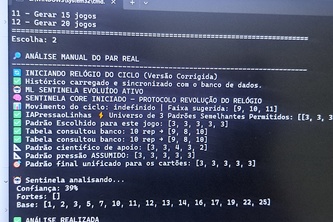
Sentinela is a self-reported multi-agent AI platform designed to analyze historical data using specialized AI agents that detect patterns, trends, and structural behaviors. It claims to operate through a central intelligence coordinating multiple analysis modules, built in Python with SQLite.
What changed
The project was submitted as part of the OpenAI 2026 hackathon, indicating an early-stage development phase. No evidence of prior traction, revenue, or customer adoption is provided.
Single most important open question
Is there any evidence that Sentinela has moved beyond a proof-of-concept or prototype stage, and whether its core functionality can be reliably scaled or integrated into existing systems?
What The Product Actually Is
The description states that Sentinela is a multi-agent AI platform that analyzes historical data using specialized AI agents, each performing different types of analysis such as patterns, cycles, trends, and statistical balance. These agents are coordinated by a central intelligence engine, which compiles their outputs into a final analysis.
It was built using:
- Python
- SQLite database
- Modular architecture
- Multiple specialized AI modules
The system is described as operating on historical databases rather than random data inputs, and it aims to replicate how an experienced analyst might interpret data.
Inference The product appears to be a data analysis tool, likely aimed at analysts or decision-makers who want automated pattern recognition from historical datasets. It is not described as a SaaS offering, nor does it claim to have a user-facing interface beyond what is implied in future development plans.
Positioning & Claim Evolution
The author states that Sentinela was inspired by the idea of AI analyzing data like an experienced analyst, while also discovering patterns humans often miss.
It positions itself as:
- A system that analyzes historical data
- A platform where multiple AI agents work together
- An alternative to random or unstructured analysis
The tagline — "AI-powered system that analyzes historical data, detects patterns and generates intelligent predictions through multiple analysis agents." — reinforces this positioning.
Inference The product is positioned as a pattern-detection tool for data analysts, not a general-purpose AI assistant or automation platform. It does not appear to be targeting end-users directly but rather professionals who process large volumes of historical data.
Target Customer & ICP
The description does not explicitly name target customers or define an ideal customer profile (ICP). However, based on the stated use case — analyzing historical data with AI agents — it seems likely that the intended users are:
- Data analysts
- Business intelligence professionals
- Decision-makers in organizations with large datasets
There is no indication of specific industries, company sizes, or roles beyond general data work.
Inference The ICP is likely enterprise-level analysts or BI teams, but this is not confirmed. No evidence exists to suggest whether the tool targets small businesses, startups, or large enterprises.
Business Model & Pricing Evidence
There is no evidence in the description of any business model or pricing structure. The project is presented as a hackathon submission and lacks details about monetization, licensing, or customer acquisition strategies.
Inference No commercial model is evident at this stage. It may be early-stage software with no revenue yet, or it could be intended for internal use only.
Technical & Delivery Signals
The system was built using:
- Python
- SQLite database
- Modular architecture
- Multiple AI modules
- Central engine coordinating agents
It is described as a multi-agent system, implying coordination between different AI models or components.
Inference The technical stack suggests a prototype-level implementation, possibly intended for experimentation or demonstration. There is no mention of scalability, cloud deployment, API access, or integration capabilities beyond its internal architecture.
Traction & Maturity Signals
The project was submitted to the OpenAI 2026 hackathon, indicating it is in an early prototype phase. No evidence of:
- Revenue
- Customers
- Product adoption
- Market traction
- User feedback
- Production use cases
The author mentions future features like a richer interface, autonomous workflow automation, and improved learning capabilities — suggesting the current version is not fully mature.
Inference The product is at a very early stage, likely a proof-of-concept or demo. There is no evidence of real-world usage or commercial viability.
Competitive Context
The description does not provide any information about competitors or market positioning relative to existing tools. It does not reference similar platforms, such as:
- Data visualization tools
- AI analytics platforms
- Predictive modeling software
- Business intelligence suites
Inference No competitive landscape is evident. The project may be entering a crowded space (e.g., AI + data analysis), but there’s no indication of how it differentiates from or competes with existing solutions.
Open Questions & Risks
- No traction or revenue: The product is described only as a hackathon submission.
- Unproven scalability: Built on Python and SQLite, which may not support enterprise-level performance.
- Lack of commercial clarity: No pricing, business model, or customer base mentioned.
- Single founder team: Only one member listed (fernando Ugbobi), suggesting limited resources for execution.
- No evidence of real-world application: The system is described as a prototype with no external validation.
Inference The project is highly speculative, lacking any commercial or technical maturity indicators. It may be a promising idea, but there is no evidence of progress toward product-market fit or viability.
Questions the description leaves open
- What specific types of historical data does Sentinela process? Are there examples?
- How do the AI agents communicate with each other and coordinate their findings?
- Has the system been tested on real-world datasets, and what were the results?
- Is there any plan to integrate with existing BI or data platforms?
- What is the timeline for moving from prototype to a usable product?
- Are there any early adopters or pilot users currently testing the system?
Overall Assessment
Not evidenced.
There is no evidence of:
- Revenue
- Customers
- Product-market fit
- Scalable business model
- Technical maturity beyond prototype stage
The project is presented as a hackathon submission, with no indication that it has progressed beyond an experimental phase.
Inference At this point, the project is not investment-ready. It may have potential, but there is insufficient evidence to assess its commercial viability or strategic value. A follow-up evaluation would be needed once more traction or development milestones are demonstrated.
User Stories BotA demo video on every pull request
Get a demo video on every new feature
GitHub App that watches your pull requests and records a narrated, captioned demo.
Save time on demo prep and make informed decisions faster with a video walkthrough of every new feature.
Source
Submitted to the OpenAI 2026 hackathon on Devpost. Project home on Devpost. Back to the full gallery on Devpost.
This competitive analysis was produced by top-founders.com (opens in a new tab)
Generated by a language model from this project's public Devpost page — its tagline, the author's own write-up and any built-with tags listed there — as captured in August 2026. Short quotations are the author's words. It is an opinion on the idea as a business, not on the people behind it, and it reflects the description as published then. If the project has moved on, request a correction below. The analysis is not independent research and contains no verified traction, revenue or customer data.
An independent guide by KFG International LLC — not affiliated with, endorsed by, or connected to Devpost or OpenAI.