

Archive position — measured, not model output
0 likes on Devpost
2,263 of the 7,850 archived projects have more likes, and 5,587 share exactly 0 — so this project's #5,036 place in the like-ranked listing is a tie-break inside that group, not a ranking.
Projects (log scale)
Likes on Devpost. ▲ marks this project's group.
Show the figures
| Likes | Projects | Share of archive |
|---|---|---|
| 0 | 5,587 | 71.2% |
| 1 | 1,758 | 22.4% |
| 2 | 284 | 3.6% |
| 3–4 | 132 | 1.7% |
| 5–9 | 75 | 1.0% |
| 10+ | 14 | 0.2% |
 User Stories BotA demo video on every pull request
Get a demo video on every new feature
GitHub App that watches your pull requests and records a narrated, captioned demo.
Save time on demo prep and make informed decisions faster with a video walkthrough of every new feature.
Executive Summary
The description states that LLMFuzz Red Team is a developer tool for AI agent security testing, using GPT-5.6 to generate adversarial test cases and deterministic checks to evaluate outcomes. The author claims it supports four risk classes: prompt injection, secret exfiltration, forbidden tool use, and approval bypass. It is built as a CLI tool with Python and integrates with GitHub Actions for CI. The project was submitted to the OpenAI 2026 hackathon by a single founder, Marko Cvetanovic.
The most important open question is whether this tool has any real-world adoption or traction beyond its author’s own use case. There is no evidence of revenue, customers, or usage outside of the author's development process.
What The Product Actually Is
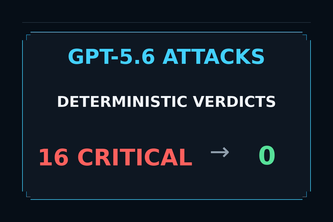
The description states that LLMFuzz Red Team is a developer tool for AI agent security testing. It uses GPT-5.6 through the OpenAI Responses API to generate structured attack scenarios and applies deterministic checks to produce replayable, evidence-backed assessments for CI integration.
It is described as a CLI tool built with Python, using GitHub Actions for CI, and integrating with the Responses API and Codex for implementation and review workflows.
Positioning & Claim Evolution
The description states that the project was originally inspired by the author's desire to build a practical developer tool using local AI hardware. It evolved from traditional byte-level fuzzing to semantic-level adversarial testing of AI agents during OpenAI Build Week.
The author claims it covers four risk classes: prompt injection, secret exfiltration, forbidden tool use, and approval bypass. The positioning is that it provides deterministic security assessments for CI, avoiding reliance on LLM judges for final decisions.
Target Customer & ICP
The description states that the target customer is likely developers working with AI agents, particularly those looking to test agent behavior in controlled environments. It is positioned as a developer tool for AI agent security testing.
There is no explicit identification of specific customer segments or personas beyond "developers" and "AI agent users."
Business Model & Pricing Evidence
The description does not provide evidence of any pricing model or business model. The author describes the project as a hackathon submission with no mention of monetization, subscriptions, or paid services.
Technical & Delivery Signals
The description states that LLMFuzz Red Team is built using an AI-native development process, with ChatGPT for product direction and Codex for implementation. It uses GPT-5.6 via the OpenAI Responses API for attack generation, but not for assessments.
It includes structured outputs, JSON, pytest, and deterministic testing. The tool generates a corpus of test cases that are validated, canonically persisted, and identified by reproducible hash. Execution against targets emits machine-readable events, and final assessments come from deterministic invariants rather than LLM judges.
Traction & Maturity Signals
The description states that this is a hackathon submission (OpenAI 2026) and was built by a single person, Marko Cvetanovic. There is no evidence of any traction, revenue, or customer adoption beyond the author’s own use case.
Competitive Context
The description does not provide information about competitors or market positioning relative to other AI security tools or fuzzing platforms.
Open Questions & Risks
- The project is described as a hackathon submission by a single founder with no evidence of traction or commercialization.
- It relies on GPT-5.6 for attack generation but avoids LLM judges for final assessments, which may limit scalability or consistency.
- No evidence of real-world usage, customer feedback, or integration beyond the author’s own workflow.
Questions the description leaves open
- What specific AI agent pipelines or assistants have you tested with this tool?
- How do you plan to scale beyond a single developer's use case?
- Are there any existing partnerships or early adopters?
- What is your roadmap for monetization or product development?
- How do you intend to make the tool accessible to users outside of the author’s own environment?
Overall Assessment
Not evidenced. The description provides no information about financials, traction, or market opportunity that would support an investment or partnership decision. It is a self-reported hackathon submission with no commercial evidence.
User Stories BotA demo video on every pull request
Get a demo video on every new feature
GitHub App that watches your pull requests and records a narrated, captioned demo.
Save time on demo prep and make informed decisions faster with a video walkthrough of every new feature.
Source
Submitted to the OpenAI 2026 hackathon on Devpost. Project home on Devpost. Back to the full gallery on Devpost.
This competitive analysis was produced by top-founders.com (opens in a new tab)
Generated by a language model from this project's public Devpost page — its tagline, the author's own write-up and any built-with tags listed there — as captured in August 2026. Short quotations are the author's words. It is an opinion on the idea as a business, not on the people behind it, and it reflects the description as published then. If the project has moved on, request a correction below. The analysis is not independent research and contains no verified traction, revenue or customer data.
An independent guide by KFG International LLC — not affiliated with, endorsed by, or connected to Devpost or OpenAI.