

Archive position — measured, not model output
0 likes on Devpost
2,263 of the 7,850 archived projects have more likes, and 5,587 share exactly 0 — so this project's #4,990 place in the like-ranked listing is a tie-break inside that group, not a ranking.
Projects (log scale)
Likes on Devpost. ▲ marks this project's group.
Show the figures
| Likes | Projects | Share of archive |
|---|---|---|
| 0 | 5,587 | 71.2% |
| 1 | 1,758 | 22.4% |
| 2 | 284 | 3.6% |
| 3–4 | 132 | 1.7% |
| 5–9 | 75 | 1.0% |
| 10+ | 14 | 0.2% |
 User Stories BotA demo video on every pull request
Get a demo video on every new feature
GitHub App that watches your pull requests and records a narrated, captioned demo.
Save time on demo prep and make informed decisions faster with a video walkthrough of every new feature.
Executive Summary
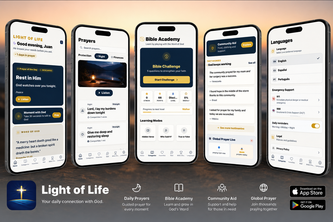
What the company appears to be: Light of Life: Help & Hope is an AI-powered humanitarian platform, self-described as a tool to connect people with verified aid, emergency recovery resources, and AI guidance, beginning with Venezuela.
What changed: The project evolved from an existing app on the Apple App Store into an AI-enhanced humanitarian platform during OpenAI Build Week. It was repositioned to focus on verified assistance and emergency support, incorporating AI guidance and multilingual capabilities.
Single most important open question: Is there evidence of traction, user adoption or revenue generation beyond the author’s own description?
What The Product Actually Is
The description states that Light of Life is an AI-powered humanitarian platform designed to connect people with verified assistance during emergencies. It includes:
- AI humanitarian guidance
- Verified community assistance
- Emergency and disaster recovery resources
- Community Prayer Wall
- Spiritual encouragement
- Multilingual support (English, Spanish, Portuguese)
The author notes that it was originally available on the Apple App Store before Build Week, but was redesigned and expanded during the hackathon.
Evidence: The description states this is an AI-powered humanitarian platform with verified assistance features and multilingual support.
Inference: It appears to be a mobile application (iOS) built using React Native and Expo.io, with backend services via Cloudflare and AI integration through OpenAI GPT models (GPT-5.5, GPT-5.6), Codex, and TypeScript.
Positioning & Claim Evolution
The author describes the platform as evolving from an existing app into a humanitarian intelligence platform focused on verified assistance during emergencies.
Key claims include:
- Combining AI with real-world humanitarian information
- Prioritizing trust over intelligence
- Focused initially on Venezuela, expanding to the U.S. and Latin America
The positioning appears to be that of a humanitarian tech solution, not a commercial SaaS or marketplace product.
Evidence: The author states that it started as an app and was transformed into an AI-powered humanitarian platform during Build Week.
Inference: The platform is positioned as a public good, not a revenue-generating service. It does not appear to be monetized or sold to users.
Target Customer & ICP
The target customer is described as people in need during emergencies, particularly those in Venezuela, with plans to expand to the U.S. and Latin America.
The platform is aimed at individuals seeking:
- Verified aid
- Emergency recovery resources
- Community support
- Spiritual encouragement
Evidence: The author states that millions of people in Venezuela are searching for verified information about food assistance, shelters, NGOs, medical support, immigration resources, and disaster recovery.
Inference: The ICP is likely low-income or displaced individuals in crisis zones, with limited access to reliable information or services.
Business Model & Pricing Evidence
There is no evidence of a business model or pricing structure. The description does not mention monetization, subscriptions, fees, or any commercial arrangement.
The platform is described as a humanitarian tool, not a product for sale.
Evidence: Not evidenced.
Inference: If the app is free to use and relies on community support or grants, it may be non-commercial in nature. However, this is speculative without further data.
Technical & Delivery Signals
- Built with React Native, Expo.io, TypeScript
- Uses OpenAI GPT models (GPT-5.5, GPT-5.6), Codex, and Cloudflare
- Development was accelerated using Codex as an engineering partner
- The app is already on the Apple App Store
- Multilingual support added during Build Week
Evidence: The author states how it was built, including tools used and AI integration.
Inference: The platform appears to be a mobile-first humanitarian tool with AI assistance features. It has been production-ready since before Build Week.
Traction & Maturity Signals
There is no evidence of user traction, adoption, or revenue. The description does not mention:
- Number of users
- Customer acquisition metrics
- Revenue or monetization
- User engagement data
The platform was already on the App Store prior to Build Week, but no usage statistics are provided.
Evidence: Not evidenced.
Inference: If it had been used by thousands or millions of people, this would be a key signal. Absence of such data is notable.
Competitive Context
There is no evidence of competitors or market analysis in the description. The author does not reference:
- Existing humanitarian platforms
- AI chatbots for aid
- Emergency response tools
- Similar apps or services
The platform appears to be self-contained and not part of a known competitive landscape.
Evidence: Not evidenced.
Open Questions & Risks
- No traction or revenue evidence: The platform is described as a humanitarian tool but lacks any data on adoption or monetization.
- Unverified claims: All descriptions are self-reported, with no independent verification.
- Single-person team: Only one member listed (Juan Gudino), which may limit scalability and execution capability.
- No commercial model: The platform is framed as a public good, not a business — raising questions about sustainability or long-term viability.
- AI dependency: Heavy reliance on AI models (GPT-5.5, GPT-5.6) raises concerns about cost, availability, and control.
Evidence: Not evidenced.
Inference: These are risks based on the lack of evidence for key business metrics and the platform’s non-commercial framing.
Questions the description leaves open
- What is the current user base or adoption rate of the app?
- How is verified information sourced and validated?
- Are there any partnerships with NGOs, governments, or humanitarian organizations?
- Is there a plan to monetize the platform, or is it purely community-driven?
- What are the technical dependencies on AI models (e.g., GPT-5.5/5.6), and how will they be sustained?
- How does the team plan to scale beyond Venezuela into the U.S. and Latin America?
- What are the legal or compliance risks of operating in crisis zones like Venezuela?
Overall Assessment
Not evidenced.
The description provides no data on traction, revenue, or commercial viability. It is a self-reported humanitarian project with no evidence of business metrics or user adoption.
It appears to be a non-commercial initiative, possibly supported by grants or personal effort, rather than a scalable or investable business model.
Given the lack of evidence for any commercial or financial dimension, there is insufficient basis to recommend investment or partnership at this time.
Confidence level: Low. The project description is thin and self-reported, with no independent validation or data on performance or market relevance.
User Stories BotA demo video on every pull request
Get a demo video on every new feature
GitHub App that watches your pull requests and records a narrated, captioned demo.
Save time on demo prep and make informed decisions faster with a video walkthrough of every new feature.
Source
Submitted to the OpenAI 2026 hackathon on Devpost. Project home on Devpost. Back to the full gallery on Devpost.
This competitive analysis was produced by top-founders.com (opens in a new tab)
Generated by a language model from this project's public Devpost page — its tagline, the author's own write-up and any built-with tags listed there — as captured in August 2026. Short quotations are the author's words. It is an opinion on the idea as a business, not on the people behind it, and it reflects the description as published then. If the project has moved on, request a correction below. The analysis is not independent research and contains no verified traction, revenue or customer data.
An independent guide by KFG International LLC — not affiliated with, endorsed by, or connected to Devpost or OpenAI.