

Archive position — measured, not model output
1 like on Devpost
505 of the 7,850 archived projects have more likes, and 1,758 share exactly 1 — so this project's #1,066 place in the like-ranked listing is a tie-break inside that group, not a ranking.
Projects (log scale)
Likes on Devpost. ▲ marks this project's group.
Show the figures
| Likes | Projects | Share of archive |
|---|---|---|
| 0 | 5,587 | 71.2% |
| 1 | 1,758 | 22.4% |
| 2 | 284 | 3.6% |
| 3–4 | 132 | 1.7% |
| 5–9 | 75 | 1.0% |
| 10+ | 14 | 0.2% |
 User Stories BotA demo video on every pull request
Get a demo video on every new feature
GitHub App that watches your pull requests and records a narrated, captioned demo.
Save time on demo prep and make informed decisions faster with a video walkthrough of every new feature.
Executive Summary
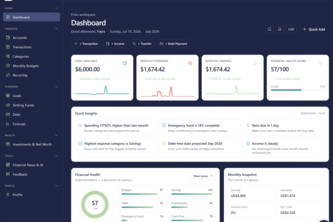
What the company appears to be: Finlo Finance is a self-reported personal finance platform designed to unify multiple financial activities—budgeting, expense tracking, debt management, investment monitoring, forecasting, analytics, and more—into one application. The author states it was built using AI tools like Codex and GPT-5.6 during the OpenAI Build Week hackathon.
What changed: The project evolved from a simple finance tracker into what the author describes as a "financial operating system" that aims to replace spreadsheets and fragmented financial apps with a single, intelligent workspace powered by a shared financial ledger.
The single most important open question: Is there any evidence of actual user adoption or revenue generation beyond the self-reported development narrative?
Analysis basis: This report is based entirely on the author’s own description, as supplied. No external verification, traction data, customer names, or financial metrics are available. All claims are treated as unverified self-reports.
What The Product Actually Is
The description states that Finlo Finance is an "ultimate finance platform" that helps users manage their finances from a single dashboard. It includes features such as:
- Tracking income and expenses
- Creating and managing budgets
- Monitoring savings goals
- Managing debts and loan repayments
- Tracking investment portfolios
- Viewing net worth and cash flow
- Exploring financial KPIs and interactive analytics
- Forecasting future balances and spending trends
- Organizing recurring payments using a financial calendar
- Scanning receipts via OCR to create transactions faster
- Asking questions about their own financial data
The author further describes Finlo as a platform that connects various aspects of personal finance into one application, replacing the need for multiple spreadsheets or disconnected apps.
Inference: The product is described as a unified financial workspace, but no evidence exists regarding whether this functionality has been implemented in a usable form or tested with users.
Positioning & Claim Evolution
The author positions Finlo Finance as an alternative to fragmented personal finance tools like YNAB, Monarch Money, Copilot Money, Quicken Simplifi, Rocket Money, EveryDollar, Empower Personal Dashboard, PocketSmith, Goodbudget, and Tiller Money. These are cited as existing solutions that address individual parts of personal finance but do not integrate well.
The evolution described in the write-up shows a shift from a basic expense tracker to a broader "financial operating system" capable of supporting features like:
- Secure bank synchronization
- Automatic transaction categorization
- Collaborative family finance
- AI-powered financial coaching
- Advanced forecasting and scenario simulation
- Tax planning, retirement planning, estate planning
Claim vs Fact: The author claims Finlo will become a complete financial operating system; however, there is no evidence of actual implementation or user feedback on these advanced features.
Target Customer & ICP
The target customer appears to be individuals and households seeking a centralized solution for managing personal finances. The author notes that users often rely on spreadsheets or multiple apps because current tools solve only one part of the financial puzzle.
Inference: Based on the description, Finlo targets people who currently use spreadsheets or separate apps for different financial tasks. No specific demographic data or segmentation is provided.
Business Model & Pricing Evidence
There is no mention of pricing models, monetization strategies, or business model details in the project description. The author does not state how the platform will generate revenue or whether it intends to offer free or paid tiers.
Not evidenced: No evidence of any business model or pricing structure exists within the provided description.
Technical & Delivery Signals
The project was built using:
- Frontend: React, TypeScript, Vite, Tailwind CSS, shadcn/ui
- Backend: Supabase, React Query, Zustand, Recharts
- AI Tools: Codex, GPT-5.6 (used for planning, brainstorming, implementation, debugging)
- Deployment: Vercel
The author also mentions the use of Progressive Web App (PWA) technologies.
Inference: The technical stack suggests a modern web-based application with AI-assisted development. However, no evidence exists regarding scalability, performance, or production deployment status.
Traction & Maturity Signals
There is no evidence of user adoption, customer base, revenue, ARR, or any form of traction beyond the author’s own account. The project was submitted as a hackathon entry and has not been independently verified for usage or impact.
Not evidenced: No data on users, customers, or product performance is available.
Competitive Context
The author references several competitors in the personal finance space, including YNAB, Monarch Money, Copilot Money, Quicken Simplifi, Rocket Money, EveryDollar, Empower Personal Dashboard, PocketSmith, Goodbudget, and Tiller Money. These are described as solving individual parts of personal finance but failing to integrate.
Inference: Finlo positions itself as a unifying solution in a competitive market where integration is lacking. However, no evidence exists that this positioning has been validated by users or the market.
Open Questions & Risks
- Unverified claims: All features and capabilities are self-reported without external validation.
- No traction or revenue: No evidence of actual user adoption or monetization.
- AI dependency: Heavy reliance on AI tools (Codex, GPT-5.6) raises questions about long-term viability if those services change or become unavailable.
- Lack of product maturity: The project is described as a hackathon submission with no indication of ongoing development or production readiness.
- Unclear roadmap execution: While the author outlines ambitious future features, there is no evidence that these have been implemented or tested.
Not evidenced: No data on risk mitigation strategies, scalability concerns, or competitive differentiation beyond self-reporting.
Questions the description leaves open
- What specific financial data sources does Finlo support?
- How are user transactions categorized and reconciled?
- Has the platform undergone any user testing or feedback loops?
- Are there plans to integrate with banks or third-party financial institutions?
- What is the current status of monetization strategy, if any?
- How does Finlo handle data privacy and security compliance?
- What are the key assumptions behind the AI-assisted development approach?
- Is there a plan for ongoing feature development beyond the initial scope?
Overall Assessment
There is no evidence to support investment or partnership interest at this time. The project remains in an early-stage, self-reported phase with no demonstrated traction, revenue, or customer validation.
Confidence level: Low — based solely on unverified author claims and no external data.
Conclusion: This is a conceptually ambitious idea presented as a hackathon prototype. It lacks any measurable commercial signal or proof of concept beyond the author’s own description.
User Stories BotA demo video on every pull request
Get a demo video on every new feature
GitHub App that watches your pull requests and records a narrated, captioned demo.
Save time on demo prep and make informed decisions faster with a video walkthrough of every new feature.
Source
Submitted to the OpenAI 2026 hackathon on Devpost. Project home on Devpost. Back to the full gallery on Devpost.
This competitive analysis was produced by top-founders.com (opens in a new tab)
Generated by a language model from this project's public Devpost page — its tagline, the author's own write-up and any built-with tags listed there — as captured in August 2026. Short quotations are the author's words. It is an opinion on the idea as a business, not on the people behind it, and it reflects the description as published then. If the project has moved on, request a correction below. The analysis is not independent research and contains no verified traction, revenue or customer data.
An independent guide by KFG International LLC — not affiliated with, endorsed by, or connected to Devpost or OpenAI.