

Archive position — measured, not model output
1 like on Devpost
505 of the 7,850 archived projects have more likes, and 1,758 share exactly 1 — so this project's #710 place in the like-ranked listing is a tie-break inside that group, not a ranking.
Projects (log scale)
Likes on Devpost. ▲ marks this project's group.
Show the figures
| Likes | Projects | Share of archive |
|---|---|---|
| 0 | 5,587 | 71.2% |
| 1 | 1,758 | 22.4% |
| 2 | 284 | 3.6% |
| 3–4 | 132 | 1.7% |
| 5–9 | 75 | 1.0% |
| 10+ | 14 | 0.2% |
 User Stories BotA demo video on every pull request
Get a demo video on every new feature
GitHub App that watches your pull requests and records a narrated, captioned demo.
Save time on demo prep and make informed decisions faster with a video walkthrough of every new feature.
Executive Summary
What the company appears to be
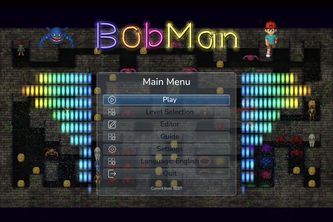
BobMan is a self-reported family project that uses C++ and AI tools (specifically Codex with GPT-5.6 Sol) to build a native game. The author, Rob Pietsch, describes it as a learning tool for his children, who act as product owners, while he provides engineering direction and Codex handles implementation.
What changed
The project evolved from a small private C++ game into a structured family activity involving product ownership, AI-assisted development, and an engineering harness that supports autonomous agent-led refactoring. It is described as having moved beyond simple code generation to enable complex Brownfield engineering with human oversight.
Single most important open question — the commercial due-diligence read
Is there evidence of a scalable or repeatable business model, or does this remain a personal learning project without commercial traction?
What The Product Actually Is
The description states that BobMan is:
- A native C++17 and SDL2 game with animated creatures and gameplay systems.
- Includes features such as a map editor, persistent configuration, an integrated game guide, automated tests, headless simulation, and macOS packaging.
- Not a thin AI wrapper but an asset-heavy application with rendering, audio, persistence, multithreaded behavior, and organically grown complexity.
It is built using:
- C++17, CMake, CTest, Git, GitHub Actions, GLTF 2.0/GLB, OpenAI Codex, Python, SDL2-image, SDL2-mixer, SDL2-ttf.
- The project was submitted as a solo effort by Rob Pietsch.
Inference The product is described as a technical experiment with AI integration, not a commercial offering.
Positioning & Claim Evolution
The author states that:
- BobMan turns family game-making into shared learning.
- Children act as product owners while a returning developer and Codex build the polished native C++ game.
- It is not a thin AI wrapper but an asset-heavy application with complex systems.
- The project evolved from a small private game to a structured family activity involving product ownership, AI-assisted development, and engineering harnesses.
Inference This is positioned as a learning tool for families or individuals using AI in software development. There is no evidence of commercial positioning or market targeting beyond the author’s personal use case.
Target Customer & ICP
The description states:
- The primary users are Rob Pietsch's children (aged nine and twelve), who act as product owners.
- The broader audience includes families interested in collaborative software development.
- The author also mentions that he is a people manager working in software development, not as a developer, and uses this project to stay current with modern engineering practices.
Inference The ICP appears to be:
- Families or individuals exploring AI-assisted development.
- Software leaders seeking to understand agentic development.
- Not evidenced: No clear commercial customer base or target market beyond the author’s personal use case.
Business Model & Pricing Evidence
The description does not provide any evidence of:
- Revenue streams
- Pricing models
- Customer acquisition strategies
- Monetization plans
Inference There is no indication that BobMan has a business model or monetization strategy beyond being a personal project.
Technical & Delivery Signals
The description states:
- The project uses C++17, SDL2, Git, GitHub Actions, and Codex with GPT-5.6 Sol.
- It includes automated tests, architecture checks, and guardrails.
- Codex was used to refactor large source files without user guidance during implementation.
- A harness was built to encode lessons learned into the repository, including regression tests, architectural decisions, and automated guardrails.
Inference The technical approach involves:
- AI-assisted development with human oversight.
- Strong engineering practices (tests, architecture checks).
- Use of modern tools like CMake, Git, GitHub Actions.
- Not evidenced: No evidence of scalability, production deployment, or integration with other systems.
Traction & Maturity Signals
The description does not provide any evidence of:
- Customers
- Revenue
- Adoption metrics
- Product usage data
- Market traction
Inference The project is described as a personal learning tool and family activity. It has no demonstrated traction or maturity beyond the author’s own experience.
Competitive Context
The description does not mention:
- Competitors
- Market positioning
- Industry trends
- Direct or indirect competition
Inference No competitive context is provided in the self-reported description.
Open Questions & Risks
Key risks and open questions identified from the description:
- The project is described as a solo effort with no evidence of team expansion or commercial traction.
- There is no indication of scalability, monetization, or market demand.
- The use of AI tools like Codex and GPT-5.6 Sol may be experimental and not yet proven in production environments.
- The focus on family learning suggests limited commercial applicability.
Inference The project lacks evidence of a viable business model or scalable product.
Questions the description leaves open
- Is this project intended to evolve into a commercial product, or is it purely a personal learning tool?
- What are the specific use cases for AI-assisted development beyond this family project?
- How does the team plan to scale beyond a single developer and child product owners?
- Are there any plans for monetization or customer acquisition?
- Has the project been tested in real-world environments outside of the family setting?
Overall Assessment
The description states that BobMan is:
- A family learning how to build together.
- A software leader learning how to lead in an agentic future.
- Not a game built by AI, but a family learning how to build together.
Inference This appears to be a personal project focused on education and experimentation with AI-assisted development. There is no evidence of commercial viability or traction.
Assessment Not evidenced as a viable investment or partnership opportunity at this time. The project lacks commercial signals, revenue, customers, or scalability indicators. It remains a self-reported learning experiment without demonstrated market relevance.
User Stories BotA demo video on every pull request
Get a demo video on every new feature
GitHub App that watches your pull requests and records a narrated, captioned demo.
Save time on demo prep and make informed decisions faster with a video walkthrough of every new feature.
Source
Submitted to the OpenAI 2026 hackathon on Devpost. Project home on Devpost. Back to the full gallery on Devpost.
This competitive analysis was produced by top-founders.com (opens in a new tab)
Generated by a language model from this project's public Devpost page — its tagline, the author's own write-up and any built-with tags listed there — as captured in August 2026. Short quotations are the author's words. It is an opinion on the idea as a business, not on the people behind it, and it reflects the description as published then. If the project has moved on, request a correction below. The analysis is not independent research and contains no verified traction, revenue or customer data.
An independent guide by KFG International LLC — not affiliated with, endorsed by, or connected to Devpost or OpenAI.