

Archive position — measured, not model output
1 like on Devpost
505 of the 7,850 archived projects have more likes, and 1,758 share exactly 1 — so this project's #711 place in the like-ranked listing is a tie-break inside that group, not a ranking.
Projects (log scale)
Likes on Devpost. ▲ marks this project's group.
Show the figures
| Likes | Projects | Share of archive |
|---|---|---|
| 0 | 5,587 | 71.2% |
| 1 | 1,758 | 22.4% |
| 2 | 284 | 3.6% |
| 3–4 | 132 | 1.7% |
| 5–9 | 75 | 1.0% |
| 10+ | 14 | 0.2% |
 User Stories BotA demo video on every pull request
Get a demo video on every new feature
GitHub App that watches your pull requests and records a narrated, captioned demo.
Save time on demo prep and make informed decisions faster with a video walkthrough of every new feature.
Executive Summary
Bodh is a self-reported educational tool designed to help children understand conceptual misunderstandings in homework doubts through a structured learning journey. The product uses AI to identify misconceptions and then rebuilds the underlying concept using visual artifacts, narration, and practice exercises — all grounded in a curriculum taxonomy.
The author states that Bodh currently supports two subjects (fractions and science), works across Hindi, Hinglish, and English, and is built with React, Next.js, OpenAI APIs, and Cloudflare. It includes voice input/output, image-based doubt intake, and deterministic teaching experiences.
Key commercial signals are absent: no revenue, customers, or adoption data are provided. The description presents a strong vision but lacks evidence of traction or product-market fit.
The single most important open question
Is there sufficient evidence that this approach to AI-assisted learning can scale beyond a hackathon demo and be adopted by real users in educational settings?
What The Product Actually Is
The description states that Bodh is an educational tool for children that takes homework doubts via voice, text, or image — in Hindi, Hinglish, or English — and guides them through a structured learning journey.
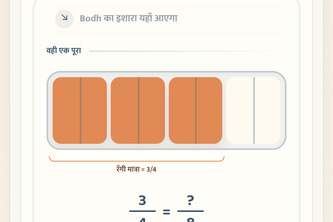
It pauses before answering to first ask one clarifying question to identify the misconception. Then it rebuilds the missing idea using:
- Visual artifacts
- Calm voice narration
- Synchronized pointers
The child then practices with a fresh question and returns to the original doubt. Finally, it creates a visual learning receipt showing their journey.
It supports two subjects: fractions (e.g., 3/4 ÷ 1/8) and science (e.g., water cycle). The system uses:
- OpenAI Responses API for misconception diagnosis
- OpenAI Speech API for narration
- Web Speech API for voice input
- React, Next.js, TypeScript for UI
- Cloudflare Workers for edge deployment
- Canvas for learning receipts
The experience is deterministic and not generated by AI in the interface or artifacts.
Inference The system appears to be a hybrid of AI interpretation and structured pedagogy, with AI used only for diagnosis and not for generating content or UI.
Positioning & Claim Evolution
The author states that Bodh was inspired by a desire to enhance education through AI, focusing on understanding rather than rote learning. The tagline “That which is truly understood” reflects this intent.
The product positions itself as:
- A tool for helping children understand conceptual misunderstandings
- Not just another homework-answerer
- A mentor-like experience that builds mental models
It claims to be grounded in curriculum taxonomy (Marble Skill Taxonomy) and designed to avoid generic AI explanations.
Inference The positioning is evolving from a simple doubt-resolver to a structured pedagogical system that emphasizes understanding, transfer, and feedback.
Target Customer & ICP
The description states that Bodh targets children — specifically those with homework doubts in mathematics and science. It supports learning in Hindi, Hinglish, and English.
It is designed for:
- Children aged around 15 months to school-age learners
- Parents or teachers who want to support conceptual understanding
- Learners who struggle with misconceptions rather than just answers
The author mentions that the system can be used by children bringing their own real doubts, suggesting a focus on self-directed learning.
Inference The ICP is likely young learners (primary/elementary school age) in multilingual Indian contexts, supported by parents or teachers. The product is not yet proven with real users beyond demo conditions.
Business Model & Pricing Evidence
There is no evidence of a business model or pricing structure in the description.
The author does not state:
- Who pays for the service
- Whether it's free-to-use or subscription-based
- If there are plans to monetize
- Any revenue streams or customer acquisition strategies
Inference No commercial model is evident from the self-reported description.
Technical & Delivery Signals
The system uses:
- React, Next.js, TypeScript for frontend
- OpenAI APIs (Responses and Speech)
- Cloudflare Workers and D1 for backend
- Canvas for visual receipts
- Web Speech API for voice input
- Vinext for edge deployment
It is built with a curriculum graph from Marble Skill Taxonomy.
The system:
- Uses bounded schema validation to restrict AI outputs
- Employs deterministic UI and artifacts
- Includes fallbacks for reliability
- Supports multiple input methods (voice, text, image)
- Is designed for responsive layouts across devices
Inference The technical architecture is well-thought-out for a demo, with clear separation of AI and deterministic components. However, no evidence of production deployment or scalability.
Traction & Maturity Signals
The description states:
- A demo proving the approach in two subjects (fractions and science)
- Nine reviewed selectable doubts
- 32/32 synthetic diagnostic evaluations
- 8/8 holdout evaluations
- 115/115 automated checks passing
- Visual learning receipts
- Voice, text, and image input support
However:
- No real users or customer data are mentioned
- No revenue or adoption metrics are provided
- The product is described as a hackathon submission
Inference The system has been rigorously tested in demo conditions but lacks evidence of real-world traction or user engagement.
Competitive Context
The description does not mention any direct competitors. It implies that Bodh aims to be different from generic AI homework tools by focusing on misconception diagnosis and structured learning journeys.
It is positioned as a tool for conceptual understanding, which may differentiate it from chatbots or general tutoring platforms.
Inference The competitive landscape is unclear — there is no evidence of existing similar products in the market. The author does not reference competitors or market positioning beyond their own claims.
Open Questions & Risks
- No real-world usage data: The product is described as a demo, with no evidence of adoption or user feedback.
- Unproven scalability: No indication of how it would scale beyond a single developer’s prototype.
- Limited language support: Only Hindi, Hinglish, and English are mentioned; no expansion plans for other languages are detailed.
- No monetization strategy: No business model is described.
- Unclear path to market: No mention of distribution, partnerships, or go-to-market strategy.
Inference The risk of failure is high if the product cannot move beyond the demo stage and prove value in real educational environments.
Questions the description leaves open
- What are the actual user feedbacks from children, parents, or teachers who have used this system?
- How does the curriculum graph (Marble Skill Taxonomy) scale to more subjects or grade levels?
- What is the plan for expanding beyond Hindi and English into other Indian languages?
- Are there any partnerships with schools or educational institutions already in place?
- How do you intend to monetize this product, if at all?
- What are the technical challenges of deploying this system at scale?
- How do you ensure consistent quality of AI diagnosis across different types of doubts?
Overall Assessment
The description is self-reported and unverified, and no evidence of traction, revenue, or customer adoption is provided.
It presents a compelling vision for an AI-powered educational tool focused on conceptual understanding. However, the product remains in early-stage development (hackathon demo), with no indication of real-world usage or commercial viability.
Assessment Not ready for investment or partnership at this stage. The idea has potential, but there is no evidence of product-market fit, traction, or scalability beyond a prototype.
User Stories BotA demo video on every pull request
Get a demo video on every new feature
GitHub App that watches your pull requests and records a narrated, captioned demo.
Save time on demo prep and make informed decisions faster with a video walkthrough of every new feature.
Source
Submitted to the OpenAI 2026 hackathon on Devpost. Project home on Devpost. Back to the full gallery on Devpost.
This competitive analysis was produced by top-founders.com (opens in a new tab)
Generated by a language model from this project's public Devpost page — its tagline, the author's own write-up and any built-with tags listed there — as captured in August 2026. Short quotations are the author's words. It is an opinion on the idea as a business, not on the people behind it, and it reflects the description as published then. If the project has moved on, request a correction below. The analysis is not independent research and contains no verified traction, revenue or customer data.
An independent guide by KFG International LLC — not affiliated with, endorsed by, or connected to Devpost or OpenAI.