

Archive position — measured, not model output
1 like on Devpost
505 of the 7,850 archived projects have more likes, and 1,758 share exactly 1 — so this project's #712 place in the like-ranked listing is a tie-break inside that group, not a ranking.
Projects (log scale)
Likes on Devpost. ▲ marks this project's group.
Show the figures
| Likes | Projects | Share of archive |
|---|---|---|
| 0 | 5,587 | 71.2% |
| 1 | 1,758 | 22.4% |
| 2 | 284 | 3.6% |
| 3–4 | 132 | 1.7% |
| 5–9 | 75 | 1.0% |
| 10+ | 14 | 0.2% |
 User Stories BotA demo video on every pull request
Get a demo video on every new feature
GitHub App that watches your pull requests and records a narrated, captioned demo.
Save time on demo prep and make informed decisions faster with a video walkthrough of every new feature.
Executive Summary
Bola Cero is a self-reported personal finance tool designed to help users organize debt, compare payment strategies, and evaluate debt purchase offers. The project was built by a single developer (Natalia Vasquez) using AI tools like Codex and GPT-5.6, with frontend technologies including Next.js, React, and TypeScript. It is described as publicly available but stores no data beyond the user's device, offering only demo functionality for now.
The author states that Bola Cero supports two debt payoff strategies (snowball or avalanche), simulates payment increases, estimates interest savings, generates monthly payment calendars, evaluates credit types, and assesses debt purchase offers based on multiple financial factors. It is positioned as an educational tool aimed at people overwhelmed by debt.
Key commercial due-diligence questions include: Is there any evidence of user adoption or traction? What is the actual product-market fit for this niche? How does it differentiate from existing tools? Does it have a sustainable business model?
The most important open question is whether Bola Cero has achieved sufficient traction or user engagement to justify further investment or partnership interest.
What The Product Actually Is
The description states that Bola Cero is an application that organizes debts, compares payment strategies, and evaluates debt purchase offers. It allows users to register details such as balance, type of credit, rate, installment, and insurance for each debt.
It supports two debt payoff methods:
- Snowball method
- Avalanche method
Features include:
- Comparing payment increases (10%, 20%, 30%, or custom amounts)
- Estimating interest savings and time reduction
- Generating a monthly payment calendar
- Analyzing if a credit type merits rate review
- Evaluating debt purchase offers by considering rate, term, insurance, and costs—not just the monthly payment
The tool is described as being built with:
- Codex
- GPT-5.6
- Next.js
- React
- TypeScript
It is publicly accessible but stores data only on the user's device and provides demo functionality with fictional data.
Inference: The product appears to be a financial planning simulator, not a full-fledged financial management platform or one that integrates with banks or credit providers. It is self-reported as educational in nature.
Positioning & Claim Evolution
The author positions Bola Cero as a tool that helps people who are confused about managing multiple debts and want clarity on which debts to prioritize, how much they can save, and whether debt purchase offers are beneficial.
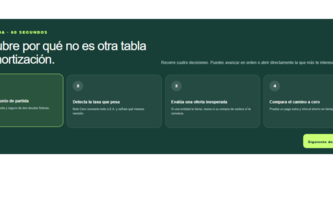
It claims to go beyond simple amortization tables by guiding users toward actionable decisions and helping them understand complex financial concepts like effective annual rates and total cost of credit.
The project evolved from a personal challenge: many people pay multiple debts without knowing which to attack first or how much they could save. The author states that Bola Cero was created to convert "many installments into a clear, understandable, and achievable plan."
Claim: The tool aims to be more than just a calculator—it seeks to educate users about debt management.
Inference: This is a self-reported positioning statement; no external validation or market research is provided. The claim of being educational implies an intent to build user trust and engagement, but this has not been demonstrated in the description.
Target Customer & ICP
The author describes the target audience as individuals who:
- Pay multiple debts each month
- Do not know which debt to tackle first
- Want to understand how much they could save
- Are unsure if a debt purchase offer is truly beneficial
There is no explicit segmentation beyond this general user profile. The tool is framed as useful for people who feel overwhelmed by their debts.
Inference: The ICP likely includes financially literate individuals with moderate-to-high debt burdens, possibly in Latin American markets given the language and context of the project (e.g., “tasa”, “plazo”). However, no demographic or geographic data is provided.
Business Model & Pricing Evidence
The description does not mention any business model or pricing strategy. It states that Bola Cero is publicly available but stores no data beyond the user's device and offers only demo functionality.
There is no indication of monetization plans, subscriptions, or paid features.
Not evidenced: No evidence of revenue streams, pricing tiers, or commercial viability.
Technical & Delivery Signals
The project was built using:
- Codex
- GPT-5.6
- Next.js
- React
- TypeScript
The author reports that Codex was used throughout the development process—from product definition to testing and publishing—and GPT-5.6 helped translate complex financial concepts into understandable explanations.
It is described as publicly accessible, though it does not store data beyond the device and only offers demo functionality with fictional information.
Inference: The use of AI tools suggests rapid prototyping and possibly low technical overhead. However, there is no evidence of scalability, security measures, or integration capabilities.
Traction & Maturity Signals
The author states that Bola Cero:
- Is already publicly available
- Stores data only on the user’s device
- Offers demo functionality with fictional data
- Does not yet support features like monthly follow-up, reminders, secure import of statements, updated rate references, or personalized recommendations
There is no mention of actual users, downloads, retention metrics, or usage analytics.
Not evidenced: No evidence of traction, adoption, or user engagement. The project is described as functional but not yet mature in terms of feature set or real-world impact.
Competitive Context
The description does not reference any competitors or existing tools in the personal finance or debt management space.
It is unclear whether similar tools exist, how Bola Cero would differentiate itself, or what its competitive advantages might be.
Not evidenced: No competitive landscape analysis or differentiation strategy provided.
Open Questions & Risks
- Lack of traction: The tool is publicly available but lacks evidence of user adoption or engagement.
- No monetization model: No indication of how the project will generate revenue.
- Single-founder build: Built by one person, which raises questions about scalability and long-term maintenance.
- AI dependency: Heavy reliance on AI tools (Codex, GPT) may limit control over product evolution and intellectual property.
- Educational focus vs. utility: The tool is framed as educational, but there’s no evidence that this approach leads to user retention or conversion.
- Privacy and data handling: While it stores no data externally, the lack of secure import features could be a limitation for users seeking deeper integration.
Questions the description leaves open
- What is your current user base or engagement level?
- How do you plan to monetize this tool?
- Are there any plans to integrate with financial institutions or data sources?
- What are the key assumptions behind the debt evaluation logic (e.g., how are interest rates and fees calculated)?
- Have you considered legal or regulatory implications of offering financial advice?
- How do you plan to scale beyond a single developer?
- What is your roadmap for adding features like secure data import, reminders, or personalized recommendations?
Overall Assessment
Not evidenced: No evidence of revenue, customers, traction, or clear path to monetization exists in the description.
The project is described as functional and publicly available but remains in an early stage with limited features and no demonstrated market demand. It is self-reported as educational and aimed at helping users make better financial decisions, but there is no indication that it has achieved significant adoption or user engagement.
Confidence level: Low — based entirely on self-reporting without external validation or evidence of traction.
Assessment: Not ready for investment or partnership consideration at this time. Further due diligence would require proof of usage, revenue models, and competitive positioning.
User Stories BotA demo video on every pull request
Get a demo video on every new feature
GitHub App that watches your pull requests and records a narrated, captioned demo.
Save time on demo prep and make informed decisions faster with a video walkthrough of every new feature.
Source
Submitted to the OpenAI 2026 hackathon on Devpost. Project home on Devpost. Back to the full gallery on Devpost.
This competitive analysis was produced by top-founders.com (opens in a new tab)
Generated by a language model from this project's public Devpost page — its tagline, the author's own write-up and any built-with tags listed there — as captured in August 2026. Short quotations are the author's words. It is an opinion on the idea as a business, not on the people behind it, and it reflects the description as published then. If the project has moved on, request a correction below. The analysis is not independent research and contains no verified traction, revenue or customer data.
An independent guide by KFG International LLC — not affiliated with, endorsed by, or connected to Devpost or OpenAI.