

Archive position — measured, not model output
3 likes on Devpost
128 of the 7,850 archived projects have more likes, and 93 share exactly 3 — so this project's #216 place in the like-ranked listing is a tie-break inside that group, not a ranking.
Projects (log scale)
Likes on Devpost. ▲ marks this project's group.
Show the figures
| Likes | Projects | Share of archive |
|---|---|---|
| 0 | 5,587 | 71.2% |
| 1 | 1,758 | 22.4% |
| 2 | 284 | 3.6% |
| 3–4 | 132 | 1.7% |
| 5–9 | 75 | 1.0% |
| 10+ | 14 | 0.2% |
 User Stories BotA demo video on every pull request
Get a demo video on every new feature
GitHub App that watches your pull requests and records a narrated, captioned demo.
Save time on demo prep and make informed decisions faster with a video walkthrough of every new feature.
Executive Summary
What the company appears to be
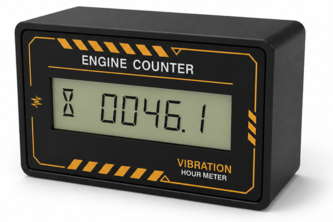
The project described by the caller is a hardware-based vibration-activated hour meter designed for heavy machinery and infrastructure equipment. The author states that it tracks operational time automatically through vibration detection, aiming to provide tamper-proof proof of usage to prevent billing disputes in equipment rental markets.
What changed
The description indicates this was built as part of a hackathon submission (OpenAI 2026), with the authors transitioning from field experience into product development and entrepreneurship. The project evolved from an initial mechanical sensor failure to a solid-state MEMS accelerometer, using AI tools like ChatGPT and Codex for both hardware diagnosis and firmware optimization.
Single most important open question
Is there any evidence of actual customer orders or revenue generation beyond the author's claim that “we have already many hour meter order already in pipeline”?
Note: This analysis is based entirely on the self-reported, unverified description provided by the caller. No third-party verification, archived data, or independent sources are available.
What The Product Actually Is
- The description states:
- It is a standalone, tamper-proof vibration hour meter.
- It detects engine or motor operation via a calibrated sensor that responds to specific vibrations.
- It does not connect to the machine’s electrical system, avoiding bypassing or manipulation.
- It uses a solid-state MEMS accelerometer (replacing an earlier mechanical sensor).
- Firmware was optimized using Codex; hardware issues were resolved with help from ChatGPT.
- Inferred:
- The device is intended for use in industrial settings where billing disputes over equipment usage occur.
- It records operational time and may store data locally or transmit it via Bluetooth (future version).
Not evidenced:
- No details on physical dimensions, power source type, battery life, or integration methods.
- No mention of software interface, data export capabilities, or real-time monitoring features beyond future plans.
Positioning & Claim Evolution
- The description states:
- The product addresses a real-world industry problem in international markets (especially Africa), where billing disputes arise due to unreliable hour meters.
- It positions itself as filling a gap between cheap, unreliable Chinese alternatives and expensive European-made models.
- The authors claim it offers a cost-effective, accurate, and tamper-proof solution.
- Inferred:
- The positioning evolved from a personal field challenge into a scalable product idea.
- The use of AI tools (ChatGPT, Codex) is presented as a key enabler in overcoming technical hurdles.
Not evidenced:
- No evidence of market research, competitive benchmarking, or pricing strategy.
- No mention of branding, messaging, or go-to-market plans beyond the author’s personal journey.
Target Customer & ICP
- The description states:
- Equipment rental companies are the primary target.
- These clients operate in international markets, particularly Africa.
- The device helps resolve disputes between vendors and clients regarding extra hours used.
- Inferred:
- Customers likely include fleet managers, construction firms, mining operations, or agricultural equipment users who rent machinery.
- The ICP is defined by the need for reliable, tamper-proof tracking of heavy machinery usage.
Not evidenced:
- No customer personas, segmentation criteria, or buyer journey details.
- No evidence of specific industries or regions targeted beyond Africa.
Business Model & Pricing Evidence
- The description states:
- The authors are now selling the hour meter to real customers.
- They mention having “many hour meter order already in pipeline” — implying pre-orders or early sales.
- Inferred:
- The business model likely involves direct B2B sales of physical hardware.
- Pricing is not stated, nor is any pricing tier or volume discount structure described.
Not evidenced:
- No revenue figures, pricing tiers, subscription models, or channel partners.
- No indication of whether the device will be sold individually or in bulk.
Technical & Delivery Signals
- The description states:
- Hardware redesign involved switching from mechanical to solid-state MEMS accelerometer.
- Firmware was rewritten using Codex to improve accuracy, power management, and data protection.
- AI tools were used for debugging and component selection.
- Original prototype failed after 500 hours in field; improvements led to a ruggedized version.
- Inferred:
- The team has some engineering capability, especially in embedded systems and low-power design.
- The product is likely designed for durability and reliability under harsh conditions.
Not evidenced:
- No details on sensor sensitivity thresholds, signal filtering algorithms, or data storage capacity.
- No mention of testing protocols, certifications, or compliance standards.
Traction & Maturity Signals
- The description states:
- The team has already received multiple orders (“many hour meter order already in pipeline”).
- It was developed over more than a year with iterative field testing and failures.
- The authors transitioned from infrastructure professional to entrepreneur.
- Inferred:
- There is early traction, but no clear indication of scale or repeat purchases.
- The product has moved beyond prototype stage, suggesting some level of maturity.
Not evidenced:
- No revenue data, customer acquisition numbers, or retention metrics.
- No evidence of marketing efforts, distribution channels, or user feedback loops.
Competitive Context
- The description states:
- Current market is divided between cheap, unreliable Chinese options and expensive European alternatives.
- The authors aim to bridge that gap with a cost-effective, reliable solution.
- Inferred:
- The competitive landscape includes both low-end and high-end hour meters.
- There is a niche for mid-tier, tamper-proof devices in emerging markets.
Not evidenced:
- No names of competitors or market share data.
- No evidence of pricing comparison or feature differentiation strategies.
Open Questions & Risks
- The description states:
- Original mechanical sensor failed after 500 hours.
- Battery life must last five years, which requires tight firmware budgeting.
- Signal noise and false positives were challenges during development.
- Inferred:
- Product reliability remains unproven at scale.
- Risk of underperformance in real-world environments due to prior field failures.
- Dependency on AI tools for development may indicate lack of deep technical expertise or internal R&D capacity.
Not evidenced:
- No evidence of regulatory compliance, IP protection, or scalability planning.
- No mention of supply chain risks, manufacturing partners, or logistics.
Questions the description leaves open
- What is the current status of orders in pipeline? Are they confirmed or pending?
- How many units have been sold so far, and what is the average order value?
- What are the key technical specifications (e.g., battery life, accuracy, operating temperature)?
- Have you conducted any formal testing or validation with end-users?
- What is your go-to-market strategy for reaching equipment rental companies?
- How do you plan to scale production and manage supply chain risks?
- Are there any intellectual property considerations or patents filed?
- What are the biggest technical challenges still unresolved?
Overall Assessment
- The description indicates early traction with confirmed orders, suggesting some commercial viability.
- The product addresses a clear pain point in a specific market segment.
- However, the lack of financial data, customer numbers, and scalability evidence limits confidence in its readiness for investment or partnership.
Assessment:
This is an early-stage hardware product with potential in niche markets. It shows signs of execution and problem-solving but lacks sufficient traction, revenue, or detailed business metrics to justify further due diligence without additional confirmation from the founders. The use of AI tools suggests innovation, but also raises questions about depth of engineering capability.
Confidence Level: Low
Evidence Base: Self-reported only; no external validation or financials provided.
User Stories BotA demo video on every pull request
Get a demo video on every new feature
GitHub App that watches your pull requests and records a narrated, captioned demo.
Save time on demo prep and make informed decisions faster with a video walkthrough of every new feature.
Source
Submitted to the OpenAI 2026 hackathon on Devpost. Project home on Devpost. Back to the full gallery on Devpost.
This competitive analysis was produced by top-founders.com (opens in a new tab)
Generated by a language model from this project's public Devpost page — its tagline, the author's own write-up and any built-with tags listed there — as captured in August 2026. Short quotations are the author's words. It is an opinion on the idea as a business, not on the people behind it, and it reflects the description as published then. If the project has moved on, request a correction below. The analysis is not independent research and contains no verified traction, revenue or customer data.
An independent guide by KFG International LLC — not affiliated with, endorsed by, or connected to Devpost or OpenAI.