

Archive position — measured, not model output
0 likes on Devpost
2,263 of the 7,850 archived projects have more likes, and 5,587 share exactly 0 — so this project's #7,517 place in the like-ranked listing is a tie-break inside that group, not a ranking.
Projects (log scale)
Likes on Devpost. ▲ marks this project's group.
Show the figures
| Likes | Projects | Share of archive |
|---|---|---|
| 0 | 5,587 | 71.2% |
| 1 | 1,758 | 22.4% |
| 2 | 284 | 3.6% |
| 3–4 | 132 | 1.7% |
| 5–9 | 75 | 1.0% |
| 10+ | 14 | 0.2% |
 User Stories BotA demo video on every pull request
Get a demo video on every new feature
GitHub App that watches your pull requests and records a narrated, captioned demo.
Save time on demo prep and make informed decisions faster with a video walkthrough of every new feature.
Executive Summary
What the company appears to be
Verde Vivo AI is a self-reported web-based platform that allows users to upload an image of an outdoor space and receive an AI-assisted ecological regeneration proposal. The product is described as an MVP built for OpenAI Build Week, with a focus on validating user workflow and product experience.
What changed
The project was submitted as part of the OpenAI 2026 hackathon. It represents a self-reported prototype that demonstrates how a single photograph can be used to generate structured ecological guidance. No commercial traction or revenue is evidenced.
Single most important open question
Is there evidence of a viable business model, customer demand, or path to monetization beyond the MVP stage?
What The Product Actually Is
The description states that Verde Vivo AI is a web application that allows users to upload an image of an outdoor space and receive an AI-assisted ecological analysis. It includes features such as:
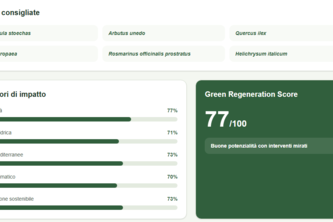
- A Green Regeneration Score
- Environmental impact indicators
- Mediterranean plant recommendations
- Priority intervention suggestions
- Expected ecological benefits
- PDF report export
The product is described as a functioning MVP built with Next.js, React, TypeScript, and OpenAI integration.
Inference The platform appears to be focused on transforming underused outdoor spaces into more climate-resilient and biodiverse environments using AI-assisted workflows.
Positioning & Claim Evolution
The description states that Verde Vivo AI is positioned as a tool that makes ecological regeneration more understandable, practical, and accessible. It is rooted in three main ideas:
- Ecological regeneration should be easier to approach.
- Biophilia can help reconnect people, places, and natural systems.
- Artificial intelligence can support professionals and users without replacing human expertise.
The project claims to be inspired by the urgency of climate change, water scarcity, biodiversity loss, and urban health challenges.
Inference The positioning is centered on democratizing ecological decision-making through AI, with a focus on accessibility and human-centered design.
Target Customer & ICP
The description does not clearly define a specific target customer or ideal customer profile (ICP). It mentions that the platform supports both professionals and users, but no further segmentation or targeting details are provided.
Inference The product may be aimed at individuals, communities, or organizations interested in improving outdoor spaces, though no explicit ICP is defined.
Business Model & Pricing Evidence
There is no evidence of a business model or pricing structure in the description. The project is described as an MVP with no mention of monetization strategies, customer acquisition plans, or revenue models.
Inference No commercial business model has been evidenced; the platform appears to be in early-stage development without a clear path to revenue.
Technical & Delivery Signals
The product is built using:
- Next.js
- React
- TypeScript
- OpenAI integration
- jsPDF for PDF generation
- Vercel for deployment
It supports desktop and mobile devices, with a responsive interface. The AI-assisted workflow is described as structured and designed to support future multimodal capabilities.
Inference The technical stack suggests a modern, web-based MVP with potential for scalability and integration of advanced AI features.
Traction & Maturity Signals
The project is described as an MVP submitted for OpenAI Build Week. It includes:
- A functioning prototype
- Online deployment
- Image upload and preview
- AI-assisted analysis workflow
- PDF report export
- Responsive interface
No evidence of user adoption, customer base, or revenue is provided.
Inference The product has reached a basic functional stage but lacks any demonstrated traction or maturity beyond the MVP phase.
Competitive Context
The description does not provide information about competitors or the competitive landscape. No mention of existing tools or platforms that address ecological regeneration or AI-assisted outdoor space planning is included.
Inference There is no evidence of competitive positioning or awareness of existing solutions in this domain.
Open Questions & Risks
- The project is described as a self-reported MVP with no verified traction, revenue, or customer data.
- No clear business model or monetization strategy is evident.
- The product’s AI capabilities are described as part of the roadmap, not implemented in the current MVP.
- The lack of defined target customers raises questions about market fit and demand.
- The platform is built for a hackathon context; no indication of long-term commercial viability.
Inference The project is in early development with significant uncertainty around commercial viability, customer demand, and scalability.
Questions the description leaves open
- What specific user problems are you solving, and how do you know they exist?
- How do you plan to monetize this platform beyond the MVP stage?
- Are there any existing users or pilot programs for this product?
- What is your roadmap for AI integration, and how will it differ from current capabilities?
- Have you validated your target customer segment with real-world feedback?
- What are the key assumptions in your business model, and how do you plan to test them?
Overall Assessment
The description indicates that Verde Vivo AI is a self-reported MVP built for a hackathon. There is no evidence of revenue, customers, or traction beyond the prototype stage.
Inference At this point, there is insufficient evidence to support an investment or partnership decision. The platform shows potential in concept and execution but lacks commercial validation and clarity on business model, target market, and monetization strategy.
User Stories BotA demo video on every pull request
Get a demo video on every new feature
GitHub App that watches your pull requests and records a narrated, captioned demo.
Save time on demo prep and make informed decisions faster with a video walkthrough of every new feature.
Source
Submitted to the OpenAI 2026 hackathon on Devpost. Project home on Devpost. Back to the full gallery on Devpost.
This competitive analysis was produced by top-founders.com (opens in a new tab)
Generated by a language model from this project's public Devpost page — its tagline, the author's own write-up and any built-with tags listed there — as captured in August 2026. Short quotations are the author's words. It is an opinion on the idea as a business, not on the people behind it, and it reflects the description as published then. If the project has moved on, request a correction below. The analysis is not independent research and contains no verified traction, revenue or customer data.
An independent guide by KFG International LLC — not affiliated with, endorsed by, or connected to Devpost or OpenAI.