

Archive position — measured, not model output
6 likes on Devpost
35 of the 7,850 archived projects have more likes, and 19 share exactly 6 — so this project's #52 place in the like-ranked listing is a tie-break inside that group, not a ranking.
Projects (log scale)
Likes on Devpost. ▲ marks this project's group.
Show the figures
| Likes | Projects | Share of archive |
|---|---|---|
| 0 | 5,587 | 71.2% |
| 1 | 1,758 | 22.4% |
| 2 | 284 | 3.6% |
| 3–4 | 132 | 1.7% |
| 5–9 | 75 | 1.0% |
| 10+ | 14 | 0.2% |
 User Stories BotA demo video on every pull request
Get a demo video on every new feature
GitHub App that watches your pull requests and records a narrated, captioned demo.
Save time on demo prep and make informed decisions faster with a video walkthrough of every new feature.
Executive Summary
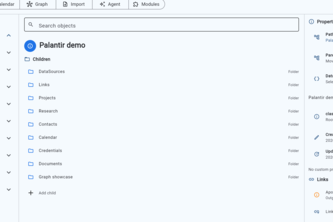
The company appears to be a solo developer project named Velocity, self-described as an "engine" for organizing personal life data — conceptualized as a game engine but for life management. The author states it is built using Dart, Flutter, Python and Flet, with modular components for connectors, intelligence, actions, views and data storage.
What changed: The project evolved from a personal experimentation phase (inspired by LuaU game engines) into a structured architecture that allows users to define objects in an ontology tree, connect them across sources, and visualize or process them via modules. It is not yet deployed for public use or monetized.
The single most important open question: Is there evidence of real-world usage beyond the author’s personal testing? The project lacks any demonstrated traction, revenue, or customer base — all claims are self-reported and unverified.
What The Product Actually Is
- The description states that Velocity is a modular system for organizing life data, built around Python ontology objects.
- It uses Flet as the UI framework and supports custom views, connectors, intelligence modules (e.g., LLMs), actions, and data storage options.
- Core functionality includes:
- An ontology tree structure where everything is an instance (notes, calendar events, etc.)
- Modular architecture allowing for integration of external data sources
- Support for multiple data backends such as local pickle files or custom databases
- A LuaU-inspired design pattern, with code examples showing object instantiation like
Folder = Folder("FolderName", newRoot)
- The author describes it as a "GAME ENGINE, but for your life", suggesting an emphasis on modularity and extensibility.
Inference: This is not a finished product or platform; rather, it's a prototype or early-stage architecture built by one person. It has no public deployment or user-facing features beyond what the author describes.
Positioning & Claim Evolution
- The tagline: “All your knowledge, indexable in one place.” positions Velocity as a unifying tool for personal information management.
- The inspiration comes from game engines, particularly LuaU-based ones, implying a focus on structured, object-oriented systems.
- The author claims:
- It is designed to replace fragmented apps like calendar and todo list tools
- It supports modular components that can be extended or customized
- It allows for data from multiple sources to be unified under one system
- The project evolved from a personal experiment into a more defined architecture, with the goal of making something useful through personal use.
Claim vs Fact: These are self-reported claims about intent and design. No evidence exists that this has been adopted or used by others beyond the author.
Target Customer & ICP
- The description does not name specific customers or personas.
- Based on the author’s stated motivation (personal life management), the target appears to be individuals who struggle with fragmented digital organization.
- There is no indication of:
- Specific user segments
- Enterprise or team use cases
- Market segmentation strategy
Not evidenced: No clear ICP or customer profile beyond a general idea of personal productivity users.
Business Model & Pricing Evidence
- The description does not mention any pricing, monetization, or business model.
- The author mentions:
- Plans to release it as open source
- Potential future release as a commercial product
- No details on:
- Revenue streams
- Subscription tiers
- Licensing models
- Paid features
Not evidenced: No evidence of any business model or pricing structure.
Technical & Delivery Signals
- Built with:
- Dart, Flutter, Python, Flet
- Uses Codex for code generation
- Designed with a LuaU-style object-oriented approach
- Modules include:
- Connectors
- Intelligence (LLMs)
- Actions
- Views
- Data storage
- The author notes:
- It supports local and custom database configurations
- Has been tested personally
- Is modular and extensible
Inference: The architecture suggests a strong technical foundation, but no public deployment or delivery mechanism is described.
Traction & Maturity Signals
- The project is described as:
- A personal experiment
- Built by one developer (team size = 1)
- Not yet released for public use
- Not monetized
- The author states:
- It has been used personally and found useful
- It’s not ready for production due to security issues
- It is not available publicly or in any form other than personal testing
Not evidenced: No evidence of users, customers, or adoption beyond the author's own usage.
Competitive Context
- The description does not mention competitors.
- However, based on the stated goals (unifying life data), it could be seen as related to:
- Personal knowledge management tools
- Productivity platforms (e.g., Notion, Roam Research)
- Data integration tools
- Custom workflow builders
Not evidenced: No competitive landscape or positioning against existing tools.
Open Questions & Risks
- Single-person development: The project is built by one person with no team.
- Security vulnerabilities:
- Web version not functional due to RCE/SSRF risks
- Syncing poses risk of data loss
- Credentials are not encrypted before deployment
- No public availability or user feedback
- Unproven market demand: No evidence of traction, customers, or usage beyond the author.
- Open source release is speculative — no timeline or plan shared.
Inference: The project is at a very early stage and faces significant technical and commercial risks.
Questions the description leaves open
- What specific problems are you solving for users, and how do you know they exist?
- Have you validated the need for this tool with anyone outside of yourself?
- How do you plan to address the security vulnerabilities mentioned in the write-up?
- Is there a timeline or roadmap for releasing a public version?
- What is your long-term vision for monetization or scaling beyond personal use?
Overall Assessment
- Not evidenced: There is no evidence of revenue, customers, traction, or market validation.
- The project is described as a personal prototype, not a commercial product.
- It has no demonstrated business model or user base.
- While the architecture shows promise and technical depth, it remains unproven in real-world use.
Assessment: Not ready for investment or partnership consideration. A potential idea with strong engineering design but no evidence of viability or traction.
User Stories BotA demo video on every pull request
Get a demo video on every new feature
GitHub App that watches your pull requests and records a narrated, captioned demo.
Save time on demo prep and make informed decisions faster with a video walkthrough of every new feature.
Source
Submitted to the OpenAI 2026 hackathon on Devpost. Project home on Devpost. Back to the full gallery on Devpost.
This competitive analysis was produced by top-founders.com (opens in a new tab)
Generated by a language model from this project's public Devpost page — its tagline, the author's own write-up and any built-with tags listed there — as captured in August 2026. Short quotations are the author's words. It is an opinion on the idea as a business, not on the people behind it, and it reflects the description as published then. If the project has moved on, request a correction below. The analysis is not independent research and contains no verified traction, revenue or customer data.
An independent guide by KFG International LLC — not affiliated with, endorsed by, or connected to Devpost or OpenAI.