

Archive position — measured, not model output
0 likes on Devpost
2,263 of the 7,850 archived projects have more likes, and 5,587 share exactly 0 — so this project's #7,371 place in the like-ranked listing is a tie-break inside that group, not a ranking.
Projects (log scale)
Likes on Devpost. ▲ marks this project's group.
Show the figures
| Likes | Projects | Share of archive |
|---|---|---|
| 0 | 5,587 | 71.2% |
| 1 | 1,758 | 22.4% |
| 2 | 284 | 3.6% |
| 3–4 | 132 | 1.7% |
| 5–9 | 75 | 1.0% |
| 10+ | 14 | 0.2% |
 User Stories BotA demo video on every pull request
Get a demo video on every new feature
GitHub App that watches your pull requests and records a narrated, captioned demo.
Save time on demo prep and make informed decisions faster with a video walkthrough of every new feature.
Executive Summary
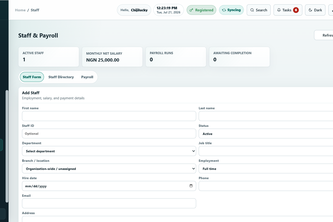
The company appears to be a single-person project named TransInvent Business Management System, self-described as a software suite for managing multi-tier inventory, procurement pipelines, business financials, staff and payroll, and localized POS operations. The author states this is a personal project that evolved into a scalable system, but there is no evidence of revenue, customers, or adoption.
What changed: The author describes evolving the scope from a personal workflow tool to a potentially scalable system for enterprise use, though no evidence supports this transition or any actual deployment.
Single most important open question: Is there any evidence of real-world usage, customer feedback, or traction beyond the author's own testing and self-reported claims?
What The Product Actually Is
The description states that TransInvent is a comprehensive, organization-based software suite built to manage:
- Multi-tier inventory
- Procurement pipelines
- Business financials
- Staff and payroll
- Localized POS operations
It includes features such as:
- End-to-end stock tracking
- Precision value preservation
- Multi-tenant organization isolation
- Role-based authorizations
- Offline-first cloud synchronization
- POS operational boundaries
- Unified procurement & finance ledger
The system is built using CSS, Electron, HTML5, JavaScript, JSON, Node.js, PostgreSQL, React, SQLite, TypeScript, and is described as a personal project that has evolved in scope.
Not evidenced: No information on actual product functionality beyond feature claims. No evidence of deployment, user testing, or real-world use.
Positioning & Claim Evolution
The author states:
- The system was originally built to streamline their own workflow
- It was then scaled up to be potentially usable by others
- The goal is to solve real-world problems, particularly data loss due to manual paperwork and delays in report compilation
The positioning appears to be a business management platform for small-to-medium enterprises (SMEs) or multi-location organizations, with an emphasis on inventory control, procurement, and financial tracking.
Not evidenced: No evidence of market research, customer interviews, or competitive positioning. The claim that it "can be scalable" is self-reported without demonstration.
Target Customer & ICP
The description states the system is built for organizations managing multi-tier inventory, including:
- Bulk warehouses
- Central stores
- Branch-level transfers
- Consumer-facing sales points
It also mentions support for:
- Staff and payroll
- Localized POS operations
Inferred: The target customer likely includes businesses with multiple locations or complex supply chains, but no explicit ICP is defined.
Not evidenced: No evidence of actual customers, user personas, or market segmentation. No indication of whether the author has identified specific industries or business sizes.
Business Model & Pricing Evidence
The description does not include any information about:
- Revenue model
- Pricing structure
- Monetization strategy
- Subscription plans or licensing models
Not evidenced: No evidence of a business model, pricing, or monetization approach. The system is described as a personal project with no indication of commercial intent.
Technical & Delivery Signals
The system is built using:
- Frontend: React, HTML5, CSS, JavaScript
- Backend: Node.js, PostgreSQL, SQLite
- Desktop App: Electron
- Other tech: TypeScript, JSON
It includes features like:
- Offline-first cloud synchronization
- Multi-tenant data isolation
- POS client integration
- Role-based access control
Inferred: The system is a desktop application with web-like capabilities, built for offline use and multi-location support.
Not evidenced: No evidence of scalability, performance metrics, or production deployment. No mention of API exposure, third-party integrations, or data migration tools.
Traction & Maturity Signals
The author states:
- The system was initially a personal project
- It was later scaled up to be potentially scalable
- They have tested the system and seen it solve their original problem
- They are proud of its functionality
There is no evidence of:
- Real-world usage
- Customer feedback or testimonials
- Adoption metrics
- Product maturity (e.g., release history, bug fixes, feature updates)
Not evidenced: No traction data, user base, or product evolution beyond the author’s own testing.
Competitive Context
The description does not mention any competitors or market context. It is unclear whether TransInvent is positioned against:
- ERP systems
- Inventory management platforms
- POS solutions
- Cloud-based business tools
Not evidenced: No competitive analysis, market positioning, or awareness of existing tools in the space.
Open Questions & Risks
- Single-person development: The system is built by one person (Chijilucky Ibe), raising questions about scalability and long-term maintenance.
- No commercial traction: No evidence of revenue, customers, or product adoption beyond personal use.
- Unverified claims: All features and capabilities are self-reported without external validation.
- Limited technical depth: The system is described as a desktop app with offline capabilities, but no information on data handling, security, or performance under load.
- AI dependency: The author mentions challenges with AI subscriptions, suggesting reliance on tools that may not be sustainable.
Inferred: The lack of evidence for real-world usage or product maturity raises concerns about viability and commercial potential.
Questions the description leaves open
- What specific business problems are you solving, and how do you know they exist?
- Have you tested the system with any actual users or organizations?
- What is your plan for monetization and scaling beyond a single developer?
- How does the system handle data security, especially in multi-tenant environments?
- Are there any third-party integrations or APIs planned?
- What are the technical limitations of the current architecture that could affect scalability?
Overall Assessment
Not evidenced: No evidence of revenue, customer traction, or commercial viability.
The system is described as a personal project with potential for scalability, but there is no indication of:
- Product-market fit
- Customer validation
- Revenue model
- Technical maturity
- Market positioning
This is a self-reported idea with no external corroboration. The author’s claims are not substantiated by any data, and the system has not been demonstrated in real-world use.
Confidence level: Low — based entirely on self-reporting with no external validation or traction evidence.
User Stories BotA demo video on every pull request
Get a demo video on every new feature
GitHub App that watches your pull requests and records a narrated, captioned demo.
Save time on demo prep and make informed decisions faster with a video walkthrough of every new feature.
Source
Submitted to the OpenAI 2026 hackathon on Devpost. Project home on Devpost. Back to the full gallery on Devpost.
This competitive analysis was produced by top-founders.com (opens in a new tab)
Generated by a language model from this project's public Devpost page — its tagline, the author's own write-up and any built-with tags listed there — as captured in August 2026. Short quotations are the author's words. It is an opinion on the idea as a business, not on the people behind it, and it reflects the description as published then. If the project has moved on, request a correction below. The analysis is not independent research and contains no verified traction, revenue or customer data.
An independent guide by KFG International LLC — not affiliated with, endorsed by, or connected to Devpost or OpenAI.