

Archive position — measured, not model output
0 likes on Devpost
2,263 of the 7,850 archived projects have more likes, and 5,587 share exactly 0 — so this project's #7,214 place in the like-ranked listing is a tie-break inside that group, not a ranking.
Projects (log scale)
Likes on Devpost. ▲ marks this project's group.
Show the figures
| Likes | Projects | Share of archive |
|---|---|---|
| 0 | 5,587 | 71.2% |
| 1 | 1,758 | 22.4% |
| 2 | 284 | 3.6% |
| 3–4 | 132 | 1.7% |
| 5–9 | 75 | 1.0% |
| 10+ | 14 | 0.2% |
 User Stories BotA demo video on every pull request
Get a demo video on every new feature
GitHub App that watches your pull requests and records a narrated, captioned demo.
Save time on demo prep and make informed decisions faster with a video walkthrough of every new feature.
Executive Summary
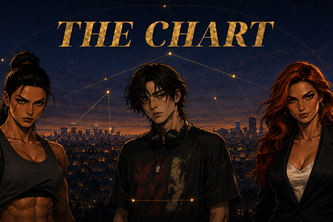
The chart is a self-reported narrative relationship game built for the OpenAI 2026 hackathon. The author states it uses GPT-5.6 to analyze player-created relationship data and generate insights at key moments, without replacing or generating story content. It is described as an experimental project with no evidence of revenue, customers or traction.
The single most important open question: What is the actual commercial potential of this concept beyond a hackathon prototype?
What The Product Actually Is
The description states that The Chart is:
- A narrative relationship game
- Built around character connections and player choices
- Uses GPT-5.6 to analyze relationship evidence created by players
- Generates "Pattern Discovery" insights at key moments
- Does not create new story content or replace writer intent
- Integrates AI into an existing relationship system that tracks:
- Relationship changes
- Relationship history
- Unlocked Intel
- Route progress
- Completed narrative moments
The author claims the game uses Codex for development and debugging, and that Chart Intelligence is integrated directly into the existing UI.
Positioning & Claim Evolution
The description states the project's positioning:
- "A narrative relationship game where AI helps players discover patterns in the relationships they create through their choices"
- The goal is to help players understand relationships they have already built
- Not to generate new story content or replace human-authored experiences
- AI is described as a tool for reflection, not creation
The author claims this project explores "a different idea" from typical narrative games where choice meaning is often hidden.
Target Customer & ICP
Not evidenced. The description does not state who the target customer is, what their needs are, or how they would engage with the product.
Business Model & Pricing Evidence
Not evidenced. The description does not mention any pricing model, monetization strategy, or business model.
Technical & Delivery Signals
The description states:
- Built with: codex, gpt-5.6, html, javascript, narrative, node.js, openai
- Uses GPT-5.6 for AI analysis of relationship evidence
- Integrates Chart Intelligence into existing relationship system
- Tracks relationship changes, history, unlocked Intel, route progress, and completed moments
- Has fallback content when AI service is unavailable
- Uses Codex throughout development for code inspection, debugging, and implementation
Traction & Maturity Signals
Not evidenced. The description states this was a hackathon submission (OpenAI 2026) and does not mention any traction, revenue, customers, or adoption.
Competitive Context
Not evidenced. The description does not mention competitors or the broader market context for narrative relationship games or AI-enhanced storytelling tools.
Open Questions & Risks
- This is a self-reported hackathon submission with no evidence of traction or commercial viability
- The author states GPT-5.6 is used, but this version is not publicly confirmed to exist
- No evidence of any business model, pricing, or monetization strategy
- No evidence of target customer or market demand
- The project appears to be experimental and not production-ready
- The team size is listed as 1 person (ava noooo)
Questions the description leaves open
- What specific market need does this product address that isn't already met by existing tools?
- How would you monetize this concept beyond a hackathon prototype?
- What are the actual user engagement metrics or feedback from any early users?
- Can you demonstrate how the AI insights actually improve player experience or retention?
- What is your plan for scaling beyond a single-person development effort?
- How do you intend to validate that players find value in the pattern discovery feature?
Overall Assessment
Not evidenced. The description does not provide any information about valuation, funding rounds, or investment potential. This appears to be an experimental hackathon project with no commercial evidence. The author states it was submitted to a hackathon and there is no indication of any business traction or market validation.
User Stories BotA demo video on every pull request
Get a demo video on every new feature
GitHub App that watches your pull requests and records a narrated, captioned demo.
Save time on demo prep and make informed decisions faster with a video walkthrough of every new feature.
Source
Submitted to the OpenAI 2026 hackathon on Devpost. Project home on Devpost. Back to the full gallery on Devpost.
This competitive analysis was produced by top-founders.com (opens in a new tab)
Generated by a language model from this project's public Devpost page — its tagline, the author's own write-up and any built-with tags listed there — as captured in August 2026. Short quotations are the author's words. It is an opinion on the idea as a business, not on the people behind it, and it reflects the description as published then. If the project has moved on, request a correction below. The analysis is not independent research and contains no verified traction, revenue or customer data.
An independent guide by KFG International LLC — not affiliated with, endorsed by, or connected to Devpost or OpenAI.