

Archive position — measured, not model output
0 likes on Devpost
2,263 of the 7,850 archived projects have more likes, and 5,587 share exactly 0 — so this project's #7,152 place in the like-ranked listing is a tie-break inside that group, not a ranking.
Projects (log scale)
Likes on Devpost. ▲ marks this project's group.
Show the figures
| Likes | Projects | Share of archive |
|---|---|---|
| 0 | 5,587 | 71.2% |
| 1 | 1,758 | 22.4% |
| 2 | 284 | 3.6% |
| 3–4 | 132 | 1.7% |
| 5–9 | 75 | 1.0% |
| 10+ | 14 | 0.2% |
 User Stories BotA demo video on every pull request
Get a demo video on every new feature
GitHub App that watches your pull requests and records a narrated, captioned demo.
Save time on demo prep and make informed decisions faster with a video walkthrough of every new feature.
Executive Summary
What the company appears to be
TB-303-vibe is a self-reported web-based emulator of the Roland TB-303 bass synthesizer, built with Tone.js and JavaScript. It includes a 16-step sequencer, Moog and Monotron companions, and effects. The project was developed by one person (Brett Cooper) in collaboration with AI coding partners.
What changed
The author states that the project emerged from a desire to democratize access to the TB-303 sound through a browser-based tool. It is described as an experimental, creative endeavor submitted to a hackathon.
Single most important open question
Is there any evidence of user adoption, revenue, or commercial traction beyond the author’s self-reported description?
What The Product Actually Is
The description states that TB-303-vibe is a web-based Roland TB-303 emulator, built using Tone.js and Vanilla JavaScript, with support for Web MIDI API. It features:
- A 16-step sequencer modeled after the original hardware
- Slides & accents that replicate the analog behavior of the TB-303
- Moog Grandmother drone synth, KORG Monotron, and KO-40 Micro Sampler as companion instruments
- Stompbox-style effects
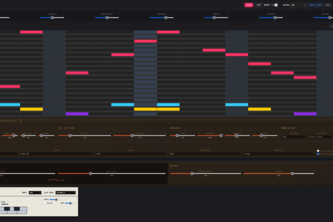
- A piano-roll grid sequencer replacing the original hardware’s button-based interface
It is described as a mini studio rack within a browser, with support for physical MIDI controllers.
Inference The product is a software tool aimed at musicians or hobbyists interested in recreating acid house sounds. It is not a commercial product but a prototype or experimental project.
Positioning & Claim Evolution
The author claims that TB-303-vibe is an effort to democratize access to the iconic TB-303 sound, which they describe as rare and expensive in hardware form. The project is positioned as a browser-based alternative, accessible to anyone with a web browser.
It also positions itself as a creative experiment, combining human intuition with AI coding partners (Google Gemini 3.1 Pro, OpenAI Sol 5.6, CodeX) to build a complex audio tool using only JavaScript and Tone.js.
Claim
The project is a “human-AI collaborative effort” that brings together musical creativity and advanced AI tools.
Inference This positioning reflects an experimental or hackathon-style approach rather than a commercial product.
Target Customer & ICP
The description does not explicitly define a target customer or ideal customer profile (ICP). However, it implies the following:
- Musicians or producers interested in acid house and techno sounds
- Hobbyists or enthusiasts who want to experiment with classic synthesizer emulators
- Users who prefer browser-based tools over desktop software or hardware
Inference The target audience is likely niche — those with an interest in retro electronic music production, particularly the TB-303 sound.
Business Model & Pricing Evidence
There is no evidence of a business model or pricing structure. The project is described as a hackathon submission and not a commercial product.
Claim
The author states that the tool is accessible via web browser, implying no cost to use.
Inference No monetization strategy is evident from the description.
Technical & Delivery Signals
The author reports:
- Built with Tone.js, Vanilla JavaScript, and Web Audio API
- Uses a custom grid-based sequencer without heavy frontend frameworks
- Integrated Web MIDI API for physical keyboard/controller support
- AI coding partners (Google Gemini 3.1 Pro, OpenAI Sol 5.6, CodeX) assisted in development
Claim
The project was built using human-AI collaboration.
Inference Technical execution appears to be focused on audio fidelity and browser compatibility.
Traction & Maturity Signals
There is no evidence of traction or user adoption beyond the author’s own account. No data on:
- Number of users
- Downloads or usage metrics
- Revenue or monetization
- Customer feedback or reviews
Claim
The project was submitted to a hackathon.
Inference This suggests it is in an early, experimental phase with no commercial traction.
Competitive Context
The description does not mention competitors. However, the TB-303 emulator space includes:
- Hardware units (Roland TB-303)
- Software emulators (e.g., plugins for DAWs)
- Browser-based tools (e.g., web-based synthesizers)
Inference The project is likely a niche entry in a competitive and well-established market, with no clear differentiation stated.
Open Questions & Risks
- No commercial traction or revenue — the product is described as a hackathon submission
- Unverified claims — all information is self-reported and unverified
- Limited team size — only one developer (Brett Cooper) involved
- Experimental nature — not a product, but a prototype or creative experiment
- No monetization strategy — no indication of how the project might be commercialized
Inference The lack of evidence for adoption or business model raises questions about scalability and viability as a commercial offering.
Questions the description leaves open
- What is the intended path to monetization, if any?
- Are there any users or early adopters beyond the author?
- How does this project differ from existing TB-303 emulators in the market?
- What are the long-term plans for development and maintenance?
- Is there any interest from the broader music or developer community?
Overall Assessment
The description states that TB-303-vibe is a hackathon submission and not a commercial product. There is no evidence of revenue, customers, or traction.
Assessment Not evidenced as a viable investment or partnership opportunity at this time. The project appears to be an experimental prototype with no clear path to commercialization or user adoption.
User Stories BotA demo video on every pull request
Get a demo video on every new feature
GitHub App that watches your pull requests and records a narrated, captioned demo.
Save time on demo prep and make informed decisions faster with a video walkthrough of every new feature.
Source
Submitted to the OpenAI 2026 hackathon on Devpost. Project home on Devpost. Back to the full gallery on Devpost.
This competitive analysis was produced by top-founders.com (opens in a new tab)
Generated by a language model from this project's public Devpost page — its tagline, the author's own write-up and any built-with tags listed there — as captured in August 2026. Short quotations are the author's words. It is an opinion on the idea as a business, not on the people behind it, and it reflects the description as published then. If the project has moved on, request a correction below. The analysis is not independent research and contains no verified traction, revenue or customer data.
An independent guide by KFG International LLC — not affiliated with, endorsed by, or connected to Devpost or OpenAI.