

Archive position — measured, not model output
0 likes on Devpost
2,263 of the 7,850 archived projects have more likes, and 5,587 share exactly 0 — so this project's #6,792 place in the like-ranked listing is a tie-break inside that group, not a ranking.
Projects (log scale)
Likes on Devpost. ▲ marks this project's group.
Show the figures
| Likes | Projects | Share of archive |
|---|---|---|
| 0 | 5,587 | 71.2% |
| 1 | 1,758 | 22.4% |
| 2 | 284 | 3.6% |
| 3–4 | 132 | 1.7% |
| 5–9 | 75 | 1.0% |
| 10+ | 14 | 0.2% |
 User Stories BotA demo video on every pull request
Get a demo video on every new feature
GitHub App that watches your pull requests and records a narrated, captioned demo.
Save time on demo prep and make informed decisions faster with a video walkthrough of every new feature.
Executive Summary
What the company appears to be
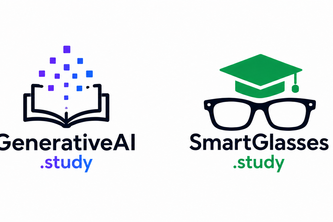
The project described by the author is a self-contained, solo-built educational platform combining AI-generated learning content with wearable technology (Meta smart glasses) for children. It consists of two components: GenerativeAI.study, a web application that generates age-appropriate study material and flashcards; and SmartGlasses.study, an Android app that delivers audio-based quizzes through Meta smart glasses.
What changed
This is a hackathon submission, not a product in production or with any commercial traction. The author describes building the full stack solo within a short timeframe using AI tools like Codex and GPT-5.6. No revenue, customers, or adoption data are provided.
Single most important open question
Is there evidence of any real-world usage or testing beyond the author’s own children? The description states no commercial deployment or user feedback exists.
Note: This analysis is based solely on the self-reported, unverified account provided by the author. No external verification, funding history, customer data, or performance metrics are available.
What The Product Actually Is
- The description states that GenerativeAI.study is a web application where users can sign in, select a subject, enter a topic, and generate age-appropriate facts, flashcards, and quizzes.
- SmartGlasses.study is an Android app that connects to Meta smart glasses to deliver audio-based quizzes via voice interaction.
- The two components are connected through a shared API.
- The system uses Azure cloud services for data storage (Table and Blob) and OpenAI for generating educational content.
- Codex and GPT-5.6 were used throughout development as a co-developer.
Inference: The product is described as a proof-of-concept or prototype built in a hackathon setting, not a commercial offering.
Positioning & Claim Evolution
- The author claims the platform helps children explore subjects beyond the classroom in a “personal, accessible, and fun” way.
- It aims to turn idle moments (e.g., walking, waiting) into learning opportunities through hands-free revision.
- The positioning is centered on combining AI with wearable tech for flexible, engaging study experiences.
- There is no evidence of prior versions or iterative improvements beyond this single project.
Claim vs Fact: These are claims about intent and user experience. No data supports whether users actually find it “fun” or “accessible.”
Target Customer & ICP
- The target customer is described as children aged 10 and 13.
- The platform is intended for learners who want to study outside of traditional classroom settings.
- Parents are also implied as stakeholders, given the author’s motivation was rooted in helping his own kids.
Not evidenced: No data on broader age groups, school systems, or educational institutions. No evidence of segmentation beyond age and parental involvement.
Business Model & Pricing Evidence
- The description does not mention any pricing model or monetization strategy.
- There is no indication of subscriptions, freemium tiers, or B2B sales.
- The platform appears to be built for personal use or internal testing only.
Inference: If this were a commercial product, there would likely be some mention of how it generates value or revenue — none exists in the self-report.
Technical & Delivery Signals
- Built by one person (Lee Englestone) over a short hackathon timeframe.
- Technologies used include .NET, ASP.NET MVC, Android Studio, Kotlin, Azure, Meta Wearables Device Access Toolkit, and OpenAI APIs.
- The author used Codex and GPT-5.6 extensively for architecture, coding, and debugging.
- Components include web app, mobile app, shared API, cloud storage, and wearable integration.
Inference: This is a solo-built prototype with AI-assisted development — not a scalable or enterprise-grade solution.
Traction & Maturity Signals
- No evidence of users, customers, or adoption beyond the author’s own children.
- No mention of beta testing, user feedback, or product iteration.
- The platform was submitted to a hackathon and has no live deployment.
- Domain names are registered but redirect to a Git repository.
Absence of evidence: There is no indication of traction, growth, or market validation.
Competitive Context
- No mention of competitors or existing solutions in the educational AI or wearable learning space.
- The author does not reference similar platforms or tools that might compete with this idea.
- No positioning relative to other edtech or smart-glasses-based learning products.
Not evidenced: No competitive landscape or differentiation strategy described.
Open Questions & Risks
- Solo development in a short timeframe raises concerns about scalability, maintainability, and long-term viability.
- The use of AI tools like Codex and GPT-5.6 may indicate limited human oversight or control over the final product quality.
- No evidence of real-world testing or feedback from users other than the author’s children.
- Lack of commercial traction, revenue model, or customer base suggests no clear path to monetization.
- The project is presented as a hackathon submission — not a business in progress.
Inference: Without external validation or product-market fit, this remains a concept rather than a viable business.
Questions the description leaves open
- What specific feedback did you get from your children during testing?
- Have you tested the system with other users outside of your family?
- How do you plan to scale beyond one developer and one prototype?
- Are there any plans for monetization or commercial partnerships?
- What are the technical limitations of using Meta smart glasses in a learning context?
- Is there a roadmap for integrating more advanced AI features or expanding to other age groups?
Overall Assessment
- Not evidenced: No financials, traction, or business metrics are available.
- The project is described as a hackathon submission with no commercialization strategy.
- It lacks any indication of market demand, user engagement, or product-market fit.
- The author’s solo effort and use of AI tools suggest a prototype, not a scalable venture.
Assessment: This is an unproven concept with no evidence of traction, revenue, or customer adoption. Not suitable for investment or partnership at this stage.
User Stories BotA demo video on every pull request
Get a demo video on every new feature
GitHub App that watches your pull requests and records a narrated, captioned demo.
Save time on demo prep and make informed decisions faster with a video walkthrough of every new feature.
Source
Submitted to the OpenAI 2026 hackathon on Devpost. Project home on Devpost. Back to the full gallery on Devpost.
This competitive analysis was produced by top-founders.com (opens in a new tab)
Generated by a language model from this project's public Devpost page — its tagline, the author's own write-up and any built-with tags listed there — as captured in August 2026. Short quotations are the author's words. It is an opinion on the idea as a business, not on the people behind it, and it reflects the description as published then. If the project has moved on, request a correction below. The analysis is not independent research and contains no verified traction, revenue or customer data.
An independent guide by KFG International LLC — not affiliated with, endorsed by, or connected to Devpost or OpenAI.