

Archive position — measured, not model output
5 likes on Devpost
54 of the 7,850 archived projects have more likes, and 35 share exactly 5 — so this project's #84 place in the like-ranked listing is a tie-break inside that group, not a ranking.
Projects (log scale)
Likes on Devpost. ▲ marks this project's group.
Show the figures
| Likes | Projects | Share of archive |
|---|---|---|
| 0 | 5,587 | 71.2% |
| 1 | 1,758 | 22.4% |
| 2 | 284 | 3.6% |
| 3–4 | 132 | 1.7% |
| 5–9 | 75 | 1.0% |
| 10+ | 14 | 0.2% |
 User Stories BotA demo video on every pull request
Get a demo video on every new feature
GitHub App that watches your pull requests and records a narrated, captioned demo.
Save time on demo prep and make informed decisions faster with a video walkthrough of every new feature.
Executive Summary
What the company appears to be
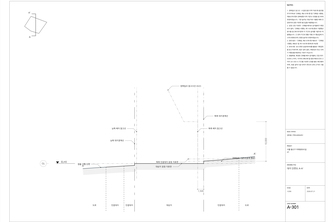
Skima is an AI-native architectural CAD engine that enables AI agents to understand architects’ design intent and create/edit architectural drawings using professional conventions, informed by real site conditions and building codes. It is a self-reported tool built for use in South Korea, integrating GPT-5.6 with a structured workflow of generation, validation, repair, and approval.
What changed
The project description indicates a shift from conventional generative AI outputs (images/text) to editable CAD drawings that follow architectural standards and incorporate regulatory constraints. It introduces an AI-driven design loop that includes site analysis, proposal generation, validation, and revision handling via PDF markups.
Single most important open question
Is there evidence of any real-world usage or adoption by architects or firms? The description states no revenue, customers, or traction data are available beyond the author's own account.
What The Product Actually Is
The description states that Skima is an AI-native architectural CAD engine. It integrates GPT-5.6 with a structured design workflow involving:
- Site data collection from Korean addresses (geospatial, parcel boundaries, land-use info)
- Regulatory reference criteria translated into computational rules and geometric constraints
- Generation of editable CAD drawings using validated proposals
- Validation of geometry, area, overlaps, access relationships, and building coverage ratio
- Revision handling through PDF markups interpreted by GPT-5.6
It uses technologies such as canvaskit, three.js, react, express.js, postgresql, and openai (specifically GPT-5.6), among others.
Confidence Low — this is a self-reported technical architecture without evidence of deployment or usage.
Positioning & Claim Evolution
The description positions Skima as an AI-native CAD engine that bridges the gap between generative AI outputs and professional architectural practice by enabling editable, rule-informed CAD drawings. It claims to:
- Translate design intent into editable CAD objects
- Visualize regulations spatially (e.g., building coverage ratio, daylight setbacks)
- Produce professional architectural drawings with layers, line weights, hatches, dimensions, etc.
- Turn PDF markups into validated CAD revisions
The author also states that Skima is built for use in South Korea and integrates local zoning laws and ordinances.
Confidence Low — all claims are self-reported and lack independent verification or demonstration of traction.
Target Customer & ICP
The description implies the primary user is an architect working on site planning in South Korea. The system is designed to:
- Understand architectural design intent
- Work within real site conditions and building codes
- Generate and revise editable CAD drawings
There is no mention of other stakeholders such as engineers, developers, or clients.
Confidence Low — no evidence of customer personas, user interviews, or market segmentation beyond the author’s own account.
Business Model & Pricing Evidence
The description does not provide any information about pricing models, monetization strategies, or business model assumptions. It also lacks details on whether Skima is intended for individual use, firm licensing, or marketplace integration.
Confidence Not evidenced — no commercial or financial data provided.
Technical & Delivery Signals
Skima uses a multi-toolchain approach involving:
- GPT-5.6 as the core AI agent
- MCP-based architectural design toolchain
- Codex for structuring laws and ordinances into computable rules
- CanvasKit, Three.js, React, PostgreSQL for rendering and storage
- PDF viewer with markup interpretation capabilities
It implements a generate–validate–repair–approve loop to ensure CAD consistency and compliance.
Confidence Medium — the technical stack is described in detail but not independently verified or tested in production.
Traction & Maturity Signals
The description states that Skima was built for the OpenAI 2026 hackathon, suggesting it is a prototype or proof-of-concept. There is no evidence of:
- Revenue
- Customers
- Product adoption
- Market traction
- Iteration history or product maturity beyond its initial development phase
Confidence Not evidenced — this is a self-reported project with no external validation.
Competitive Context
The description does not mention any competitors or existing solutions in the architectural AI/CAD space. It does not describe how Skima compares to other tools or platforms used by architects for design, planning, or code compliance.
Confidence Not evidenced — no competitive analysis or market positioning provided.
Open Questions & Risks
- Unverified claims: All features and capabilities are self-reported without external validation.
- Limited scope: The system is built for South Korea only; no indication of scalability or international expansion plans.
- Prototype nature: Built for a hackathon, not yet proven in real-world use.
- Dependency on AI hallucination risk: Reliance on GPT-5.6 for design decisions introduces potential inaccuracies unless tightly controlled.
- No commercialization path: No mention of monetization, partnerships, or go-to-market strategy.
Confidence High — these are logical inferences from the lack of evidence and self-reporting nature of the description.
Questions the description leaves open
- What is the current stage of development? Is this a working prototype or a pre-alpha version?
- Are there any early users or pilot partners in South Korea?
- How does Skima handle jurisdictional differences beyond South Korea?
- What are the specific validation rules used for different types of building codes and zoning laws?
- Has the team tested the system with actual architects or firms?
- Is there a plan to expand beyond site planning into full architectural design workflows?
- What is the long-term vision for monetization or product commercialization?
Overall Assessment
Assessment Not ready for investment or partnership.
The description presents Skima as a conceptual and technical prototype built for a hackathon, with no evidence of traction, revenue, customers, or validated market demand. While the idea has potential in the intersection of AI and architectural design, there is insufficient evidence to assess its viability or scalability at this stage.
Confidence Very low — this is a self-reported project without any external corroboration or demonstration of real-world utility.
User Stories BotA demo video on every pull request
Get a demo video on every new feature
GitHub App that watches your pull requests and records a narrated, captioned demo.
Save time on demo prep and make informed decisions faster with a video walkthrough of every new feature.
Source
Submitted to the OpenAI 2026 hackathon on Devpost. Project home on Devpost. Back to the full gallery on Devpost.
This competitive analysis was produced by top-founders.com (opens in a new tab)
Generated by a language model from this project's public Devpost page — its tagline, the author's own write-up and any built-with tags listed there — as captured in August 2026. Short quotations are the author's words. It is an opinion on the idea as a business, not on the people behind it, and it reflects the description as published then. If the project has moved on, request a correction below. The analysis is not independent research and contains no verified traction, revenue or customer data.
An independent guide by KFG International LLC — not affiliated with, endorsed by, or connected to Devpost or OpenAI.