

Archive position — measured, not model output
0 likes on Devpost
2,263 of the 7,850 archived projects have more likes, and 5,587 share exactly 0 — so this project's #6,392 place in the like-ranked listing is a tie-break inside that group, not a ranking.
Projects (log scale)
Likes on Devpost. ▲ marks this project's group.
Show the figures
| Likes | Projects | Share of archive |
|---|---|---|
| 0 | 5,587 | 71.2% |
| 1 | 1,758 | 22.4% |
| 2 | 284 | 3.6% |
| 3–4 | 132 | 1.7% |
| 5–9 | 75 | 1.0% |
| 10+ | 14 | 0.2% |
 User Stories BotA demo video on every pull request
Get a demo video on every new feature
GitHub App that watches your pull requests and records a narrated, captioned demo.
Save time on demo prep and make informed decisions faster with a video walkthrough of every new feature.
Executive Summary
The description states that "Restaurant Menu" is a self-contained digital menu platform built as a prototype for a hackathon. The author describes it as a mobile-first solution with an admin studio for managing menus, supporting customization and live previews. It uses Bun as runtime and vanilla web technologies (HTML, CSS, JS) to deliver a lightweight experience. The system is designed to be resilient—keeping menus available even when the admin system goes down.
The project appears to be a proof-of-concept or prototype with no evidence of commercial traction, revenue, customers, or product-market fit beyond its author's own account. It is not yet a SaaS offering but is described as evolving toward one.
Single most important open question
Is there any evidence that the author has begun building out the multi-tenant SaaS version described in "What’s Next"? If not, this remains an unproven concept with no demonstrated path to monetization or customer adoption.
What The Product Actually Is
The description states:
- A mobile-first digital restaurant menu
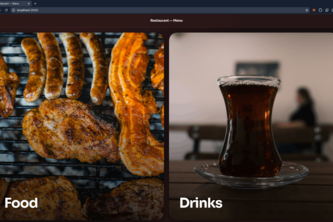
- Includes main categories, subcategories, and product detail views
- Supports dietary, allergen, and popular-item tags
- Optional calorie information
- Responsive light and dark themes
- Custom colors and typography
- Accessible, touch-friendly interface
- Admin studio for managing business info, themes, fonts, tags, categories, and products
- Live preview feature using
postMessageto sync editor state with menu interface - Data driven by a single structured JSON document
- Server-side validation of menu fields before saving
- 36 Bun tests covering various aspects of functionality
Inferred from the description:
- The product is built with vanilla web technologies (HTML, CSS, JS) and Bun.
- It uses atomic file renaming for safe updates to prevent corruption.
- The admin interface allows real-time previewing without saving each keystroke.
Not evidenced:
- No actual deployed menus or live systems
- No customer data or usage metrics
- No pricing model or monetization strategy
Positioning & Claim Evolution
The description states:
- The platform aims to replace slow, difficult-to-navigate PDF-based QR menus.
- It seeks to make digital menus feel like part of the restaurant’s brand.
- It emphasizes ease of management without requiring code knowledge.
Inferred from the description:
- The positioning is toward restaurants seeking modern, customizable, and resilient menu solutions.
- The evolution path described suggests a move from prototype to multi-tenant SaaS platform.
Not evidenced:
- No market research or competitive differentiation
- No claims about user acquisition, retention, or conversion rates
- No evidence of prior customer feedback or product iteration
Target Customer & ICP
The description states:
- The primary users are restaurant owners who want to manage menus easily.
- The platform supports customization for branding purposes.
Inferred from the description:
- The target is small-to-medium-sized restaurants looking for a digital menu solution.
- It may appeal to those wanting to avoid PDF-based QR menus and prefer a branded, easy-to-update system.
Not evidenced:
- No segmentation or persona development
- No evidence of customer interviews or user research
- No indication of whether the author has identified specific restaurant types or verticals
Business Model & Pricing Evidence
The description states:
- The next step is turning the prototype into a multi-tenant SaaS platform.
- Features include authentication, workspaces, draft/published versions, revision history, rollback, image storage, and CDN-backed public menus.
Inferred from the description:
- The business model appears to be SaaS with potential for subscription-based pricing.
- It may involve tiered offerings based on features or number of locations.
Not evidenced:
- No pricing structure
- No revenue model details
- No evidence of pilot customers or early adopters
- No indication of monetization strategy beyond “SaaS”
Technical & Delivery Signals
The description states:
- Built with Bun (runtime, dev server, package manager, test runner)
- Uses vanilla HTML, CSS, JavaScript for frontend
- Single structured JSON document drives the menu
- Server provides static files and GET/PUT API
- Live preview via postMessage to avoid duplicate implementations
- Atomic file renaming for safe updates
- 36 tests with 329 assertions
Inferred from the description:
- The architecture is lightweight and performance-focused.
- Validation occurs both client-side and server-side.
- Accessibility and responsive design are considered core features.
Not evidenced:
- No evidence of scalability or infrastructure plans
- No deployment or hosting details
- No production readiness or monitoring systems described
Traction & Maturity Signals
The description states:
- Submitted to the OpenAI 2026 hackathon.
- Prototype built in a short timeframe (implied by hackathon context).
- Next step is multi-tenant SaaS platform.
Inferred from the description:
- The project is at an early stage, likely pre-product-market fit.
- It has not yet demonstrated real-world usage or adoption.
Not evidenced:
- No revenue data
- No customer base
- No product usage metrics
- No evidence of product iteration or feedback loops
Competitive Context
The description states:
- Most QR menus are PDF-based and feel slow and difficult to navigate.
- The goal is to improve upon existing offerings by making menus more usable and customizable.
Inferred from the description:
- The competitive landscape includes traditional PDF QR menu platforms.
- There may be other digital menu tools, but no specific names or market positioning are given.
Not evidenced:
- No competitor analysis
- No pricing comparison data
- No evidence of market size or TAM
- No differentiation strategy against existing players
Open Questions & Risks
The description states:
- The project is currently a prototype.
- It is described as evolving into a multi-tenant SaaS platform.
Inferred from the description:
- Risk of over-engineering or misalignment with actual customer needs.
- Lack of traction or validation makes commercial viability uncertain.
- The author is solo, which may limit execution speed and scalability.
- No evidence of product-market fit or user feedback.
Open questions:
- No revenue, customers, or monetization strategy
- No indication of how the author plans to scale beyond a single developer
- No mention of legal, compliance, or data privacy considerations
Questions the description leaves open
- What specific problems do you observe in current QR menu systems that your solution addresses?
- Have you conducted any interviews with restaurant owners or managers about their needs?
- How do you plan to validate demand for this product before building the full SaaS version?
- Are there any existing partnerships or pilot customers you're working with?
- What are the key technical challenges you expect in scaling from prototype to multi-tenant SaaS?
- Do you have a go-to-market strategy, including pricing and sales processes?
- How do you intend to handle data migration for restaurants currently using PDF-based menus?
- What is your timeline for launching the SaaS version?
Overall Assessment
The description states:
- The project is a hackathon submission.
- It is described as evolving into a multi-tenant SaaS platform.
Inferred from the description:
- This is an early-stage idea with no demonstrated traction or commercial viability.
- The author has technical capability but lacks evidence of product-market fit or customer validation.
Not evidenced:
- No revenue, ARR, or headcount
- No customer data or testimonials
- No competitive analysis or market positioning
- No financial projections or funding history
Assessment Not ready for investment or partnership. This is a concept with strong technical execution but no evidence of commercial traction or validated demand. The author must demonstrate real-world usage, customer feedback, and a clear path to monetization before this becomes a viable opportunity.
User Stories BotA demo video on every pull request
Get a demo video on every new feature
GitHub App that watches your pull requests and records a narrated, captioned demo.
Save time on demo prep and make informed decisions faster with a video walkthrough of every new feature.
Source
Submitted to the OpenAI 2026 hackathon on Devpost. Project home on Devpost. Back to the full gallery on Devpost.
This competitive analysis was produced by top-founders.com (opens in a new tab)
Generated by a language model from this project's public Devpost page — its tagline, the author's own write-up and any built-with tags listed there — as captured in August 2026. Short quotations are the author's words. It is an opinion on the idea as a business, not on the people behind it, and it reflects the description as published then. If the project has moved on, request a correction below. The analysis is not independent research and contains no verified traction, revenue or customer data.
An independent guide by KFG International LLC — not affiliated with, endorsed by, or connected to Devpost or OpenAI.