

Archive position — measured, not model output
2 likes on Devpost
221 of the 7,850 archived projects have more likes, and 284 share exactly 2 — so this project's #505 place in the like-ranked listing is a tie-break inside that group, not a ranking.
Projects (log scale)
Likes on Devpost. ▲ marks this project's group.
Show the figures
| Likes | Projects | Share of archive |
|---|---|---|
| 0 | 5,587 | 71.2% |
| 1 | 1,758 | 22.4% |
| 2 | 284 | 3.6% |
| 3–4 | 132 | 1.7% |
| 5–9 | 75 | 1.0% |
| 10+ | 14 | 0.2% |
 User Stories BotA demo video on every pull request
Get a demo video on every new feature
GitHub App that watches your pull requests and records a narrated, captioned demo.
Save time on demo prep and make informed decisions faster with a video walkthrough of every new feature.
Executive Summary
What the company appears to be
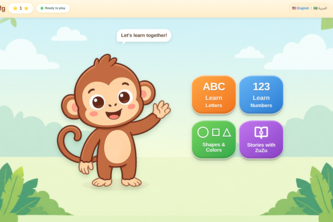
ZuZu is a self-reported bilingual Arabic/English learning app for children ages 3–8, built as a tablet-first interactive experience using AI-generated content and browser-native speech technologies. It claims to offer a fluid, voice-led environment where languages synchronize dynamically, with features including bilingual lessons, AI-generated stories, a safe conversational AI buddy, sticker rewards, and a parent dashboard.
What changed
This is a self-reported project submitted for the OpenAI 2026 hackathon. No prior version or commercial history is evidenced. The description reflects an early-stage prototype or proof-of-concept built in a short timeframe (likely a hackathon) with no evidence of prior traction, funding, or product-market fit.
The single most important open question
Is there any evidence that ZuZu has been tested with real children or parents, and what is the actual adoption or usage behavior of its features?
What The Product Actually Is
- The description states that ZuZu is a bilingual Arabic/English learning app for kids aged 3–8.
- It is designed to be tablet-first, with an interface that dynamically flips between RTL and LTR layouts when toggling languages.
- Key features include:
- Tap-and-hear games
- AI-generated bilingual stories (via OpenAI GPT)
- A safe AI voice buddy using browser-native speech recognition and synthesis
- Sticker rewards for completing quizzes
- Parent dashboard with analytics and profile management
- The app is built using a stack including:
- Frontend: Next.js, React, Tailwind CSS, shadcn/ui
- Backend: Elysia (Bun), oRPC
- Database: PostgreSQL via Drizzle ORM
- Authentication: Clerk
- AI Engine: OpenAI GPT models via Vercel AI SDK
- Speech Core: Browser-native Web Speech API
- The app is described as fully interactive, with no mention of static or passive learning modes.
Inference The product is a prototype built for a hackathon, not a commercial-grade solution. It is not evidenced to have been tested beyond the development team’s own use or limited user feedback.
Positioning & Claim Evolution
- The description states that ZuZu was built to solve a gap in bilingual education — specifically, how traditional apps isolate languages rather than allowing them to flow together naturally.
- It positions itself as an interactive, voice-led learning environment, with a focus on natural language synchronization between Arabic and English.
- The app is described as child-safe, using guardrails to ensure AI responses are educational, encouraging, and appropriate for children.
Inference The positioning reflects a niche market need (bilingual families), but the claim of solving a real-world problem is unverified. The app’s self-described “soft, living jungle toy” tone suggests an emotional or playful framing, not a commercial one.
Target Customer & ICP
- The target customer is bilingual families with children aged 3–8.
- The primary user is the child, using voice-based interaction and visual feedback.
- The secondary user is the parent, who accesses a dashboard to monitor progress and manage settings.
Inference The description does not indicate whether this is a direct-to-consumer (DTC) or B2B model. It also lacks evidence of market research, customer interviews, or early adopter feedback.
Business Model & Pricing Evidence
- No pricing information, monetization strategy, or business model is stated in the description.
- The app is described as free-to-operate, with no mention of subscriptions, in-app purchases, or paid features.
- It is built for a hackathon, suggesting it may be a prototype without commercial intent.
Inference There is no evidence of any revenue model or pricing structure. The app appears to be a proof-of-concept, not a monetized product.
Technical & Delivery Signals
- Built using modern stack:
- Frontend: Next.js 16, React 19, Tailwind CSS v4
- Backend: Elysia (Bun), oRPC
- Database: PostgreSQL with Drizzle ORM
- AI: OpenAI GPT models via Vercel AI SDK
- Speech: Browser-native Web Speech API
- Notable technical decisions:
- Dynamic RTL/LTR layout mirroring using a DirectionSync context
- Child-safe AI guardrails implemented via system prompts
- Local audio caching to avoid latency and cloud costs
Inference The technical stack is modern and well-suited for a prototype. However, no evidence of scalability, performance testing, or production deployment exists.
Traction & Maturity Signals
- No evidence of user traction, customer base, or usage metrics.
- The project was submitted to a hackathon, suggesting it is in an early stage.
- No mention of beta testing, user feedback, or iterative improvements beyond the hackathon.
Inference There are no signs of product-market fit or real-world adoption. It is likely a prototype with no commercial traction.
Competitive Context
- The description does not mention any direct competitors.
- It positions itself as solving a gap in bilingual language learning apps, which may include:
- Traditional apps that separate languages
- Voice-based educational tools
- AI-powered learning platforms for children
Inference No competitive analysis or differentiation strategy is evident. The app’s positioning is not compared to existing solutions.
Open Questions & Risks
- Unverified claims: All features and benefits are self-reported, with no external validation.
- Prototype nature: Built for a hackathon; no evidence of commercial readiness or long-term vision.
- No monetization strategy: No pricing, subscriptions, or revenue model is described.
- Limited testing: No evidence of user testing or feedback from children or parents.
- Technical risks: The use of browser-native speech APIs may not scale or perform consistently across devices.
Inference The project lacks commercial viability indicators. It is a self-contained idea with no demonstrated traction, market validation, or path to monetization.
Questions the description leaves open
- What was the actual user testing done with children and parents?
- How does the app handle edge cases in speech recognition or AI responses?
- Is there any plan for monetization or long-term business sustainability?
- What is the roadmap beyond the hackathon prototype?
- Are there any partnerships or pilot programs with schools, families, or educational institutions?
Overall Assessment
- Not evidenced — no data on revenue, customers, traction, or commercial viability.
- The project is a self-reported hackathon submission, not a product in the market.
- It lacks any evidence of:
- Product-market fit
- Revenue model
- Customer feedback
- Scalability or technical maturity
Inference This is an early-stage idea, not a viable investment or partnership opportunity. It requires further development and validation before any commercial due diligence can proceed.
User Stories BotA demo video on every pull request
Get a demo video on every new feature
GitHub App that watches your pull requests and records a narrated, captioned demo.
Save time on demo prep and make informed decisions faster with a video walkthrough of every new feature.
Source
Submitted to the OpenAI 2026 hackathon on Devpost. Project home on Devpost. Back to the full gallery on Devpost.
This competitive analysis was produced by top-founders.com (opens in a new tab)
Generated by a language model from this project's public Devpost page — its tagline, the author's own write-up and any built-with tags listed there — as captured in August 2026. Short quotations are the author's words. It is an opinion on the idea as a business, not on the people behind it, and it reflects the description as published then. If the project has moved on, request a correction below. The analysis is not independent research and contains no verified traction, revenue or customer data.
An independent guide by KFG International LLC — not affiliated with, endorsed by, or connected to Devpost or OpenAI.