

Archive position — measured, not model output
1 like on Devpost
505 of the 7,850 archived projects have more likes, and 1,758 share exactly 1 — so this project's #1,802 place in the like-ranked listing is a tie-break inside that group, not a ranking.
Projects (log scale)
Likes on Devpost. ▲ marks this project's group.
Show the figures
| Likes | Projects | Share of archive |
|---|---|---|
| 0 | 5,587 | 71.2% |
| 1 | 1,758 | 22.4% |
| 2 | 284 | 3.6% |
| 3–4 | 132 | 1.7% |
| 5–9 | 75 | 1.0% |
| 10+ | 14 | 0.2% |
 User Stories BotA demo video on every pull request
Get a demo video on every new feature
GitHub App that watches your pull requests and records a narrated, captioned demo.
Save time on demo prep and make informed decisions faster with a video walkthrough of every new feature.
Executive Summary
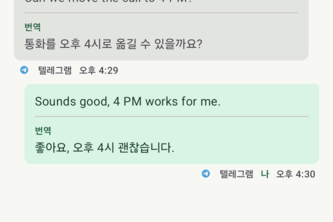
What the company appears to be: ReplyHub is an Android app that aggregates messages from multiple messaging platforms (KakaoTalk, WeChat, LINE, Telegram, SMS, etc.) into a unified inbox. It uses AI to auto-translate incoming messages, draft replies using web search or chat history, and send them back — even by voice.
What changed: The author describes building this in five days using Codex for most of the codebase. It's an experimental project submitted to the OpenAI 2026 hackathon.
Single most important open question: Is there any evidence of traction, revenue, or customer adoption beyond the author’s own use case?
Analysis basis: This report is based entirely on the self-reported description provided by the author. No external verification or historical data is available. All claims are treated as stated by the author and not independently confirmed.
What The Product Actually Is
The description states that ReplyHub is an Android inbox for multiple messengers, capturing notifications at the OS level (NotificationListenerService). It works across 25 messengers without per-app integration.
- It translates messages on arrival using GPT-5.6.
- It drafts replies with context from web search or local message history.
- It supports dictation and sending replies via voice or clipboard deep-linking.
- All data is stored locally in a sandboxed Room database with configurable retention (default 30 days).
- An API key is optional; users can connect their own OpenAI key or use built-in fallback.
Inference: The product appears to be an AI-powered triage-and-reply assistant for messaging apps, not a full replacement for existing messengers. It functions as a layer that enhances user interaction with messages rather than replacing the core messaging experience.
Positioning & Claim Evolution
The author positions ReplyHub as a solution to the fragmentation of messaging across platforms — specifically targeting users who use multiple apps (e.g., KakaoTalk, WeChat, LINE) and face friction in managing them.
- The tagline: “ReplyHub unifies KakaoTalk, WeChat, LINE, Telegram, and SMS into one AI feed that auto-translates messages, drafts replies using web search or chat history, and sends them back — even by voice.”
- The inspiration behind the product is personal: the author lives across five messaging apps daily and wanted to reduce switching between them.
- The claim evolution shows a shift from solving a UX problem (notification fatigue) to leveraging AI for translation, drafting, and automation.
Claim: The author claims this solves a real pain point for multilingual users who manage multiple messengers.
Fact: Not evidenced. This is self-reported usage and intent, not verified adoption or feedback.
Target Customer & ICP
The description implies the target user is someone who uses multiple messaging platforms regularly — particularly those who:
- Use KakaoTalk, WeChat, LINE, Telegram, SMS, etc.
- Are multilingual (e.g., Korean speakers using Chinese contacts via WeChat)
- Want to reduce friction in replying to messages across apps
The author also mentions a specific use case: “I live in five messaging apps” — suggesting the primary user is likely an individual consumer with cross-platform communication needs.
Inference: The ICP seems to be multilingual individuals or professionals who manage conversations across several messengers.
Fact: Not evidenced. No data on actual users, personas, or segmentation beyond the author's personal experience.
Business Model & Pricing Evidence
There is no mention of pricing, monetization strategy, or business model in the description.
- The app supports optional API keys for OpenAI access.
- It includes demo mode and local fallbacks.
- No indication of subscription plans, freemium tiers, or paid features.
Claim: There is no evidence of a defined business model or pricing structure.
Fact: Not evidenced.
Technical & Delivery Signals
The app was built primarily using Codex with a structured workflow:
- The author used tight scoping and subsystem-by-subsystem handoff to Codex.
- Two models were used: gpt-5.6-luna for fast tasks like translation, and gpt-5.6 for reply drafting.
- Asynchronous processing ensures low latency.
- The app uses Android’s NotificationListenerService, Room database, Kotlin, SQLite, Compose UI.
- Multi-agent adversarial code review was conducted with Codex fixing issues and expanding tests.
Inference: The technical stack reflects a modern, AI-integrated Android app built rapidly using AI-assisted development tools.
Fact: Not evidenced. These are self-reported implementation details without external validation.
Traction & Maturity Signals
There is no evidence of traction or user adoption beyond the author’s own use case.
- The project was submitted to a hackathon.
- No mention of downloads, users, revenue, or customer feedback.
- The app includes demo mode for testing purposes, implying it may not yet be in production use.
Claim: The product is functional and tested by the author.
Fact: Not evidenced. No external metrics or usage data are provided.
Competitive Context
The description does not provide any information about competitors or market positioning.
- It doesn’t name similar products or services.
- There’s no discussion of how ReplyHub compares to existing tools for unified messaging or AI reply assistants.
Claim: No competitive landscape is described.
Fact: Not evidenced.
Open Questions & Risks
Several potential risks and open questions emerge from the self-reported description:
- No API access: The app relies on OS-level notification capture, which may not work reliably across all apps or versions.
- AI dependency: Heavy reliance on GPT-5.6 and Codex raises questions about scalability, cost, and robustness.
- Limited scope: It only works for Android and does not support desktop or iOS.
- Unverified traction: No evidence of real-world usage or customer feedback.
- Demo mode: The inclusion of demo mode suggests the product is still experimental.
Inference: The risk profile includes technical fragility, lack of commercial viability, and unproven market demand.
Fact: Not evidenced. These are speculative concerns based on the limited description.
Questions the description leaves open
- How many actual users have you tested this with?
- Have you considered how this would scale beyond a single developer’s use case?
- What is your plan for monetization or commercialization?
- Are there any known compatibility issues with different Android versions or messaging apps?
- Can you provide evidence of performance under real-world conditions (e.g., battery drain, latency)?
- Do you have plans to expand beyond Android or support other platforms like iOS?
Overall Assessment
There is no evidence of a functioning business, revenue, or customer traction. The project appears to be an experimental prototype built in a hackathon environment.
Assessment: Not suitable for investment or partnership at this stage.
Confidence level: Low — based on self-reported description only, with no external validation or proof of traction.
User Stories BotA demo video on every pull request
Get a demo video on every new feature
GitHub App that watches your pull requests and records a narrated, captioned demo.
Save time on demo prep and make informed decisions faster with a video walkthrough of every new feature.
Source
Submitted to the OpenAI 2026 hackathon on Devpost. Project home on Devpost. Back to the full gallery on Devpost.
This competitive analysis was produced by top-founders.com (opens in a new tab)
Generated by a language model from this project's public Devpost page — its tagline, the author's own write-up and any built-with tags listed there — as captured in August 2026. Short quotations are the author's words. It is an opinion on the idea as a business, not on the people behind it, and it reflects the description as published then. If the project has moved on, request a correction below. The analysis is not independent research and contains no verified traction, revenue or customer data.
An independent guide by KFG International LLC — not affiliated with, endorsed by, or connected to Devpost or OpenAI.