

Archive position — measured, not model output
1 like on Devpost
505 of the 7,850 archived projects have more likes, and 1,758 share exactly 1 — so this project's #1,416 place in the like-ranked listing is a tie-break inside that group, not a ranking.
Projects (log scale)
Likes on Devpost. ▲ marks this project's group.
Show the figures
| Likes | Projects | Share of archive |
|---|---|---|
| 0 | 5,587 | 71.2% |
| 1 | 1,758 | 22.4% |
| 2 | 284 | 3.6% |
| 3–4 | 132 | 1.7% |
| 5–9 | 75 | 1.0% |
| 10+ | 14 | 0.2% |
 User Stories BotA demo video on every pull request
Get a demo video on every new feature
GitHub App that watches your pull requests and records a narrated, captioned demo.
Save time on demo prep and make informed decisions faster with a video walkthrough of every new feature.
Executive Summary
What the company appears to be
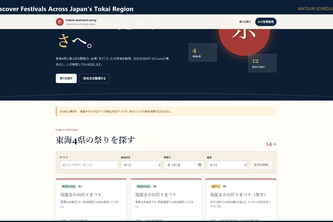
Matsuri Schedule Catcher is a self-reported festival information directory for Japan’s Tokai region (Aichi, Gifu, Mie, Shizuoka), built as a hackathon project using AI-powered data extraction from announcements. It allows users to search and filter events, with a sample mode that does not use AI and a live mode that uses GPT-5.6 Luna via OpenAI's Responses API.
What changed
The project is described as an MVP built for a hackathon, integrating structured outputs from GPT-5.6 Luna into a React/Next.js frontend with Zod validation and human review steps. It includes two distinct modes: sample (no AI) and judge-only live (with AI), both requiring manual confirmation before data is stored.
The single most important open question
Is there any evidence of traction, revenue, or customer adoption beyond the self-reported hackathon demo? The description states no such evidence exists.
What The Product Actually Is
- The description states that Matsuri Schedule Catcher is a searchable festival directory for Aichi, Gifu, Mie, and Shizuoka.
- It allows filtering by prefecture, date, festival type, and keyword.
- Users can view detail pages with highlights, access, parking, rain policy, organizer, and source information.
- The product has two modes:
- Sample mode: No code required; uses rule-based extraction; leaves unknown fields empty.
- Judge-only live mode: Sends an announcement to GPT-5.6 Luna through OpenAI Responses API after validating a judge access code.
- Both modes lead to the same human review screen where all fields are editable.
- Confirmed records are stored in browser localStorage only.
- The system uses Zod for schema validation and includes checks for duplicates, required fields, and format compliance.
Inference: The product is not a live service but a demonstration of how AI could be used to extract structured data from unstructured festival announcements. It is described as an MVP built for a hackathon with no production deployment or user base beyond the demo.
Positioning & Claim Evolution
- The description states that festival information across Japan’s Tokai region is scattered and difficult to find.
- The core principle is: “AI can organize the announcement, but a person remains responsible for checking the result and its source.”
- It positions itself as a tool that organizes data without treating AI output as automatically trustworthy.
- The product claims to make festival discovery easier by centralizing information in one place.
Inference: This is a self-reported positioning claim. There is no evidence of market traction, customer feedback, or competitive differentiation beyond the hackathon context.
Target Customer & ICP
- The description states that the target region is Japan’s Tokai region (Aichi, Gifu, Mie, Shizuoka).
- It appears to be aimed at individuals looking for festival information in this area.
- There is no indication of a specific persona or buyer profile beyond general users seeking event details.
Inference: No evidence of defined ICP or target user segmentation beyond the geographic scope. The product is described as a demo, not a commercial offering.
Business Model & Pricing Evidence
- Not evidenced.
- The description does not mention any pricing structure, monetization strategy, or business model.
- It is described as a hackathon project with no revenue or customer data.
Inference: No evidence of a business model or pricing mechanism. The product is presented as an MVP for demonstration purposes only.
Technical & Delivery Signals
- Built with Next.js App Router, React, TypeScript, Tailwind CSS, Zod, Vitest, OpenAI JavaScript SDK, Responses API, Structured Outputs.
- Uses gpt-5.6-luna model via the OpenAI Responses API.
- Implements schema validation using Zod for both transport and business-level data.
- Includes rate-limiting, input size limits, and security controls (e.g., no exposure of API keys or judge codes).
- Has a clear separation between sample and live modes.
- Uses localStorage for temporary storage; no database or backend persistence is mentioned.
- The project includes 32 passing tests, linting, typechecking, and a production build.
Inference: Technical implementation shows some sophistication in handling AI integration, validation, and security. However, it lacks real-world deployment or scalability features like persistent storage or multi-user support.
Traction & Maturity Signals
- Not evidenced.
- The product is described as a hackathon submission with no mention of users, customers, or adoption metrics.
- It uses fictional data for demonstration purposes.
- No evidence of revenue, ARR, or usage statistics.
Inference: There are no signs of traction or maturity beyond the initial demo. The project is clearly in an early stage and not yet a product in production use.
Competitive Context
- Not evidenced.
- The description does not reference existing competitors or similar tools.
- No market analysis or competitive positioning is provided.
Inference: No evidence of competitive landscape or differentiation from other event discovery platforms. This is a self-contained project without external context.
Open Questions & Risks
- No traction or revenue: The product is described as a hackathon demo with no real-world usage.
- Limited scope: Only covers the Tokai region and uses fictional data.
- No persistence: Data is stored only in browser localStorage, not in any backend system.
- No monetization strategy: No indication of how this would become a sustainable business.
- AI dependency without oversight: While human review is required, the reliance on AI for extraction introduces risk if the model fails or produces inaccurate data.
- Sample vs. live mode confusion: The distinction between sample and live modes may not be clear to end users in a real product.
Inference: These are risks inherent to an MVP built for a hackathon, but they are not validated by any external data.
Questions the description leaves open
- What is the plan to move from this demo to a production-ready service?
- Are there plans to expand beyond the Tokai region or add more features like maps, notifications, or multilingual support?
- How will you ensure data accuracy and prevent misuse of AI-generated content?
- Is there any intention to monetize this product? If so, how?
- What are the long-term goals for user engagement or retention?
- Are there any partnerships with local municipalities or tourism boards that could drive adoption?
Overall Assessment
- Not evidenced.
- The project is described as a hackathon submission with no evidence of traction, revenue, or customer base.
- It is not clear whether this represents a viable business opportunity or just an experimental prototype.
Inference: Based solely on the self-reported description, there is insufficient evidence to support investment or partnership interest. The product lacks commercial viability indicators and appears to be in early-stage development.
User Stories BotA demo video on every pull request
Get a demo video on every new feature
GitHub App that watches your pull requests and records a narrated, captioned demo.
Save time on demo prep and make informed decisions faster with a video walkthrough of every new feature.
Source
Submitted to the OpenAI 2026 hackathon on Devpost. Project home on Devpost. Back to the full gallery on Devpost.
This competitive analysis was produced by top-founders.com (opens in a new tab)
Generated by a language model from this project's public Devpost page — its tagline, the author's own write-up and any built-with tags listed there — as captured in August 2026. Short quotations are the author's words. It is an opinion on the idea as a business, not on the people behind it, and it reflects the description as published then. If the project has moved on, request a correction below. The analysis is not independent research and contains no verified traction, revenue or customer data.
An independent guide by KFG International LLC — not affiliated with, endorsed by, or connected to Devpost or OpenAI.