

Archive position — measured, not model output
0 likes on Devpost
2,263 of the 7,850 archived projects have more likes, and 5,587 share exactly 0 — so this project's #5,993 place in the like-ranked listing is a tie-break inside that group, not a ranking.
Projects (log scale)
Likes on Devpost. ▲ marks this project's group.
Show the figures
| Likes | Projects | Share of archive |
|---|---|---|
| 0 | 5,587 | 71.2% |
| 1 | 1,758 | 22.4% |
| 2 | 284 | 3.6% |
| 3–4 | 132 | 1.7% |
| 5–9 | 75 | 1.0% |
| 10+ | 14 | 0.2% |
 User Stories BotA demo video on every pull request
Get a demo video on every new feature
GitHub App that watches your pull requests and records a narrated, captioned demo.
Save time on demo prep and make informed decisions faster with a video walkthrough of every new feature.
Executive Summary
What the company appears to be
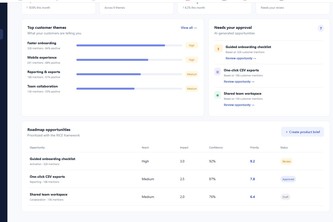
PM Signal Desk is a self-reported SaaS product management tool built for product managers (PMs), designed to process unstructured customer feedback and meeting notes into structured outputs like user stories, product briefs, roadmaps, and prioritized feature lists. It uses AI agents and agentic workflows, with human-in-the-loop controls.
What changed
The author states this is a hackathon submission (OpenAI 2026) and that the tool was built to address the challenge of turning scattered feedback into actionable product decisions. No prior version or evolution is described.
Single most important open question
Is there evidence of real-world usage, traction or customer validation beyond the author’s own account?
What The Product Actually Is
The description states: “PM Signal Desk uses AI to analyze customer feedback and meeting notes... generate product briefs and user stories... create acceptance criteria and roadmap suggestions.”
It is described as a SaaS tool built with Next.js, React, Tailwind CSS, OpenAI APIs (including GPT-5.6), and agentic workflows.
The author claims it supports:
- Sentiment analysis
- Feature prioritization using the RICE framework
- Human-in-the-loop review and approval of AI outputs
It is not evidenced whether this tool has a dashboard or API, or how it integrates with existing PM tools like Jira or Notion.
Inference Based on the tech stack and features described, it appears to be an AI-powered product management assistant that automates parts of the feedback-to-decision pipeline.
Positioning & Claim Evolution
The author states: “I wanted to build a tool that helps PMs turn unstructured feedback into clear product decisions.”
This is a self-reported intent, not a validated market need. The description does not indicate any prior positioning or evolution in messaging — it appears to be the first articulation of the idea.
Inference This is a new product concept with no prior branding, customer feedback or competitive positioning history.
Target Customer & ICP
The author states: “Product managers receive feedback from customer calls, support tickets, surveys, and meeting notes.”
The tool is described as being for PMs who want to process this feedback into structured outputs like user stories and roadmaps.
No specific segment or persona is named. The description does not indicate whether it targets enterprise PMs, startups, or individual PMs.
Inference The target customer is product managers, but the exact ICP (Ideal Customer Profile) is not defined beyond that.
Business Model & Pricing Evidence
The author states: “PM Signal Desk is a SaaS tool.”
No pricing model, subscription tiers, or monetization strategy are described. There is no mention of revenue, customers, or sales.
Inference The business model is inferred to be SaaS-based, but no evidence of pricing, monetization or customer acquisition exists.
Technical & Delivery Signals
The author states: “Built with (author-declared): agentic-workflows, ai-agents, api, automation, chatgpt-work, codex, customer-feedback, dashboard, feature-prioritization, gpt-5.6, human-in-the-loop, javascript, next.js, openai, product-briefs, product-management, product-roadmap, react, rice-framework, saas, sentiment-analysis, tailwind-css, user-stories.”
The tool is described as using:
- AI agents and agentic workflows
- GPT-5.6 (self-reported)
- React + Next.js frontend
- Tailwind CSS
- Human-in-the-loop review process
It is not evidenced whether the tool has a dashboard, API, or integration capabilities.
Inference The technical architecture suggests a modern SaaS product with AI and workflow automation, but no evidence of delivery or production readiness.
Traction & Maturity Signals
The author states: “This project was submitted to the OpenAI 2026 hackathon on Devpost.”
No evidence of traction, revenue, customers, or usage beyond this submission. No mention of product adoption, user feedback, or iteration history.
Inference The product is at a very early stage — likely a prototype or MVP — with no demonstrated traction or maturity.
Competitive Context
The author does not describe any competitive landscape or existing tools in the space.
No mention of competitors like Productboard, Aha!, Jira, Notion, or other PM tools that might offer similar functionality.
Inference No evidence of competitive awareness or positioning against existing solutions.
Open Questions & Risks
- The product is described as a hackathon submission with no prior development or customer validation.
- No revenue, customers, or traction are evidenced.
- The tool is described as using GPT-5.6 (self-reported), which may not be accurate or publicly available.
- The author is the sole team member, suggesting limited execution capacity.
- No evidence of product-market fit, pricing, or monetization strategy.
Inference High risk due to lack of validation, traction, and business model clarity.
Questions the description leaves open
- What specific customer feedback or PM pain points did you observe that led to this tool?
- Have you tested the tool with real product teams or PMs?
- How do you plan to monetize this tool? What pricing strategy are you considering?
- Is there a roadmap for development beyond the hackathon version?
- What is your understanding of the competitive landscape in product management tools?
Overall Assessment
Not evidenced.
The description provides no evidence of revenue, customers, traction or business model validation. It is a self-reported hackathon submission with no indication of commercial viability or market readiness.
This is a very early-stage idea, not a product in the market. The author states they are building this tool to help PMs process feedback, but there is no evidence that it has been used by anyone beyond the creator.
Confidence Low. This is a speculative idea with no demonstrated traction or commercial viability.
User Stories BotA demo video on every pull request
Get a demo video on every new feature
GitHub App that watches your pull requests and records a narrated, captioned demo.
Save time on demo prep and make informed decisions faster with a video walkthrough of every new feature.
Source
Submitted to the OpenAI 2026 hackathon on Devpost. Project home on Devpost. Back to the full gallery on Devpost.
This competitive analysis was produced by top-founders.com (opens in a new tab)
Generated by a language model from this project's public Devpost page — its tagline, the author's own write-up and any built-with tags listed there — as captured in August 2026. Short quotations are the author's words. It is an opinion on the idea as a business, not on the people behind it, and it reflects the description as published then. If the project has moved on, request a correction below. The analysis is not independent research and contains no verified traction, revenue or customer data.
An independent guide by KFG International LLC — not affiliated with, endorsed by, or connected to Devpost or OpenAI.