

Archive position — measured, not model output
0 likes on Devpost
2,263 of the 7,850 archived projects have more likes, and 5,587 share exactly 0 — so this project's #5,708 place in the like-ranked listing is a tie-break inside that group, not a ranking.
Projects (log scale)
Likes on Devpost. ▲ marks this project's group.
Show the figures
| Likes | Projects | Share of archive |
|---|---|---|
| 0 | 5,587 | 71.2% |
| 1 | 1,758 | 22.4% |
| 2 | 284 | 3.6% |
| 3–4 | 132 | 1.7% |
| 5–9 | 75 | 1.0% |
| 10+ | 14 | 0.2% |
 User Stories BotA demo video on every pull request
Get a demo video on every new feature
GitHub App that watches your pull requests and records a narrated, captioned demo.
Save time on demo prep and make informed decisions faster with a video walkthrough of every new feature.
Executive Summary
What the company appears to be
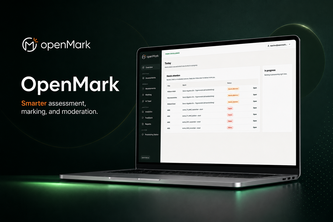
openMark is a self-reported software platform designed to automate parts of the test creation and marking process for teachers. The product is described as an end-to-end system that allows teachers to generate tests, print unique copies per student, scan answers, use AI for suggested marks, and release results — all under one interface. It integrates with OpenAI APIs and uses computer vision (via OpenCV) and OCR technologies to identify student responses.
What changed
The project is a self-reported hackathon submission from two university students who claim to have built an end-to-end system in under five days using AI tools like GPT 5.6 Sol, Terra, and Luna, along with various open-source libraries and frameworks such as Next.js, Supabase, Docker, and OpenCV.
Single most important open question
Is there any evidence of real-world usage or pilot testing by teachers or schools? The description contains no data on adoption, customer feedback, or product-market fit beyond the authors' own claims.
What The Product Actually Is
The description states that openMark is a platform for:
- Creating tests
- Printing unique copies per student using ArUco tags and data matrices
- Scanning answer pages
- Using AI to suggest marks (via OpenAI API)
- Releasing results and generating feedback reports
- Maintaining control over released marks by teachers
It also claims to include:
- A secure student portal
- An analytics dashboard
- Vision-assisted scanning pipeline using OpenCV
- Integration with Supabase for data storage and security
- Use of Docker containers for deployment
- Support for GPU acceleration in future versions
Inference The product appears to be a prototype built for a hackathon, not yet deployed in production environments. It integrates AI models (GPT 5.6 Sol, Terra, Luna) and computer vision tools but lacks evidence of real-world implementation or scalability beyond the authors’ development context.
Positioning & Claim Evolution
The description positions openMark as:
- A solution to reduce teacher workload caused by excessive marking
- An intelligent tool that supports assessment logistics while preserving teacher control
- A way to improve student engagement through more frequent assessments (which teachers avoid due to time constraints)
It also claims:
- That it avoids sending personally identifiable information (PII) to the AI API
- That it flags detected names for review but does not guarantee perfect handwriting detection
- That it was built with established, deployable technologies and scalable architecture
Inference The positioning is centered on solving a real pain point in education — teacher burnout from marking — while leveraging modern AI and automation. However, the claim of being “production-ready” or having undergone user testing is not substantiated.
Target Customer & ICP
The description identifies:
- Teachers in Ontario, Canada, as the primary users
- A specific audience: those experiencing stress due to large class sizes and limited support
- The goal of helping teachers spend more time engaging with students rather than managing logistics
Inference The target customer is likely a subset of educators working within budget-constrained public school systems. However, there is no evidence of actual teacher engagement or market validation beyond the authors' personal experience.
Business Model & Pricing Evidence
There is no mention in the description of:
- Revenue streams
- Pricing plans
- Monetization strategy
- Subscription model or licensing fees
Not evidenced No indication of how the product would be monetized or whether it has a defined business model.
Technical & Delivery Signals
The project was built using:
- Tech stack: Next.js, React, TypeScript, Tailwind CSS, Supabase (PostgreSQL), Docker, OpenCV, Playwright, ArUco tags, Codex, Context7
- Backend services: Python workers for document-heavy tasks
- Deployment architecture: Server components with secure data handling via Supabase Auth and Row-Level Security
- AI integration: OpenAI API with GPT 5.6 Sol, Terra, Luna models
Inference The technical approach suggests a modular, scalable system built with modern tools. However, the description does not confirm whether this architecture has been tested in real-world conditions or proven to scale beyond a hackathon prototype.
Traction & Maturity Signals
The description states:
- The project was completed in under 5 days during a hackathon
- It was submitted to the OpenAI 2026 hackathon on Devpost
- The team used Codex and Context7 for development assistance
- They claim to have built an app that behaves like one seen in production deployments
Not evidenced No evidence of:
- Real users or customers
- Revenue or usage metrics
- Product-market fit
- Pilot testing or feedback from educators
- Any form of commercial traction beyond the hackathon submission
Competitive Context
The description does not reference:
- Existing competitors in the educational assessment automation space
- Similar tools or platforms already available to teachers
- Market size or competitive positioning
Not evidenced No competitive analysis or awareness of existing solutions.
Open Questions & Risks
Key risks and open questions include:
- Unverified claims: All statements are self-reported, with no independent verification.
- No traction evidence: No data on adoption, usage, or customer feedback.
- Prototype status: Built in a hackathon environment; unclear if it’s production-ready.
- AI dependency: Heavy reliance on GPT 5.6 models and APIs that may not be stable or scalable for long-term use.
- Privacy concerns: While the system claims to omit PII, there is no evidence of compliance with privacy regulations (e.g., GDPR, FERPA).
- Limited team size: Only two members, which raises questions about scalability and ongoing maintenance.
Questions the description leaves open
- What specific feedback have you received from teachers or schools who tested this tool?
- Have you conducted any usability studies or pilots with educators?
- How do you plan to ensure compliance with educational privacy laws (e.g., FERPA, GDPR)?
- Is there a roadmap for monetization or commercial viability?
- What are the limitations of the current AI integration in terms of accuracy and reliability?
- Can you provide details on how the system handles edge cases in OCR or handwriting recognition?
- How do you intend to scale this beyond the current prototype?
Overall Assessment
Confidence Level Low
Assessment The description presents a self-reported hackathon project with strong technical execution but no evidence of traction, revenue, or real-world adoption. While it shows ambition and technical capability, there is insufficient data to assess its commercial viability or readiness for investment or partnership.
This is a pre-product idea that may evolve into something valuable, but currently lacks the foundation for due-diligence-level evaluation. Any further interest should focus on validating early user feedback, demonstrating product-market fit, and assessing scalability before considering deeper engagement.
User Stories BotA demo video on every pull request
Get a demo video on every new feature
GitHub App that watches your pull requests and records a narrated, captioned demo.
Save time on demo prep and make informed decisions faster with a video walkthrough of every new feature.
Source
Submitted to the OpenAI 2026 hackathon on Devpost. Project home on Devpost. Back to the full gallery on Devpost.
This competitive analysis was produced by top-founders.com (opens in a new tab)
Generated by a language model from this project's public Devpost page — its tagline, the author's own write-up and any built-with tags listed there — as captured in August 2026. Short quotations are the author's words. It is an opinion on the idea as a business, not on the people behind it, and it reflects the description as published then. If the project has moved on, request a correction below. The analysis is not independent research and contains no verified traction, revenue or customer data.
An independent guide by KFG International LLC — not affiliated with, endorsed by, or connected to Devpost or OpenAI.