

Archive position — measured, not model output
1 like on Devpost
505 of the 7,850 archived projects have more likes, and 1,758 share exactly 1 — so this project's #1,517 place in the like-ranked listing is a tie-break inside that group, not a ranking.
Projects (log scale)
Likes on Devpost. ▲ marks this project's group.
Show the figures
| Likes | Projects | Share of archive |
|---|---|---|
| 0 | 5,587 | 71.2% |
| 1 | 1,758 | 22.4% |
| 2 | 284 | 3.6% |
| 3–4 | 132 | 1.7% |
| 5–9 | 75 | 1.0% |
| 10+ | 14 | 0.2% |
 User Stories BotA demo video on every pull request
Get a demo video on every new feature
GitHub App that watches your pull requests and records a narrated, captioned demo.
Save time on demo prep and make informed decisions faster with a video walkthrough of every new feature.
Executive Summary
What the company appears to be
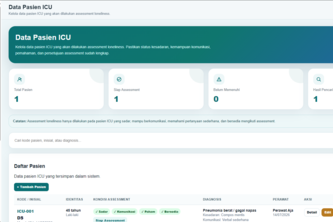
NersCare ICU is a self-reported web-based digital tool for assessing and educating about patient loneliness in ICU settings. It was built as part of a hackathon project by one individual (DWI WAHYU BINTARTO PRASETYO) and is described as an AI-assisted system, though no AI functionality is detailed.
What changed
The project emerged from a hackathon submission with the stated goal of supporting ICU nurses, research teams, and families in documenting patient loneliness using a structured digital workflow. It includes features for patient registration, assessment, scoring, education, and public simulation.
Single most important open question
Is there any evidence that this system has been tested or validated in real-world ICU environments, or is it purely conceptual?
What The Product Actually Is
The description states:
- NersCare ICU is a web-based assessment and education system for ICU patient loneliness.
- It supports patient data registration, eligibility checking, and structured loneliness questionnaires based on the De Jong Gierveld Loneliness Scale.
- It includes scoring logic, category interpretation, educational content, and a public loneliness calculator.
- The system is built using Laravel, MySQL, PHP, HTML5, CSS3, JavaScript, and supports PWA (Progressive Web App) features.
Inference It appears to be a prototype or proof-of-concept tool designed for clinical use in ICU settings, but not yet validated in real-world deployment.
Positioning & Claim Evolution
The description states:
- The product is positioned as an AI-assisted loneliness assessment and education system.
- It aims to support ICU nurses, research teams, and families.
- It was built to help document loneliness in a structured way during daily care.
Inference The positioning evolved from a hackathon idea into a tool for clinical documentation and patient education, with an emphasis on usability and emotional support.
Target Customer & ICP
The description states:
- The system is intended for ICU nurses, research teams, and families.
- It also supports public simulation via a loneliness calculator.
Inference The primary users appear to be healthcare professionals (nurses, researchers) and family members of ICU patients, with secondary public-facing use.
Business Model & Pricing Evidence
Not evidenced.
Explanation
There is no mention of pricing, monetization, or business model in the description. The project is presented as a hackathon submission without commercial intent.
Technical & Delivery Signals
The description states:
- Built with Laravel, MySQL, PHP, HTML5, CSS3, JavaScript, and supports PWA.
- Includes public pages, authenticated staff dashboards, patient management, assessment workflows, scoring logic, result history, and educational content management.
Inference The system is a basic web application with a clear structure for user roles, data handling, and educational features. It is not described as scalable or production-ready.
Traction & Maturity Signals
Not evidenced.
Explanation
No evidence of customers, users, revenue, adoption, or product maturity beyond the hackathon submission exists in the description.
Competitive Context
Not evidenced.
Explanation
There is no mention of competitors or market positioning beyond the project’s own claims. No competitive landscape or differentiation strategy is described.
Open Questions & Risks
- Unvalidated clinical tool: The system is built on a clinical scale but lacks evidence of validation in real-world settings.
- Single-person development: The team size is listed as one, raising questions about scalability and long-term maintenance.
- AI claims without detail: The product is described as AI-assisted, but no AI functionality or implementation details are provided.
- No commercial traction: No evidence of revenue, customers, or market adoption beyond the hackathon.
Questions the description leaves open
- Has this system been tested in any real ICU environment?
- What clinical validation has been performed on the De Jong Gierveld scale implementation?
- Are there plans to integrate with existing hospital systems or EHRs?
- How is user privacy and data security handled, especially for sensitive patient information?
- What are the specific AI features, if any, and how do they enhance the tool’s functionality?
- Is there a roadmap for clinical trials or research partnerships?
Overall Assessment
Not evidenced.
Explanation
There is no evidence of revenue, traction, or commercial viability to support an investment or partnership decision. The project is described as a hackathon submission with no indication of further development or market readiness.
User Stories BotA demo video on every pull request
Get a demo video on every new feature
GitHub App that watches your pull requests and records a narrated, captioned demo.
Save time on demo prep and make informed decisions faster with a video walkthrough of every new feature.
Source
Submitted to the OpenAI 2026 hackathon on Devpost. Project home on Devpost. Back to the full gallery on Devpost.
This competitive analysis was produced by top-founders.com (opens in a new tab)
Generated by a language model from this project's public Devpost page — its tagline, the author's own write-up and any built-with tags listed there — as captured in August 2026. Short quotations are the author's words. It is an opinion on the idea as a business, not on the people behind it, and it reflects the description as published then. If the project has moved on, request a correction below. The analysis is not independent research and contains no verified traction, revenue or customer data.
An independent guide by KFG International LLC — not affiliated with, endorsed by, or connected to Devpost or OpenAI.