

Archive position — measured, not model output
0 likes on Devpost
2,263 of the 7,850 archived projects have more likes, and 5,587 share exactly 0 — so this project's #5,450 place in the like-ranked listing is a tie-break inside that group, not a ranking.
Projects (log scale)
Likes on Devpost. ▲ marks this project's group.
Show the figures
| Likes | Projects | Share of archive |
|---|---|---|
| 0 | 5,587 | 71.2% |
| 1 | 1,758 | 22.4% |
| 2 | 284 | 3.6% |
| 3–4 | 132 | 1.7% |
| 5–9 | 75 | 1.0% |
| 10+ | 14 | 0.2% |
 User Stories BotA demo video on every pull request
Get a demo video on every new feature
GitHub App that watches your pull requests and records a narrated, captioned demo.
Save time on demo prep and make informed decisions faster with a video walkthrough of every new feature.
Executive Summary
What the company appears to be
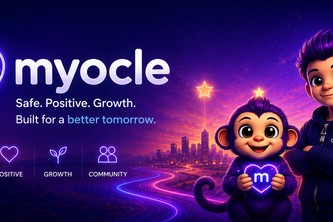
Myocle is a self-reported Flutter-based mobile application designed as an adaptive wellbeing companion for personal growth and recovery support. The product is described as a tool that supports users through small, private actions, offering personalized guidance, safer social connection, and a growing companion. It integrates AI (specifically Codex and GPT-5.6) into its development process and emphasizes user control, privacy, safety, and non-shaming language.
What changed
During the OpenAI Build Week in July 2026, Myocle underwent an engineering and product extension using Codex and GPT-5.6. The changes included consolidating existing features into a unified system (PGIS Nerve Centre), strengthening recovery pathways, adding new modules like Family Bridge and Relationship Recovery, and improving safety mechanisms such as moderation and escalation routing.
The single most important open question — the commercial due-diligence read
Is there evidence of user adoption or traction beyond the author’s own development experience? The description does not include any data on users, revenue, customers, or product-market fit. Without this, it is impossible to assess whether Myocle has moved beyond concept or prototype stage.
What The Product Actually Is
The description states that Myocle is a Flutter application built with Dart and Firebase, designed as an adaptive wellbeing companion. It uses AI tools like Codex and GPT-5.6 during development but does not appear to be an AI-native product in its core functionality.
Key components include:
- A Personal Growth Intelligence System (PGIS) that adapts guidance based on user preferences.
- A companion character system with roles such as Monkey (emotional encouragement), Coach (structure), and AI Bodyguard (safety).
- Modules for wellbeing, recovery, mental health, routines, eating support, movement, meditation, etc.
- Tools like shared journals, routine builders, and contextual lenses to reduce duplication.
- A progression system where the companion evolves from an egg to a monkey based on meaningful actions.
The app is described as not being a medical service or replacement for professional care. It also includes safety-aware social connection, private activity signals, and sanitized guidance mechanisms.
Not evidenced:
- Whether the app is live, tested, or used by anyone beyond the developer.
- Any actual user interface or functionality details outside of conceptual descriptions.
Positioning & Claim Evolution
The author states that Myocle began as a meal-planning idea but evolved into something broader around early intervention in wellbeing, especially for people facing addiction, mental health challenges, and disrupted routines. The positioning centers on:
- Early support before crisis
- Small, private actions leading to progress
- User control over experience
- Safe, non-shaming interaction
The product is positioned as a support tool, not a diagnostic or emergency service.
Inferred:
- The evolution from meal planning to a full wellbeing companion suggests a shift toward a more holistic personal development platform.
- The use of AI tools during Build Week indicates an attempt to scale or refine the product quickly, though this does not imply commercial traction.
Not evidenced:
- No claims about market positioning, competitive differentiation, or target audience segmentation beyond self-description.
- No evidence that the app has been tested with real users or validated in any way.
Target Customer & ICP
The description implies a personal growth and recovery-focused user base, particularly those dealing with:
- Addiction
- Mental health issues
- Disrupted routines
- Recovery from trauma or family conflict
It also mentions support for:
- Eating and body image
- Movement and meditation
- Relationship recovery
- Family dynamics (via Family Bridge)
The app is designed to be user-controlled, offering flexibility in how guidance is delivered, which suggests a preference for autonomy among users.
Inferred:
- The ICP likely includes individuals seeking self-directed support rather than clinical intervention.
- It may appeal to people who want to avoid stigma or public sharing, given emphasis on privacy and safety.
Not evidenced:
- No stated customer personas, demographics, or usage patterns.
- No evidence of market research or user interviews.
- No indication of whether the app targets specific age groups, genders, or geographic regions.
Business Model & Pricing Evidence
The description does not provide any information about:
- Revenue streams
- Pricing models
- Monetization strategy
- Subscription plans or in-app purchases
It does mention RevenueCat for entitlements and mentions that the app is not a replacement for professional care, implying no direct medical billing or insurance integration.
Inferred:
- The app may be subscription-based or freemium, but this is not stated.
- It could rely on user consent for analytics or feature access, though no explicit model is described.
Not evidenced:
- No pricing structure, monetization plan, or business model details.
- No evidence of paid features or premium tiers.
Technical & Delivery Signals
The app is built using:
- Flutter and Dart
- Firebase (Authentication, Cloud Firestore, Storage, Remote Config)
- GoRouter for routing
- Provider for state management
- Codex and GPT-5.6 used during Build Week for engineering assistance
Key technical elements include:
- Secure local storage
- App lock functionality
- Modular services (PGIS, moderation, lifecycle, engagement)
- Accessibility features
- CI/CD handling
- Onboarding and release contracts
Inferred:
- The use of AI tools like Codex suggests a developer-centric approach to rapid iteration.
- The modular architecture indicates scalability potential.
Not evidenced:
- No evidence of deployment, performance metrics, or production readiness.
- No mention of backend infrastructure beyond Firebase.
- No details on security audits or compliance standards.
Traction & Maturity Signals
The description states that Myocle existed before the Build Week event and was extended during it. The author mentions:
- Consolidation of old features
- Implementation of new modules
- Strengthening of safety and privacy controls
- Testing and QA efforts
However, there is no evidence of:
- User adoption or retention
- Customer feedback or reviews
- Product-market fit validation
- Revenue generation or monetization
- Market testing or pilot programs
Inferred:
- The product appears to be in a development phase, possibly near release.
- The Build Week work suggests iterative development and refinement.
Not evidenced:
- No user base, usage statistics, or customer data.
- No evidence of traction beyond the developer’s own efforts.
Competitive Context
The description does not provide any information about:
- Competitors
- Market landscape
- Differentiation from existing apps
- Industry benchmarks
It is implied that Myocle targets a niche within wellbeing and recovery support, but no specific competitors are named or compared.
Inferred:
- The app may compete with wellness apps, habit trackers, or mental health platforms.
- Its focus on non-shaming language, safety controls, and user-controlled progression sets it apart from generic tools.
Not evidenced:
- No competitive analysis or market positioning data.
- No mention of similar products or their features.
Open Questions & Risks
Several risks and open questions are present based on the self-reported description:
- No Traction or Validation: The app is described as a prototype or early-stage product with no evidence of user adoption, revenue, or market validation.
- Unproven Market Fit: There is no indication that the target audience has been tested or validated.
- High Dependency on Developer: With only one team member (Stuart Cross), the risk of project failure due to individual capacity or interest is high.
- AI Use Without Clear Value Add: While AI was used in development, it’s unclear how this adds value for end-users.
- Ambiguity Around Safety and Ethics: The app claims to protect privacy and provide safe interaction, but no third-party validation or safety audits are mentioned.
Not evidenced:
- No evidence of legal or ethical compliance frameworks.
- No mention of regulatory considerations or professional endorsements.
Questions the description leaves open
- What is the current status of the app? Is it live, in beta, or still under development?
- Have you conducted any user testing or interviews with your target audience?
- How do you plan to validate product-market fit before scaling?
- What are your plans for monetization and revenue generation?
- How do you ensure safety and ethical standards in a recovery-focused app?
- Are there any partnerships or collaborations planned with healthcare providers or support organizations?
- What is the long-term vision for Myocle beyond its current scope?
Overall Assessment
The description presents Myocle as an early-stage, developer-driven project focused on personal wellbeing and recovery support. It shows signs of thoughtful design and technical execution, particularly around user control, safety, and AI integration during development.
However, there is no evidence of traction, revenue, or customer validation. The app remains largely conceptual or prototype-level, with no indication of whether it has moved beyond the author’s own development efforts.
Given the lack of verified commercial activity, this project appears to be in a pre-product-market fit phase, and any investment or partnership decision should be contingent upon further evidence of user engagement, market testing, and product maturity.
Confidence Level: Low
User Stories BotA demo video on every pull request
Get a demo video on every new feature
GitHub App that watches your pull requests and records a narrated, captioned demo.
Save time on demo prep and make informed decisions faster with a video walkthrough of every new feature.
Source
Submitted to the OpenAI 2026 hackathon on Devpost. Project home on Devpost. Back to the full gallery on Devpost.
This competitive analysis was produced by top-founders.com (opens in a new tab)
Generated by a language model from this project's public Devpost page — its tagline, the author's own write-up and any built-with tags listed there — as captured in August 2026. Short quotations are the author's words. It is an opinion on the idea as a business, not on the people behind it, and it reflects the description as published then. If the project has moved on, request a correction below. The analysis is not independent research and contains no verified traction, revenue or customer data.
An independent guide by KFG International LLC — not affiliated with, endorsed by, or connected to Devpost or OpenAI.