

Archive position — measured, not model output
0 likes on Devpost
2,263 of the 7,850 archived projects have more likes, and 5,587 share exactly 0 — so this project's #5,272 place in the like-ranked listing is a tie-break inside that group, not a ranking.
Projects (log scale)
Likes on Devpost. ▲ marks this project's group.
Show the figures
| Likes | Projects | Share of archive |
|---|---|---|
| 0 | 5,587 | 71.2% |
| 1 | 1,758 | 22.4% |
| 2 | 284 | 3.6% |
| 3–4 | 132 | 1.7% |
| 5–9 | 75 | 1.0% |
| 10+ | 14 | 0.2% |
 User Stories BotA demo video on every pull request
Get a demo video on every new feature
GitHub App that watches your pull requests and records a narrated, captioned demo.
Save time on demo prep and make informed decisions faster with a video walkthrough of every new feature.
Executive Summary
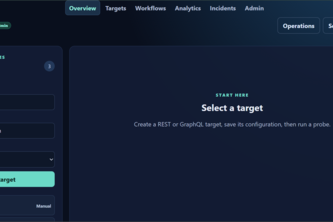
The company appears to be a self-hosted API reliability monitoring tool built by one person (Ben Samuel J. U) as part of a hackathon project. The product claims to offer continuous API testing, failure explanation in plain language, and integration with incident workflows. It is described as a command center for API reliability that supports REST and GraphQL APIs.
What changed
The author states this was built iteratively using AI tools like Codex and GPT-5.6, suggesting an experimental or rapid-development approach typical of hackathon projects.
The single most important open question
Is there any evidence of real-world usage, customer feedback, or commercial traction beyond the self-reported project description?
This analysis is based entirely on the author's own description — no external verification, no revenue data, no customers, no product usage. The entire universe of evidence comes from this one submission.
What The Product Actually Is
The description states that Meridian is a self-hosted API reliability command center. It continuously tests REST and GraphQL APIs and provides:
- Four-layer validation: connectivity, authentication, contract, and data assertions.
- Recurring probes, private-network agents, and multi-step transaction workflows.
- Incident creation, alert delivery history, and integration with Slack, Microsoft Teams, and SMTP.
- Trend analytics, SLOs, error budgets, release gates, and L1–L4 failure breakdowns.
- Enterprise controls including roles, scoped CI tokens, MFA, OIDC, SSRF protection, audit history, session management, and retention controls.
It is built with Go (Gin), React, TypeScript, Vite, Recharts, PostgreSQL, MongoDB, and Docker Compose. It can be deployed locally using Docker Compose.
This is a self-reported product specification. No independent confirmation of functionality or performance exists beyond the author’s account.
Positioning & Claim Evolution
The tagline is: “API reliability made actionable”.
The author claims Meridian makes API reliability visible, continuous, and understandable—not just to backend engineers but to everyone on a team.
It positions itself as a tool that turns raw probe failures into clear explanations (L1–L4) and supports full incident workflows from detection to resolution.
It also aims to make complex features like SLOs, error budgets, and release gates approachable for teams with limited API experience.
These are claims about intent and positioning. There is no evidence of actual user adoption or market validation.
Target Customer & ICP
The description states that Meridian targets teams working with APIs, especially those who want to avoid discovering problems only after users report them.
It is designed for both experienced backend engineers and non-technical team members, aiming to make API reliability accessible across roles.
It supports enterprise controls, suggesting a focus on organizations requiring security and governance features.
The ICP is inferred from the product’s features and target audience described by the author. No explicit segmentation or customer data provided.
Business Model & Pricing Evidence
No information is provided about pricing, licensing, or monetization strategy.
The description mentions that Meridian is self-hosted, implying no subscription model or SaaS component at this stage.
Not evidenced.
Technical & Delivery Signals
Meridian is built using:
- Backend: Go (Gin)
- Frontend: React, TypeScript, Vite, Recharts
- Databases: PostgreSQL, MongoDB
- Deployment: Docker Compose for local deployment
It was developed iteratively with AI tools like Codex and GPT-5.6.
These are technical claims from the author. No evidence of production deployment or performance data is available.
Traction & Maturity Signals
The project was submitted to a hackathon (OpenAI 2026), indicating it’s early-stage and experimental.
It includes features like private agents, multi-step workflows, and enterprise controls, suggesting ambition but no indication of real-world usage or adoption.
Not evidenced. No customers, revenue, or product usage data are provided.
Competitive Context
The author does not mention specific competitors. However, the described functionality overlaps with API monitoring and reliability tools such as:
- Postman Monitoring
- New Relic
- Datadog
- Sentry (for error tracking)
- Grafana (for dashboards)
It appears to be positioned in the space of self-hosted API observability and incident management, though no direct comparison or competitive differentiation is stated.
No competitive analysis or market positioning beyond self-description.
Open Questions & Risks
- Single-person team: The project was built by one individual, which raises questions about scalability, long-term maintenance, and future development.
- Hackathon origin: The product is likely experimental and not yet mature for enterprise use.
- No commercial traction or revenue: There is no evidence of customers, paid usage, or monetization.
- Unverified claims: All features and capabilities are self-reported without independent verification.
- AI-assisted development: While innovative, reliance on AI tools like Codex may indicate lack of deep engineering rigor or production-grade testing.
These are inferred risks from the project’s nature and lack of evidence. They are not facts.
Questions the description leaves open
- What is the current status of Meridian? Is it being used internally or by any external teams?
- How does Meridian handle real-world edge cases in private network monitoring?
- Has there been any feedback from users beyond the team?
- Are there plans to move away from self-hosted deployment toward a SaaS offering?
- What are the key assumptions behind the product’s design, and how do they align with actual API reliability needs?
- How is data stored and secured in production environments?
These questions aim to uncover gaps in the self-reported narrative.
Overall Assessment
At this stage, Meridian appears to be a conceptual or experimental tool built during a hackathon. It has not demonstrated any commercial traction, revenue, or customer adoption.
The product is described as ambitious and technically capable, but lacks evidence of real-world usage or market validation.
This is a pre-product-stage idea, not a product with proven demand or scalability. Any investment or partnership would be speculative at this point.
User Stories BotA demo video on every pull request
Get a demo video on every new feature
GitHub App that watches your pull requests and records a narrated, captioned demo.
Save time on demo prep and make informed decisions faster with a video walkthrough of every new feature.
Source
Submitted to the OpenAI 2026 hackathon on Devpost. Project home on Devpost. Back to the full gallery on Devpost.
This competitive analysis was produced by top-founders.com (opens in a new tab)
Generated by a language model from this project's public Devpost page — its tagline, the author's own write-up and any built-with tags listed there — as captured in August 2026. Short quotations are the author's words. It is an opinion on the idea as a business, not on the people behind it, and it reflects the description as published then. If the project has moved on, request a correction below. The analysis is not independent research and contains no verified traction, revenue or customer data.
An independent guide by KFG International LLC — not affiliated with, endorsed by, or connected to Devpost or OpenAI.