

Archive position — measured, not model output
1 like on Devpost
505 of the 7,850 archived projects have more likes, and 1,758 share exactly 1 — so this project's #1,369 place in the like-ranked listing is a tie-break inside that group, not a ranking.
Projects (log scale)
Likes on Devpost. ▲ marks this project's group.
Show the figures
| Likes | Projects | Share of archive |
|---|---|---|
| 0 | 5,587 | 71.2% |
| 1 | 1,758 | 22.4% |
| 2 | 284 | 3.6% |
| 3–4 | 132 | 1.7% |
| 5–9 | 75 | 1.0% |
| 10+ | 14 | 0.2% |
 User Stories BotA demo video on every pull request
Get a demo video on every new feature
GitHub App that watches your pull requests and records a narrated, captioned demo.
Save time on demo prep and make informed decisions faster with a video walkthrough of every new feature.
Executive Summary
Company: LinkGallery
Self-reported basis: The analysis is based entirely on the author-supplied project description, tagline, and write-up — unverified, self-reported information. No third-party evidence, revenue, customer or traction data is available.
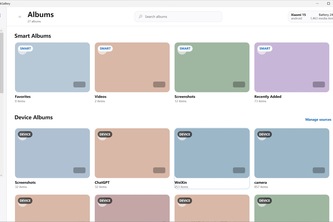
What it appears to be: A Windows-based desktop application designed to unify photo management across personal devices through a local network connection. It includes an Android client and uses a device-adapter architecture for extensibility.
What changed: The project was built during the OpenAI 2026 hackathon, with the author stating that it was developed using AI tools like Codex and GPT-5.6 to assist in design and development.
Single most important open question: Is there a clear commercial opportunity or user need for a local-first, device-unified photo terminal, especially given the proliferation of cloud-based solutions?
What The Product Actually Is
The description states that LinkGallery is a Windows-based unified photo terminal. It connects to personal devices (like Android phones, Windows PCs, cameras) and presents them through one consistent gallery interface.
It includes:
- A Windows application built with WPF and .NET 8
- An Android client built with Kotlin and Jetpack Compose
- Uses local network communication
- Implements a device adapter architecture to support future devices
- Designed with a local-first approach
The author describes it as a local-first design, suggesting no reliance on cloud services for core functionality.
Inference: The product is not a SaaS offering, but rather a desktop application with local device integration capabilities. It does not appear to include any cloud-based features or data synchronization beyond local network communication.
Positioning & Claim Evolution
The author states:
- “Managing photos across different devices is still fragmented.”
- “I wanted a single desktop application that could manage all of them from one place instead of relying on different apps or cloud ecosystems.”
Claim: LinkGallery positions itself as a solution to the fragmentation of photo management across personal devices.
Evolution: The project evolved from a hackathon idea into a prototype with an extensible architecture, aiming to support more devices in the future. It is not described as a commercial product yet, but rather a proof-of-concept or MVP.
Inference: The positioning is based on a perceived lack of unified local photo management tools, and it is framed as a solution for users who prefer local-first workflows over cloud-based ones.
Target Customer & ICP
The description does not state a specific customer segment or ideal customer profile (ICP). It only mentions:
- Users with multiple personal devices (Android phone, Windows PC, camera)
- Preference for local-first design
- Need to browse, search, preview, and transfer photos without switching between multiple applications
Inference: The target audience likely includes tech-savvy individuals or power users who own multiple devices and prefer local control over their media. However, no explicit ICP is defined.
Business Model & Pricing Evidence
The description does not contain any information about:
- Revenue model
- Pricing structure
- Monetization strategy
Not evidenced: No evidence of a business model or pricing strategy is provided.
Technical & Delivery Signals
The author states:
- Built with .NET 8, WPF, Android (Kotlin, Jetpack Compose)
- Uses local network communication (TCP/IP)
- Implements an adapter architecture for device support
- Developed using Codex and GPT-5.6
Inference: The project is technically feasible and built with modern development practices. It shows a clear understanding of cross-platform local integration, but no evidence of production deployment or scalability.
Traction & Maturity Signals
The description does not include:
- Any user base
- Revenue or monetization
- Customer feedback or adoption
- Product maturity beyond MVP stage
Not evidenced: No traction or maturity signals are provided. It is described as a hackathon project, not a product in the market.
Competitive Context
The description does not mention:
- Competitors
- Market analysis
- Differentiation from existing solutions
Not evidenced: No competitive context is provided. The author does not reference existing tools or platforms for photo management.
Open Questions & Risks
- No commercial traction or revenue model: It's a hackathon project with no evidence of market adoption.
- Limited device support: Only mentions Android and Windows as current devices, with future plans for iPhone, DJI, SD cards, NAS — but no timeline or progress.
- Local-first approach may limit appeal: Many users prefer cloud-based solutions for cross-device access.
- AI-assisted development: While innovative, it raises questions about the scalability of AI in product development and whether the team has deep technical ownership.
- Small team size: Only two members (2-person team), which may limit execution speed or depth.
Questions the description leaves open
- What is your specific customer problem, and how do you know users have it?
- How does this product differ from existing tools like Adobe Lightroom, Google Photos, or Apple Photos?
- Do you have any early adopters or user feedback?
- What are the technical challenges in scaling to more devices (e.g., iPhone, NAS)?
- Are there any legal or licensing issues with accessing media from different device types?
- How do you plan to monetize this product if it remains local-first?
Overall Assessment
Not evidenced: No information is provided about the commercial viability, market size, or financial potential of LinkGallery.
Inference: As a hackathon MVP, it shows early technical capability and a potential niche in local-first photo management. However, without traction, revenue, or clear differentiation from existing tools, it does not yet present a compelling investment or partnership opportunity.
The project is not evidenced to have reached product-market fit, nor does it show signs of commercial readiness. It remains in the early prototype stage and requires further development, user validation, and market research before any strategic move can be justified.
User Stories BotA demo video on every pull request
Get a demo video on every new feature
GitHub App that watches your pull requests and records a narrated, captioned demo.
Save time on demo prep and make informed decisions faster with a video walkthrough of every new feature.
Source
Submitted to the OpenAI 2026 hackathon on Devpost. Project home on Devpost. Back to the full gallery on Devpost.
This competitive analysis was produced by top-founders.com (opens in a new tab)
Generated by a language model from this project's public Devpost page — its tagline, the author's own write-up and any built-with tags listed there — as captured in August 2026. Short quotations are the author's words. It is an opinion on the idea as a business, not on the people behind it, and it reflects the description as published then. If the project has moved on, request a correction below. The analysis is not independent research and contains no verified traction, revenue or customer data.
An independent guide by KFG International LLC — not affiliated with, endorsed by, or connected to Devpost or OpenAI.