

Archive position — measured, not model output
0 likes on Devpost
2,263 of the 7,850 archived projects have more likes, and 5,587 share exactly 0 — so this project's #4,824 place in the like-ranked listing is a tie-break inside that group, not a ranking.
Projects (log scale)
Likes on Devpost. ▲ marks this project's group.
Show the figures
| Likes | Projects | Share of archive |
|---|---|---|
| 0 | 5,587 | 71.2% |
| 1 | 1,758 | 22.4% |
| 2 | 284 | 3.6% |
| 3–4 | 132 | 1.7% |
| 5–9 | 75 | 1.0% |
| 10+ | 14 | 0.2% |
 User Stories BotA demo video on every pull request
Get a demo video on every new feature
GitHub App that watches your pull requests and records a narrated, captioned demo.
Save time on demo prep and make informed decisions faster with a video walkthrough of every new feature.
Executive Summary
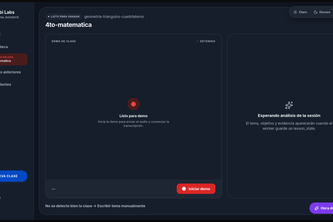
Kobi is a self-reported classroom tool designed to help teachers quickly generate and deliver student activities during the final minutes of class, using live lesson input and AI. The product is described as an AI companion that listens to a teacher’s lesson in real time, understands the content, proposes curriculum-aligned activities, and delivers them to students for immediate completion.
The description states that Kobi operates through a core loop: Listen → Understand → Propose → Approve → Deliver → Measure. It uses technologies such as Next.js, Node.js, Supabase, and generative AI to support its workflow. The team built it with an MVP focused on three activity types (quizzes, cloze/vocabulary-in-context, match/order), and emphasizes a schema-validated JSON architecture for activities.
There is no evidence of revenue, customers, or traction beyond the project’s submission to a hackathon. The description makes claims about functionality, design choices, and future directions but does not confirm any real-world use or adoption.
The single most important open question
Is there evidence that teachers actually want or need this type of AI-assisted classroom activity generation, or is Kobi an idea that has not yet been tested in practice?
What The Product Actually Is
The description states that Kobi is a web-based tool for teachers, built using Next.js and Supabase, with a Node.js worker handling audio processing and AI logic. It is described as an AI companion that:
- Listens to live classroom lessons
- Understands the content
- Proposes curriculum-aligned activities
- Allows teacher approval before delivery
- Delivers activities to students via device
- Provides session reports with completion and correctness data
The system uses a core loop: Listen → Understand → Propose → Approve → Deliver → Measure.
It is built around a structured JSON schema for activities, which supports validation, reuse, and telemetry. The MVP includes three activity families: quizzes, cloze/vocabulary-in-context, and match/order.
Inference Kobi appears to be a prototype or early-stage product, not yet deployed in real classrooms. It is described as a workflow tool, not a standalone AI demo.
Positioning & Claim Evolution
The author states that Kobi was inspired by the idea of turning the last 10 minutes of class into a useful activity block with zero prep time for teachers. The product is positioned to reduce teacher workload by automating activity creation from live lessons.
Key claims include:
- Teachers do not have time to create personalized activities on the spot.
- Kobi listens to what is already happening in class and turns it into practice.
- It is designed as a real classroom workflow, not just a demo.
- The system supports teacher approval, curriculum grounding, and telemetry reporting.
The description also notes that the team had to cut features to keep scope manageable, indicating an early-stage product with many possible directions.
Inference Kobi is positioned as a teacher productivity tool in an edtech space, but its positioning is not yet validated by real-world use or feedback.
Target Customer & ICP
The description states that Kobi is for teachers, specifically those who:
- Teach in classrooms
- Want to create curriculum-aligned activities quickly
- Have limited time for prep
- Need to engage students at the end of class
It mentions that Kobi supports a teacher approval gate and curriculum grounding, suggesting it targets educators who value control and alignment with standards.
There is no mention of specific grade levels, subjects, or school types. The team is described as two members (Anibal Andrade, Isaac Romero), indicating a small, possibly student-built project.
Inference The ICP appears to be K-12 teachers, but the description does not define any细分 or segmentation beyond that.
Business Model & Pricing Evidence
The description does not state anything about pricing, monetization, or business model. It is unclear whether Kobi is intended for individual teachers, schools, or districts, or if it will be sold as a SaaS product.
There is no mention of subscriptions, licensing, or usage fees.
Inference No evidence of a business model or pricing strategy exists in the description.
Technical & Delivery Signals
The project is built with:
- Next.js (web app)
- Node.js worker
- Supabase (data backbone)
- TypeScript-first architecture
It uses AI for:
- Audio processing
- Transcription
- Lesson understanding
- Activity generation
- Curriculum matching
Key architectural decisions include:
- Activities are stored as schema-validated JSON
- Manual fallbacks at each AI stage to ensure reliability
- Focus on three activity types in MVP
The system supports:
- Real-time student delivery
- Telemetry reporting
- Teacher approval workflow
Inference The technical stack suggests a modern, scalable architecture, but the product is described as an MVP with limited scope and not yet deployed.
Traction & Maturity Signals
There is no evidence of revenue, customers, or usage metrics. The project was submitted to a hackathon, and the description notes that it was built in a short timeframe with many features cut.
The team states they are proud of:
- The real classroom workflow design
- The activity architecture (schema-based JSON)
- The teacher approval gate
But there is no mention of user testing, feedback, or adoption.
Inference No traction or maturity signals are evident. This appears to be an early-stage prototype, not a product in active use.
Competitive Context
The description does not name competitors or reference existing tools in the edtech space. It does not describe how Kobi compares to other classroom activity generators, AI-powered lesson tools, or learning management systems.
It is described as a new idea that emerged from the hackathon context.
Inference No competitive positioning or market analysis is provided. The product’s place in the broader edtech ecosystem is unknown.
Open Questions & Risks
- No real-world use or feedback: The project is based on a hackathon submission, not actual classroom deployment.
- Unproven demand: There is no evidence that teachers actually want or need this type of AI-assisted activity generation.
- Technical complexity vs. MVP scope: The system includes AI and real-time delivery features, but the MVP is limited to three activity types.
- Lack of business model clarity: No pricing, monetization, or target market strategy is described.
- No customer data or telemetry: The product claims to support reporting, but no actual usage data is shared.
Inference Kobi is a conceptual prototype, not a validated product. Risks include unproven market need and technical feasibility in real classroom settings.
Questions the description leaves open
- What specific classroom workflows does Kobi aim to improve, and how do you know?
- Have you tested this with actual teachers or students? If so, what feedback did you get?
- How is curriculum alignment verified — manually or through AI?
- What are the main technical challenges in real-time audio processing and activity generation?
- Is there a plan to monetize Kobi, and who would be your target paying customers?
- How do you intend to scale beyond the MVP’s three activity types?
- What is the current state of user approval and feedback loops in the system?
Overall Assessment
The description states that Kobi is a hackathon project, not a commercial product. There is no evidence of traction, revenue, or customer adoption.
Confidence Low. The description is self-reported and unverified, with no third-party validation or market data.
Assessment Kobi is an early-stage idea with potential in the edtech space but lacks evidence of real-world demand or product-market fit. It should be considered a conceptual prototype, not a viable investment or partnership opportunity at this stage.
User Stories BotA demo video on every pull request
Get a demo video on every new feature
GitHub App that watches your pull requests and records a narrated, captioned demo.
Save time on demo prep and make informed decisions faster with a video walkthrough of every new feature.
Source
Submitted to the OpenAI 2026 hackathon on Devpost. Project home on Devpost. Back to the full gallery on Devpost.
This competitive analysis was produced by top-founders.com (opens in a new tab)
Generated by a language model from this project's public Devpost page — its tagline, the author's own write-up and any built-with tags listed there — as captured in August 2026. Short quotations are the author's words. It is an opinion on the idea as a business, not on the people behind it, and it reflects the description as published then. If the project has moved on, request a correction below. The analysis is not independent research and contains no verified traction, revenue or customer data.
An independent guide by KFG International LLC — not affiliated with, endorsed by, or connected to Devpost or OpenAI.