

Archive position — measured, not model output
0 likes on Devpost
2,263 of the 7,850 archived projects have more likes, and 5,587 share exactly 0 — so this project's #4,754 place in the like-ranked listing is a tie-break inside that group, not a ranking.
Projects (log scale)
Likes on Devpost. ▲ marks this project's group.
Show the figures
| Likes | Projects | Share of archive |
|---|---|---|
| 0 | 5,587 | 71.2% |
| 1 | 1,758 | 22.4% |
| 2 | 284 | 3.6% |
| 3–4 | 132 | 1.7% |
| 5–9 | 75 | 1.0% |
| 10+ | 14 | 0.2% |
 User Stories BotA demo video on every pull request
Get a demo video on every new feature
GitHub App that watches your pull requests and records a narrated, captioned demo.
Save time on demo prep and make informed decisions faster with a video walkthrough of every new feature.
Executive Summary
The company appears to be a solo-developer project named Kangen, self-described as an app that turns family stories into a timeline and a chat persona grounded in those memories. The author states it uses GPT-5.6 for metadata extraction and answering questions in the voice of a family member, with RAG (Retrieval-Augmented Generation) to ensure responses are based on real memories.
What changed: The project was submitted as part of an OpenAI hackathon, indicating a prototype or proof-of-concept stage. There is no evidence of prior development, funding, or commercial traction.
The single most important open question: Is there any evidence of user adoption, revenue, or customer feedback that would suggest this concept has market viability beyond the author’s personal use case?
Note: This analysis is based solely on the self-reported project description provided by the author. No external verification, archived data, or third-party sources are available.
What The Product Actually Is
The description states:
- Kangen is a family memory archive with a chat persona grounded in real stories.
- It includes:
- A Memory Extractor, which uses GPT-5.6 to extract structured metadata (year, location, theme, summary) from unstructured text inputs.
- A Persona chat feature that allows users to ask questions and receive answers in the voice of a family member using RAG.
- A View Source panel showing where each answer is based on original memories.
Inference: The product appears to be a personal tool for preserving and interacting with family narratives, built as a prototype during a hackathon. It is not described as a commercial product or platform for mass use.
Positioning & Claim Evolution
The author states:
- The app aims to preserve "small stories" that often disappear when elders are gone.
- The name "Kangen" reflects the Indonesian concept of longing or missing someone.
- It is positioned not just as a storage tool but as one that preserves context and voice.
Claim: This is a personal, emotional product for family storytelling.
Inference: The positioning implies a niche market focused on intergenerational memory preservation, rather than a scalable SaaS or marketplace offering.
Target Customer & ICP
The description states:
- The app is designed to help users preserve family stories and allow future generations to ask questions.
- It targets individuals who want to archive memories of loved ones, particularly elders.
Inference: The target customer is likely a single user or small family unit, not an enterprise or B2B client. No evidence of segmentation beyond personal use.
Business Model & Pricing Evidence
The description does not mention:
- Any pricing model
- Revenue streams
- Monetization strategy
- Subscription plans or usage fees
Not evidenced: There is no indication of how the product would generate revenue or whether it is intended to be monetized.
Technical & Delivery Signals
The author states:
- Built with:
- Codex and GPT-5.6 for AI features
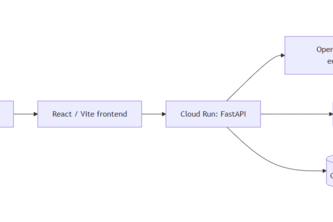
- FastAPI, React, TypeScript, Python, SQLite, ChromaDB, Firebase Hosting, Cloud Run
- The app uses RAG to ground responses in real memories.
- Challenges included:
- Ensuring GPT doesn’t invent history
- Managing deployment issues with ephemeral storage and CORS
Inference: The technical stack suggests a prototype built for demonstration or personal use, not production-grade scalability. Deployment is described as messy, indicating early-stage development.
Traction & Maturity Signals
The description states:
- This was a hackathon submission.
- It was built during OpenAI Build Week.
- The author worked alone and used tools like Codex and GPT-5.6 to build it.
Not evidenced: No evidence of users, customers, or adoption beyond the author’s own use case. No metrics, usage data, or feedback are provided.
Competitive Context
The description does not mention:
- Competitors
- Market analysis
- Existing solutions in the family memory or storytelling space
Not evidenced: No competitive landscape is described. The product appears to be a standalone idea without reference to existing offerings.
Open Questions & Risks
- Solo developer project with no team, funding, or traction.
- No revenue model or monetization strategy.
- Prototype-level tech stack (SQLite, ephemeral storage) suggests limited scalability.
- Self-reported only: No independent validation of claims or product performance.
Inference: The risk of failure is high due to lack of market testing, user feedback, and commercial viability. It may be a personal project with no path to growth.
Questions the description leaves open
- What is the intended user base beyond the author’s own family?
- Are there any users or early adopters who have tested this product?
- How does the author plan to scale beyond a single-user, personal tool?
- Is there any intention to monetize or offer this as a service?
- What are the technical limitations of using SQLite and ChromaDB in production?
Overall Assessment
The description states that Kangen is a solo developer hackathon project with no evidence of traction, revenue, or commercial strategy.
Assessment: Not suitable for investment or partnership at this stage. It is a personal prototype with no demonstrated market demand or business model. The author’s own account indicates it was built for demonstration and personal use only.
Confidence level: Low — based entirely on self-reported information with no external validation or evidence of adoption, revenue, or scalability.
User Stories BotA demo video on every pull request
Get a demo video on every new feature
GitHub App that watches your pull requests and records a narrated, captioned demo.
Save time on demo prep and make informed decisions faster with a video walkthrough of every new feature.
Source
Submitted to the OpenAI 2026 hackathon on Devpost. Project home on Devpost. Back to the full gallery on Devpost.
This competitive analysis was produced by top-founders.com (opens in a new tab)
Generated by a language model from this project's public Devpost page — its tagline, the author's own write-up and any built-with tags listed there — as captured in August 2026. Short quotations are the author's words. It is an opinion on the idea as a business, not on the people behind it, and it reflects the description as published then. If the project has moved on, request a correction below. The analysis is not independent research and contains no verified traction, revenue or customer data.
An independent guide by KFG International LLC — not affiliated with, endorsed by, or connected to Devpost or OpenAI.