

Archive position — measured, not model output
0 likes on Devpost
2,263 of the 7,850 archived projects have more likes, and 5,587 share exactly 0 — so this project's #4,449 place in the like-ranked listing is a tie-break inside that group, not a ranking.
Projects (log scale)
Likes on Devpost. ▲ marks this project's group.
Show the figures
| Likes | Projects | Share of archive |
|---|---|---|
| 0 | 5,587 | 71.2% |
| 1 | 1,758 | 22.4% |
| 2 | 284 | 3.6% |
| 3–4 | 132 | 1.7% |
| 5–9 | 75 | 1.0% |
| 10+ | 14 | 0.2% |
 User Stories BotA demo video on every pull request
Get a demo video on every new feature
GitHub App that watches your pull requests and records a narrated, captioned demo.
Save time on demo prep and make informed decisions faster with a video walkthrough of every new feature.
Executive Summary
HansUp is a self-reported social fitness application built by a single developer as part of the OpenAI 2026 hackathon. The app integrates with Apple Health to track movement data and offers features such as goal setting, streaks, badges, friend rankings, challenges, and chat. It is described as a private social experience aimed at increasing motivation through shared activity tracking and friendly competition.
The author states that the app was built using SwiftUI, SwiftData, Node.js, TypeScript, PostgreSQL, and Supabase Storage. The project has no known revenue, customers, or traction beyond its development phase.
Key Open Question
Is there evidence of any commercial intent or user adoption beyond this single-person development effort?
What The Product Actually Is
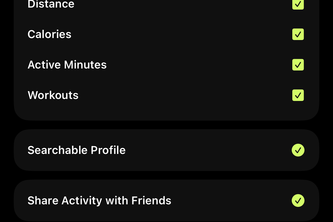
The description states that HansUp is a social fitness app that connects to Apple Health for tracking steps, distance, calories, workouts, and active minutes. It allows users to set goals, maintain streaks, earn badges, view recaps, add friends, compare rankings, chat, and join fitness challenges.
- Claimed functionality: Activity tracking, goal setting, streak maintenance, badge earning, friend comparison, group challenges, messaging.
- Integration: Apple Health via HealthKit.
- Technology stack (as stated): iOS app built with SwiftUI, SwiftData; backend with Node.js, TypeScript, PostgreSQL, Supabase Storage, Google OAuth.
The author states that the app combines "HealthKit activity tracking, historical insights, goals, streaks, badges, friend activity, rankings, challenges, notifications, and direct or group messaging."
Inference The app appears to be a prototype or MVP built for personal use and hackathon submission, not yet a commercial product.
Positioning & Claim Evolution
The author describes HansUp as an attempt to solve the lack of pace tracking in existing fitness apps like Apple Fitness and Strava. It is positioned as a way to make staying active easier with friends, combining fitness tracking, competition, and communication into one private social experience.
- Original motivation: Personal health improvement and identifying gaps in current apps.
- Core positioning: A private social platform for fitness tracking and motivation.
- Evolution of claims: From personal tool to a potential social fitness app with competitive elements.
The author states: “I wanted to combine fitness tracking, friendly competition, and communication in one private social experience.”
Inference The positioning evolved from a personal solution to a broader social product idea, but no evidence suggests this has been validated or tested with users beyond the developer.
Target Customer & ICP
The description does not explicitly define a target customer or ideal customer profile (ICP). However, it implies that the app is aimed at individuals who are active and interested in tracking their movement, comparing performance with friends, and participating in challenges.
- Implied audience: Health-conscious individuals using Apple devices.
- Use case: Personal fitness tracking with social elements.
- Not evidenced Specific demographics, user personas, or segmentation strategy.
The author states: “I decided to build HansUp… because I noticed I couldn’t find it on the Apple fitness app and also wasn't so sure I would find that feature on strava.”
Inference The target is likely a subset of Apple users who are already engaged in fitness tracking and want more social or competitive features.
Business Model & Pricing Evidence
There is no evidence in the description of any business model or pricing strategy. The app is described as a personal project built for a hackathon, with no mention of monetization, subscriptions, or paid features.
- Monetization: Not stated.
- Pricing: Not stated.
- Revenue streams: Not stated.
The author does not describe any commercial aspects beyond the development effort.
Inference No business model is evident. The app appears to be a prototype with no known revenue generation or pricing structure.
Technical & Delivery Signals
The project was built using modern technologies including SwiftUI, SwiftData, Node.js, TypeScript, PostgreSQL, and Supabase Storage. It integrates with Apple HealthKit and uses OAuth for authentication.
- Backend: Node.js, TypeScript, PostgreSQL.
- Frontend (iOS): SwiftUI, SwiftData.
- Deployment: Render.
- Authentication: Google OAuth, with plans to add Sign in with Apple.
- Challenges overcome: Data synchronization, stale server responses, performance with large datasets.
The author states: “I learned how to build durable background synchronization, prevent stale server data from replacing newer device data, and manage large datasets without slowing down SwiftUI.”
Inference Technical execution shows some depth in handling complex mobile and backend integration, but no evidence of production-scale deployment or user-facing infrastructure.
Traction & Maturity Signals
There is no evidence of traction, adoption, or user engagement beyond the single developer’s personal use and hackathon submission. The team size is listed as 0, and there are no mentions of users, customers, or usage metrics.
- User base: Not stated.
- Adoption: Not stated.
- Maturity level: Prototype or MVP.
- Deployment status: Not stated beyond TestFlight/App Store preparation.
The author states: “I built HansUp into a functional social fitness app rather than a static prototype.”
Inference The app is described as functional but not yet released to the public or validated in the market.
Competitive Context
The description does not provide any information about competitors or how HansUp compares to existing solutions like Apple Fitness, Strava, or other fitness tracking platforms. It only mentions that the author couldn’t find pace tracking features in these apps.
- Known competitors: Apple Fitness, Strava.
- Differentiation: Pace tracking, social elements, private experience.
- Market awareness: Not stated.
The author states: “I noticed I couldn’t find it on the Apple fitness app and also wasn't so sure I would find that feature on strava.”
Inference The product is positioned to address a gap in existing apps but lacks competitive analysis or positioning against them.
Open Questions & Risks
- Single developer: No team, no external validation.
- No revenue or traction: No evidence of monetization or user adoption.
- Prototype status: Described as a functional prototype, not yet a product for market.
- Unproven market fit: No evidence of user feedback or demand beyond the author’s personal experience.
- Limited scalability: No indication of infrastructure or architecture to support growth.
The author states: “I built HansUp into a functional social fitness app rather than a static prototype.”
Inference The lack of team, traction, and commercial intent raises questions about whether this is a viable product or just a personal project.
Questions the description leaves open
- What specific user problems are you solving that existing apps don’t?
- Have you tested the app with real users beyond yourself?
- What is your plan for monetization and scaling?
- How do you intend to grow the user base and engagement?
- What are the key technical challenges you expect to face in production?
Overall Assessment
Not evidenced.
There is no evidence of any commercial intent, traction, or financials to support an investment or partnership decision. The project is described as a hackathon submission by a single developer with no known users, revenue, or business model.
The author states: “I built HansUp into a functional social fitness app rather than a static prototype.”
Inference This is a personal project, not a commercial venture. No basis for investment or partnership at this stage.
User Stories BotA demo video on every pull request
Get a demo video on every new feature
GitHub App that watches your pull requests and records a narrated, captioned demo.
Save time on demo prep and make informed decisions faster with a video walkthrough of every new feature.
Source
Submitted to the OpenAI 2026 hackathon on Devpost. Project home on Devpost. Back to the full gallery on Devpost.
This competitive analysis was produced by top-founders.com (opens in a new tab)
Generated by a language model from this project's public Devpost page — its tagline, the author's own write-up and any built-with tags listed there — as captured in August 2026. Short quotations are the author's words. It is an opinion on the idea as a business, not on the people behind it, and it reflects the description as published then. If the project has moved on, request a correction below. The analysis is not independent research and contains no verified traction, revenue or customer data.
An independent guide by KFG International LLC — not affiliated with, endorsed by, or connected to Devpost or OpenAI.