

Archive position — measured, not model output
0 likes on Devpost
2,263 of the 7,850 archived projects have more likes, and 5,587 share exactly 0 — so this project's #4,450 place in the like-ranked listing is a tie-break inside that group, not a ranking.
Projects (log scale)
Likes on Devpost. ▲ marks this project's group.
Show the figures
| Likes | Projects | Share of archive |
|---|---|---|
| 0 | 5,587 | 71.2% |
| 1 | 1,758 | 22.4% |
| 2 | 284 | 3.6% |
| 3–4 | 132 | 1.7% |
| 5–9 | 75 | 1.0% |
| 10+ | 14 | 0.2% |
 User Stories BotA demo video on every pull request
Get a demo video on every new feature
GitHub App that watches your pull requests and records a narrated, captioned demo.
Save time on demo prep and make informed decisions faster with a video walkthrough of every new feature.
Executive Summary
What the company appears to be
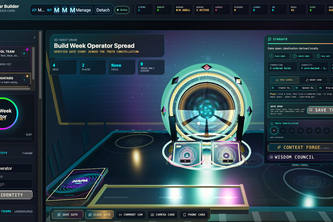
Hapa Avatar Builder is a self-reported local-first 3D application for managing AI-generated knowledge through “Wisdom Cards” and deterministic collaboration contexts. It claims to enable humans and AI agents to work together more efficiently by turning AI work history into inspectable, reusable artifacts.
What changed
The author reports building upon an existing system to add features like attributed Wisdom Cards, deterministic namespaces, portable Context Cards, and peer-blind Wisdom evaluation. These were implemented during OpenAI Build Week using tools such as Codex, GPT-5.6 Sol, and Ollama.
Single most important open question
Is there any evidence of real-world usage or adoption beyond the author’s own development work?
Note: This analysis is based entirely on the self-reported project description provided by the caller. No external verification or historical data is available. All claims are treated as stated by the author and not proven.
What The Product Actually Is
The description states that Hapa Avatar Builder is a local-first 3D workspace designed to turn AI collaboration into reusable, attributable knowledge. It allows users to:
- Browse Cards
- Inspect their source (e.g., raw AI turns)
- Arrange them into deliberate working contexts
- Carry those contexts into future human or agent work
It also supports:
- Construction and management of AI Avatars
- Use of Hapa Cards that shape avatar behavior
- Visualized deterministic namespaces via a “Stargate”
- Portable Context Cards that restore safe scene commitments without storing secrets
- Human-gated local-AI proposal workflows with peer-blind Wisdom evaluation
Inference: The product appears to be a developer-facing tool for managing AI-generated content in a structured, inspectable way. It uses technologies like Electron, React, Three.js, Hypercore, Hyperswarm, and Ollama.
Positioning & Claim Evolution
The author positions Hapa Avatar Builder as part of a broader Hapa ecosystem that supplies compatible protocols and supporting nodes. The submitted application focuses on constructing and managing AI Avatars with Hapa Cards that influence how they behave.
Key claims include:
- Turning AI work history into inspectable, reusable knowledge
- Enabling safe, deterministic 3D peer-to-peer collaboration between humans and agents
- Using “Wisdom Cards” to shape AI behavior and function
Claim: The system aims to make AI collaboration more efficient by preserving attribution, custody, and decision-making traceability.
Inference: The positioning suggests a focus on trustworthy AI workflows, where transparency and control over AI outputs are central. However, no evidence of actual user adoption or commercial traction is provided.
Target Customer & ICP
The description does not clearly define a target customer or ideal customer profile (ICP). It implies use cases for:
- Developers working with AI agents
- Teams collaborating across human and agentic workflows
- Users interested in inspecting and reusing AI-generated knowledge
Claim: The tool is aimed at developers or teams who want to manage AI work history in a structured, reusable way.
Inference: Based on the technical stack (Electron, React, Three.js) and focus on local-first design, it may appeal to developers or early adopters of decentralized AI tools. No explicit customer segment is named.
Business Model & Pricing Evidence
There is no mention of pricing, business model, monetization strategy, or revenue streams in the description.
Claim: None stated.
Inference: Since this is a hackathon submission and not a commercial product, there is no indication that any business model has been developed or tested.
Technical & Delivery Signals
The author reports building with:
- Electron + React (frontend)
- Three.js (3D rendering)
- Hypercore (append-only custody receipts)
- Hyperswarm, Noise, Protomux (P2P communication)
- Ollama + qwen3.5:27b (local inference)
- Codex Desktop and GPT-5.6 Sol/Terra (development support)
Key technical features include:
- Deterministic namespaces
- Portable Context Cards
- Human-gated AI proposal workflows
- Peer-blind Wisdom evaluation
- Expiring Gate Passes for local P2P proofs
Claim: The system supports local-first, deterministic, and secure collaboration between humans and agents.
Inference: The use of open-source protocols like Hypercore and Hyperswarm suggests a decentralized architecture. However, no evidence of scalability or production deployment is given.
Traction & Maturity Signals
There is no evidence of:
- Revenue
- Customers
- Adoption
- Product-market fit
- User engagement metrics
Claim: The project was built during OpenAI Build Week and includes a judgeable demo with 24/24 passing tests and 997/997 in broader suites.
Inference: While the author claims test coverage and functionality, there is no indication of real-world usage or impact beyond the development process.
Competitive Context
The description does not reference competitors directly. However, it implies alignment with:
- AI agent collaboration platforms
- Decentralized knowledge management systems
- Tools that support attribution and custody of AI outputs
Claim: The system operates within a broader ecosystem of compatible protocols and nodes.
Inference: Without explicit comparison to existing tools or markets, the competitive landscape remains unclear. It may compete with tools focused on AI workflow orchestration or decentralized collaboration platforms.
Open Questions & Risks
- No traction or commercial evidence: The entire description is self-reported and lacks any data on users, revenue, or adoption.
- Unproven scalability: The system is described as local-first; no indication of how it scales beyond isolated environments.
- Limited external validation: No third-party reviews, partnerships, or endorsements are mentioned.
- Unclear path to monetization: No business model or pricing strategy is presented.
- Highly technical and niche: The focus on protocols like Hypercore, Hyperswarm, and local inference may limit accessibility.
Inference: This appears to be a proof-of-concept or prototype rather than a mature product with market traction.
Questions the description leaves open
- What is the intended use case for Hapa Avatar Builder beyond the current demo?
- Are there any real-world users or pilot programs currently underway?
- How does the system plan to scale beyond local, isolated environments?
- Is there a roadmap for integrating with mainstream AI platforms or tools?
- What are the long-term plans for monetization or commercial viability?
- Can you provide more details on how the “Wisdom Cards” are generated and validated?
- How does this tool differ from other knowledge management or AI collaboration systems?
Overall Assessment
There is no evidence of traction, revenue, or customer adoption beyond the author’s own development work.
Claim: The project was built as a hackathon submission with a judgeable demo and test suite.
Inference: Given the lack of commercial activity, user feedback, or market validation, this appears to be an early-stage prototype. It may have potential for future investment if it evolves into a scalable product with clear use cases and adoption.
Confidence Level: Low
This analysis is based solely on self-reported information from one source — no external corroboration exists. The project shows technical ambition but lacks demonstrated commercial viability or real-world impact.
User Stories BotA demo video on every pull request
Get a demo video on every new feature
GitHub App that watches your pull requests and records a narrated, captioned demo.
Save time on demo prep and make informed decisions faster with a video walkthrough of every new feature.
Source
Submitted to the OpenAI 2026 hackathon on Devpost. Project home on Devpost. Back to the full gallery on Devpost.
This competitive analysis was produced by top-founders.com (opens in a new tab)
Generated by a language model from this project's public Devpost page — its tagline, the author's own write-up and any built-with tags listed there — as captured in August 2026. Short quotations are the author's words. It is an opinion on the idea as a business, not on the people behind it, and it reflects the description as published then. If the project has moved on, request a correction below. The analysis is not independent research and contains no verified traction, revenue or customer data.
An independent guide by KFG International LLC — not affiliated with, endorsed by, or connected to Devpost or OpenAI.