

Archive position — measured, not model output
0 likes on Devpost
2,263 of the 7,850 archived projects have more likes, and 5,587 share exactly 0 — so this project's #3,541 place in the like-ranked listing is a tie-break inside that group, not a ranking.
Projects (log scale)
Likes on Devpost. ▲ marks this project's group.
Show the figures
| Likes | Projects | Share of archive |
|---|---|---|
| 0 | 5,587 | 71.2% |
| 1 | 1,758 | 22.4% |
| 2 | 284 | 3.6% |
| 3–4 | 132 | 1.7% |
| 5–9 | 75 | 1.0% |
| 10+ | 14 | 0.2% |
 User Stories BotA demo video on every pull request
Get a demo video on every new feature
GitHub App that watches your pull requests and records a narrated, captioned demo.
Save time on demo prep and make informed decisions faster with a video walkthrough of every new feature.
Executive Summary
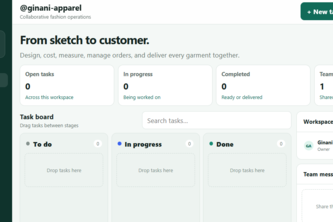
The company appears to be a self-built, single-person project named CoStudio, an AI-assisted workspace for fashion businesses. The author states that it was developed as a hackathon prototype over a few days and is intended to evolve into a full platform with AI-powered tools for fashion entrepreneurs.
What changed: The description indicates a shift from traditional methods (notebooks, spreadsheets) to a digital, AI-enhanced workflow for managing clients, costing garments, tracking production, and generating marketing content. It also reflects the author's personal journey in fashion education and entrepreneurship.
The single most important open question: Is there evidence of traction or early customer validation beyond the author’s own use case? The project is described as a prototype with no revenue, customers, or adoption data — only self-reported intent and claims about future features.
Note: This analysis is based solely on the self-reported, unverified account provided by the author. No external corroboration exists for any of the stated features, functionality, or business model.
What The Product Actually Is
- The description states that CoStudio is an "intelligent business workspace designed specifically for fashion entrepreneurs."
- It enables users to:
- Register and manage clients.
- Record measurements and garment requirements.
- Calculate accurate garment costs and quotations.
- Track production from enquiry to delivery.
- Generate product catalogue descriptions.
- Create social media and marketing content using AI.
Inference: Based on the author's own write-up, CoStudio is a web-based platform built with Next.js, TypeScript, Tailwind CSS, Supabase, and OpenAI’s GPT-5.6. It integrates AI capabilities to automate parts of the fashion business workflow.
Claim vs Fact: The description claims that CoStudio "combines practical fashion-industry knowledge with modern AI workflows." This is a claim about integration, not verified functionality or performance.
Positioning & Claim Evolution
- The author positions CoStudio as an intelligent workspace aimed at small fashion businesses.
- It is described as a tool that brings capabilities once available only to large companies into the hands of designers and dressmakers.
- The platform is framed as a solution to inefficiencies in traditional methods like notebooks, spreadsheets, and disconnected apps.
Inference: The positioning evolved from a personal need (the author’s own experience) to a broader vision for democratizing access to advanced tools through AI.
Claim vs Fact: The description states that CoStudio is “inspired by the desire to place those capabilities into the hands of fashion designers, dressmakers, and small apparel businesses.” This reflects intent, not evidence of market traction or adoption.
Target Customer & ICP
- The author identifies the primary users as:
- Fashion designers.
- Dressmakers.
- Small apparel businesses.
- Fashion entrepreneurs.
Inference: These are inferred from the stated use cases and the context of the author’s own professional journey in fashion education and entrepreneurship.
Claim vs Fact: The description states that CoStudio is designed for “small fashion businesses,” but there is no evidence of actual customer segments or personas defined beyond this general category.
Business Model & Pricing Evidence
- Not evidenced.
Absence of evidence: There is no mention of pricing, monetization strategy, or business model in the description. The author does not describe how the platform will be sold or who pays for it.
Technical & Delivery Signals
- Built with:
- Next.js
- TypeScript
- Tailwind CSS
- Supabase
- OpenAI’s GPT-5.6 (via Codex)
- Development environment: Visual Studio Code
- The author used AI tools like Codex to accelerate development and implement features.
- The application is described as a modern web application.
Inference: The tech stack suggests a full-stack, cloud-hosted SaaS-like architecture with AI integration. However, the prototype nature implies limited production readiness or scalability.
Claim vs Fact: The description states that “Codex accelerated development by helping generate application structure, implement features, refine components, and solve programming challenges.” This is a claim about tool usage, not actual performance or delivery quality.
Traction & Maturity Signals
- Not evidenced.
Absence of evidence: There is no mention of revenue, customers, users, or adoption metrics. The project is described as a hackathon prototype with no indication of real-world usage or market validation.
Competitive Context
- Not evidenced.
Absence of evidence: No information is provided about existing competitors or the competitive landscape in the fashion business software space.
Open Questions & Risks
- Single-person team: The project has only one member (Eunice Grace), which raises concerns about scalability, feature development speed, and long-term maintenance.
- Prototype nature: It’s described as a hackathon prototype with limited scope. Future features like 3D avatars, virtual fitting, and inventory management are listed but not implemented yet.
- Lack of commercial data: No evidence of revenue, customers, or product-market fit.
- AI dependency: Heavy reliance on OpenAI's GPT-5.6 may pose risks related to cost, availability, and integration complexity.
Inference: The lack of traction and commercial validation makes it difficult to assess whether the platform addresses real market needs beyond the author’s own use case.
Questions the description leaves open
- What specific problems in fashion business operations are you solving, and how do you know they exist?
- Have you validated your idea with potential users or customers outside of yourself?
- How will you monetize CoStudio? Is there a pricing model or revenue path defined?
- What is the timeline for implementing the features listed under “What’s next”?
- Are there any technical dependencies (e.g., OpenAI API access) that could limit scalability or control?
Overall Assessment
- Not evidenced.
Absence of evidence: There is no indication of funding, investor interest, or partnership discussions. The project remains a personal endeavor with no signs of external commercial support or traction.
Confidence level: Low — this is a self-reported prototype with no verified business metrics, customer data, or market validation. It reflects the author’s vision and intent but lacks evidence of viability or scalability.
User Stories BotA demo video on every pull request
Get a demo video on every new feature
GitHub App that watches your pull requests and records a narrated, captioned demo.
Save time on demo prep and make informed decisions faster with a video walkthrough of every new feature.
Source
Submitted to the OpenAI 2026 hackathon on Devpost. Project home on Devpost. Back to the full gallery on Devpost.
This competitive analysis was produced by top-founders.com (opens in a new tab)
Generated by a language model from this project's public Devpost page — its tagline, the author's own write-up and any built-with tags listed there — as captured in August 2026. Short quotations are the author's words. It is an opinion on the idea as a business, not on the people behind it, and it reflects the description as published then. If the project has moved on, request a correction below. The analysis is not independent research and contains no verified traction, revenue or customer data.
An independent guide by KFG International LLC — not affiliated with, endorsed by, or connected to Devpost or OpenAI.