

Archive position — measured, not model output
0 likes on Devpost
2,263 of the 7,850 archived projects have more likes, and 5,587 share exactly 0 — so this project's #4,208 place in the like-ranked listing is a tie-break inside that group, not a ranking.
Projects (log scale)
Likes on Devpost. ▲ marks this project's group.
Show the figures
| Likes | Projects | Share of archive |
|---|---|---|
| 0 | 5,587 | 71.2% |
| 1 | 1,758 | 22.4% |
| 2 | 284 | 3.6% |
| 3–4 | 132 | 1.7% |
| 5–9 | 75 | 1.0% |
| 10+ | 14 | 0.2% |
 User Stories BotA demo video on every pull request
Get a demo video on every new feature
GitHub App that watches your pull requests and records a narrated, captioned demo.
Save time on demo prep and make informed decisions faster with a video walkthrough of every new feature.
Executive Summary
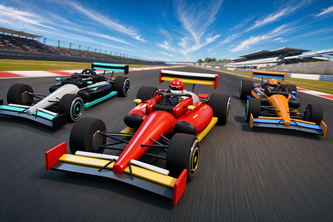
What the company appears to be: Formula Forge is a self-reported open-source, Linux-native formula racing game built by one developer (Vineet V). The project was submitted as part of the OpenAI 2026 hackathon and is described as a playable game with a complete selection-to-race loop, responsive controls, time trials, races against AI, and handling that mimics high-downforce formula cars. It uses C++20, SDL3, raylib, Blender's Python API, and Codex for development.
What changed: The author states this is an experiment to push Sol (a coding agent) toward building a complete 3D racing game with subjective qualities like handling, speed, and responsiveness. It evolved from procedural assets to Blender-generated ones and used deterministic testing and telemetry to improve gameplay feedback loops.
The single most important open question: Is there any evidence of traction, revenue, or user adoption beyond the author’s own development efforts? The description contains no data on users, downloads, monetization, or market validation.
What The Product Actually Is
The description states that Formula Forge is a native Linux, open-source formula racing game. It includes:
- Five circuits
- Five car liveries
- A six-car racing grid
- Manual sequential shifting
- Controller and steering-wheel input
- Lap timing
- Track-limit behavior
- Collisions
- Competitive AI opponents
It also mentions that the vehicle model accounts for tire grip, aerodynamic downforce and drag, load transfer, trail braking, engine braking, high-speed understeer, and surface changes.
Inference: The product is a 3D racing game prototype, not a commercial product. It is described as a working game rather than a visual demo or prototype.
Positioning & Claim Evolution
The author positions Formula Forge as:
- A Linux-native alternative to closed-source F1 games
- An open-source project that users can build, play, inspect, and improve
- A testbed for pushing Sol's capabilities, especially in subjective game design areas like handling and responsiveness
It is described as an experiment to see how far Codex could go in building a complete 3D racing game.
Inference: The positioning evolved from a personal project to a technical demonstration of AI-assisted development. There is no indication that it was ever intended for commercial release or market adoption.
Target Customer & ICP
The description does not state the target customer or ideal customer profile (ICP). It mentions:
- Linux users
- Developers interested in open-source projects
- Players who enjoy formula racing games
However, there is no evidence of user segmentation, personas, or buyer intent.
Inference: The target audience appears to be Linux users and developers, but the author does not articulate a clear ICP. No data on actual users or customer acquisition exists.
Business Model & Pricing Evidence
There is no evidence of a business model or pricing strategy in the description. The project is described as:
- Open-source
- Not monetized
- A personal experiment
Inference: There is no business model evidenced, and no pricing, licensing, or revenue streams are mentioned.
Technical & Delivery Signals
The author states that Formula Forge was built using:
- C++20
- SDL3 (input and audio)
- raylib (real-time 3D rendering)
- Blender Python API (asset pipeline)
- Codex (as an active engineering partner)
It also mentions:
- Deterministic physics and race audits
- Telemetry tools for acceleration, braking, shifting, grip, collisions, AI pace, checkpoints, lap progression
- Visual capture tools for repeatable frames
- JSONL agent-play protocol to let a model control the game
- Blender scripts for generating editable assets and metadata
Inference: The technical stack is well-defined, with a focus on iterative development using AI feedback loops. However, there is no evidence of production deployment or scalability.
Traction & Maturity Signals
The description states that Formula Forge is:
- A working game
- Not just a prototype or demo
- Built by one developer over time
- Submitted to a hackathon (OpenAI 2026)
There is no mention of:
- Downloads
- User engagement
- Community adoption
- Revenue
- Customers
Inference: The project shows maturity in development, but there is no evidence of traction or user adoption.
Competitive Context
The author states that modern licensed F1 games are closed-source and paid, with few native Linux alternatives. Formula Forge aims to be an open-source alternative for Linux users.
No specific competitors are named, nor is there any market analysis or competitive positioning data.
Inference: The project exists in a gap in the Linux gaming space, but no evidence of existing competition or market size is provided.
Open Questions & Risks
- No commercial traction or revenue: The project is described as a personal experiment, not a product with users or monetization.
- Single developer: The entire project was built by one person (Vineet V), which raises questions about scalability and long-term maintenance.
- Unproven market demand: There is no evidence of user interest beyond the author’s own efforts.
- No monetization strategy: No indication that the project intends to generate revenue or attract investors.
Inference: The main risk is that this is a personal hobby project, not a scalable business or product with commercial viability.
Questions the description leaves open
- What is your long-term vision for Formula Forge beyond the hackathon?
- Have you received any feedback from users, developers, or gaming communities?
- Are there plans to monetize or commercialize this project?
- How do you intend to scale beyond a single developer?
- What are your thoughts on expanding to Windows/macOS platforms?
- Do you have any metrics or data on how the game performs in terms of gameplay or user retention?
Overall Assessment
Not evidenced: There is no evidence of revenue, customers, traction, or commercial viability. The project is described as a personal experiment, not a business.
Confidence level: Low — this is a self-reported, unverified account with no external validation or data on adoption or performance.
Assessment: This is a developmental prototype, not a commercial opportunity. It has technical maturity but lacks any evidence of market traction or investment potential.
User Stories BotA demo video on every pull request
Get a demo video on every new feature
GitHub App that watches your pull requests and records a narrated, captioned demo.
Save time on demo prep and make informed decisions faster with a video walkthrough of every new feature.
Source
Submitted to the OpenAI 2026 hackathon on Devpost. Project home on Devpost. Back to the full gallery on Devpost.
This competitive analysis was produced by top-founders.com (opens in a new tab)
Generated by a language model from this project's public Devpost page — its tagline, the author's own write-up and any built-with tags listed there — as captured in August 2026. Short quotations are the author's words. It is an opinion on the idea as a business, not on the people behind it, and it reflects the description as published then. If the project has moved on, request a correction below. The analysis is not independent research and contains no verified traction, revenue or customer data.
An independent guide by KFG International LLC — not affiliated with, endorsed by, or connected to Devpost or OpenAI.