

Archive position — measured, not model output
0 likes on Devpost
2,263 of the 7,850 archived projects have more likes, and 5,587 share exactly 0 — so this project's #4,178 place in the like-ranked listing is a tie-break inside that group, not a ranking.
Projects (log scale)
Likes on Devpost. ▲ marks this project's group.
Show the figures
| Likes | Projects | Share of archive |
|---|---|---|
| 0 | 5,587 | 71.2% |
| 1 | 1,758 | 22.4% |
| 2 | 284 | 3.6% |
| 3–4 | 132 | 1.7% |
| 5–9 | 75 | 1.0% |
| 10+ | 14 | 0.2% |
 User Stories BotA demo video on every pull request
Get a demo video on every new feature
GitHub App that watches your pull requests and records a narrated, captioned demo.
Save time on demo prep and make informed decisions faster with a video walkthrough of every new feature.
Executive Summary
What the company appears to be
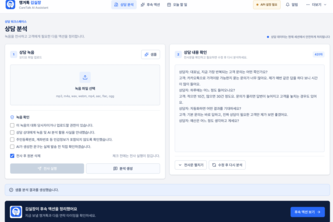
FollowUp AI is an AI-powered assistant designed for small business owners and sales professionals. The author states it helps users turn consultation notes into structured follow-up plans, including personalized messages and recommended next steps.
What changed
This project was submitted as part of the OpenAI 2026 hackathon. It represents a self-reported prototype built to address a common problem in small business sales: losing opportunities due to poor follow-up after consultations.
The single most important open question
Is there evidence that this solution solves a real, recurring need among its target users? The description includes no data on customer adoption, usage frequency, or revenue — only claims about intent and design.
Note: This analysis is based entirely on the self-reported project description provided by the author. No external verification or historical data are available.
What The Product Actually Is
The description states that FollowUp AI is an AI-powered follow-up assistant for small business owners, consultants, coaches, and sales professionals. It processes consultation transcripts or notes and outputs structured summaries including:
- Customer needs and goals
- Budget and purchase conditions
- Questions and objections
- Products or services discussed
- Promised actions
- Recommended next contact date
- Suggested follow-up messages
The system supports sending these messages via KakaoTalk, SMS, email, or other channels.
Inference: The product appears to be a web-based tool using AI to extract structured data from unstructured conversation inputs and generate actionable outputs. It is not described as a full CRM replacement but rather as a lightweight assistant for follow-up workflows.
Positioning & Claim Evolution
The author claims that FollowUp AI addresses a common problem: small business owners often lose customers after consultations because follow-ups are delayed, inconsistent, or forgotten.
It positions itself as an alternative to complex CRM tools used by large companies, targeting individuals and small teams who need simple workflows. The goal is not to replace human communication but to enhance it with AI-generated insights.
Claim: The product helps users remember important details and respond more timely and personally.
Inference: This suggests a shift from manual note-taking toward automated summarization and message generation, aimed at improving sales efficiency for non-technical users.
Target Customer & ICP
The description identifies the following personas:
- Small business owners
- Sales professionals
- Consultants
- Coaches
These are described as individuals or small teams who do not want to use complex CRM systems but still need to manage customer relationships effectively.
Claim: The tool is designed for users unfamiliar with CRM tools or AI.
Inference: This implies a low-barrier, user-friendly interface and workflow tailored to less technical users.
Business Model & Pricing Evidence
No information about pricing, monetization strategy, or business model is provided in the description. There is no mention of subscriptions, freemium tiers, or enterprise licensing.
Not evidenced: No data on how the product will be sold or whether it has a revenue path.
Technical & Delivery Signals
The prototype is built using:
- Next.js
- TypeScript
- React
- OpenAI models (GPT-5 mentioned)
- Codex
- Structured JSON outputs
- Supabase for data storage
- Vercel deployment
The workflow involves:
- User enters a transcript or memo
- AI extracts structured information
- Summary and next actions are generated
- Personalized messages are suggested
Claim: The application uses Codex to assist in development, refactoring, and debugging.
Inference: This indicates early-stage tooling with an emphasis on rapid iteration and code quality.
Traction & Maturity Signals
There is no evidence of traction or user adoption beyond the prototype stage. The project was submitted to a hackathon and has no reported customers, revenue, or usage metrics.
Not evidenced: No data on customer engagement, retention, or product maturity beyond initial development.
Competitive Context
The description does not mention competitors directly. However, it implies that existing CRM solutions are too complex for small businesses, suggesting a gap in the market for simpler tools.
Inference: The author sees a niche between general-purpose CRMs and highly specialized AI tools — focusing on ease-of-use and accessibility for individual users.
Open Questions & Risks
- Lack of real-world validation: No evidence of customer feedback, usage patterns, or market testing.
- Unclear differentiation from existing tools: The author does not compare FollowUp AI to current alternatives in the space.
- Limited scope of features: Only basic functionality is described; advanced integrations and automation are planned but not implemented yet.
- Dependency on AI accuracy: Risk of generating misleading or inappropriate messages without robust validation mechanisms.
Inference: Without traction, there is no way to assess whether the solution truly solves a meaningful problem or if it’s just a promising idea.
Questions the description leaves open
- How do you plan to validate that this addresses a real pain point for small business owners?
- Have you tested the prototype with actual users? What were their reactions?
- What specific problems are users currently facing in managing follow-ups, and how does your tool solve them better than current methods?
- Are there any existing tools that already offer similar functionality? How is FollowUp AI different?
- What is the expected timeline for moving from prototype to a scalable product?
- Do you have any plans for integrating with communication platforms like Slack, Zoom, or Google Calendar?
Overall Assessment
Not evidenced: There is no evidence of traction, revenue, or customer validation that would support an investment or partnership decision.
Confidence level: Low — based solely on a self-reported prototype and author’s claims about intent and design.
Assessment: This project appears to be an early-stage idea with potential but lacks any demonstrated commercial viability. It requires further validation through user testing, market research, and product development before any strategic move can be justified.
User Stories BotA demo video on every pull request
Get a demo video on every new feature
GitHub App that watches your pull requests and records a narrated, captioned demo.
Save time on demo prep and make informed decisions faster with a video walkthrough of every new feature.
Source
Submitted to the OpenAI 2026 hackathon on Devpost. Project home on Devpost. Back to the full gallery on Devpost.
This competitive analysis was produced by top-founders.com (opens in a new tab)
Generated by a language model from this project's public Devpost page — its tagline, the author's own write-up and any built-with tags listed there — as captured in August 2026. Short quotations are the author's words. It is an opinion on the idea as a business, not on the people behind it, and it reflects the description as published then. If the project has moved on, request a correction below. The analysis is not independent research and contains no verified traction, revenue or customer data.
An independent guide by KFG International LLC — not affiliated with, endorsed by, or connected to Devpost or OpenAI.