

Archive position — measured, not model output
0 likes on Devpost
2,263 of the 7,850 archived projects have more likes, and 5,587 share exactly 0 — so this project's #4,180 place in the like-ranked listing is a tie-break inside that group, not a ranking.
Projects (log scale)
Likes on Devpost. ▲ marks this project's group.
Show the figures
| Likes | Projects | Share of archive |
|---|---|---|
| 0 | 5,587 | 71.2% |
| 1 | 1,758 | 22.4% |
| 2 | 284 | 3.6% |
| 3–4 | 132 | 1.7% |
| 5–9 | 75 | 1.0% |
| 10+ | 14 | 0.2% |
 User Stories BotA demo video on every pull request
Get a demo video on every new feature
GitHub App that watches your pull requests and records a narrated, captioned demo.
Save time on demo prep and make informed decisions faster with a video walkthrough of every new feature.
Executive Summary
What the company appears to be
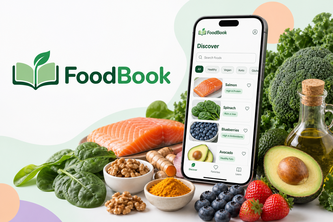
FoodBook is an AI-powered food and dietary knowledge platform, self-described as an educational tool that aggregates nutritional information, diet guides, and meal planning features. It is built with React and Node.js, uses GPT-5.6 for AI assistance, and was developed entirely using Codex (GPT-5.6 Sol). The product includes a food profile database, diet guides, search and filtering capabilities, and AI-generated meal suggestions.
What changed
The project is a self-contained prototype built in a hackathon environment. It has no revenue, customers, or traction beyond the author’s own development and deployment. It is described as an educational prototype with no medical diagnosis or treatment functionality.
Single most important open question
Is there any evidence of user adoption, feedback loops, or product-market fit beyond the author's self-reporting?
What The Product Actually Is
The description states that FoodBook is an AI-powered food and dietary knowledge platform. It includes:
- 127 natural whole-food profiles
- 11 food categories
- 12 diet guides
- Search by food name
- Combined food-category and diet filtering
- Detailed nutrition and reference pages
- Meal basket and meal suggestions (daily, weekly)
- GPT-5.6-powered Ask FoodBook and Meal studio for generating meal plans
- Responsive desktop and mobile layouts
The product is described as educational and not a substitute for medical advice.
Evidence
- The author states the features listed above.
- The platform uses React frontend and Node.js/Express backend.
- It integrates GPT-5.6 via OpenAI API for AI assistance.
- The prototype uses localStorage for favorites, with no account requirement.
- Deployment is on Render as a public service.
Inference The product appears to be a single-user, exploratory tool with limited persistence and no user accounts or data storage beyond local browser storage.
Positioning & Claim Evolution
The author positions FoodBook as an educational platform that simplifies access to food and dietary knowledge. It is described as not providing medical diagnosis or treatment but offering meal ideas and nutritional insights.
Evidence
- The tagline: “AI-powered food & dietary knowledge platform.”
- The write-up states: “FoodBook begins with a food profile database, a dietary library, clear filters, and reference pages.”
- The author emphasizes that it is not a medical tool but an educational one.
- It uses AI to help turn food knowledge into understandable answers and meal ideas.
Inference The positioning is focused on accessibility and education rather than commercial or clinical use. The AI is used for assistance, not decision-making.
Target Customer & ICP
Not evidenced.
Evidence The description does not specify a target customer segment or ideal customer profile (ICP). It only describes the product features and functionality.
Inference Given that it’s a prototype with no user accounts or data collection, it is unclear who the intended users are beyond the author.
Business Model & Pricing Evidence
Not evidenced.
Evidence The description does not mention any pricing model, monetization strategy, or business model. It is described as an educational prototype with no commercial functionality.
Inference There is no indication of a revenue-generating mechanism in the current version.
Technical & Delivery Signals
The product was built using:
- Frontend: React
- Backend: Node.js + Express
- AI integration: GPT-5.6 via OpenAI API
- Deployment: Render (public service)
- Development tooling: Codex (GPT-5.6 Sol)
Evidence
- The author states the tech stack.
- The backend sends user requests and context to OpenAI API, with API key server-side.
- The frontend is responsive and supports desktop and mobile layouts.
- The prototype uses localStorage for favorites and does not require an account.
Inference The product is a minimal viable prototype built in a short timeframe. It lacks scalability features like authentication, databases, or payment systems.
Traction & Maturity Signals
Not evidenced.
Evidence There is no mention of users, customers, revenue, or adoption metrics. The project is described as a hackathon prototype with no production database or user accounts.
Inference The product has no traction or maturity beyond the author’s own development and deployment.
Competitive Context
Not evidenced.
Evidence The description does not mention any competitors or market positioning relative to existing platforms.
Inference No competitive landscape is described, making it impossible to assess how FoodBook compares to other tools in the food/dietary knowledge space.
Open Questions & Risks
- No user data or feedback loops: The prototype does not collect user data or feedback.
- Limited persistence: Favorites are stored locally and not persisted beyond browser sessions.
- No monetization strategy: No evidence of a business model or revenue path.
- Prototype scope: The product is described as a hackathon prototype with no production database, authentication, or payment systems.
- AI dependency: Heavy reliance on GPT-5.6 without clear plans for scalability or cost control.
Evidence
- The author states that features like authentication, payments, and user profiles were removed from the hackathon scope.
- No mention of user accounts or data storage beyond localStorage.
- No pricing or monetization strategy is described.
Questions the description leaves open
- What is your intended target customer segment?
- How do you plan to scale beyond the current prototype?
- Are there any plans for monetization or revenue generation?
- What are your long-term goals for FoodBook, and how do they align with user needs?
- Have you considered how to validate product-market fit beyond the prototype stage?
- How do you intend to manage costs associated with AI API usage (e.g., GPT-5.6)?
- What is the strategy for content updates or expansion of the food/dietary database?
Overall Assessment
Not evidenced.
Evidence There is no information on funding, valuation, or investment interest. The project is described as a hackathon prototype with no commercial traction.
Inference Given the lack of revenue, customers, or business model, there is no basis for an investment or partnership assessment at this stage.
User Stories BotA demo video on every pull request
Get a demo video on every new feature
GitHub App that watches your pull requests and records a narrated, captioned demo.
Save time on demo prep and make informed decisions faster with a video walkthrough of every new feature.
Source
Submitted to the OpenAI 2026 hackathon on Devpost. Project home on Devpost. Back to the full gallery on Devpost.
This competitive analysis was produced by top-founders.com (opens in a new tab)
Generated by a language model from this project's public Devpost page — its tagline, the author's own write-up and any built-with tags listed there — as captured in August 2026. Short quotations are the author's words. It is an opinion on the idea as a business, not on the people behind it, and it reflects the description as published then. If the project has moved on, request a correction below. The analysis is not independent research and contains no verified traction, revenue or customer data.
An independent guide by KFG International LLC — not affiliated with, endorsed by, or connected to Devpost or OpenAI.