

Archive position — measured, not model output
0 likes on Devpost
2,263 of the 7,850 archived projects have more likes, and 5,587 share exactly 0 — so this project's #4,036 place in the like-ranked listing is a tie-break inside that group, not a ranking.
Projects (log scale)
Likes on Devpost. ▲ marks this project's group.
Show the figures
| Likes | Projects | Share of archive |
|---|---|---|
| 0 | 5,587 | 71.2% |
| 1 | 1,758 | 22.4% |
| 2 | 284 | 3.6% |
| 3–4 | 132 | 1.7% |
| 5–9 | 75 | 1.0% |
| 10+ | 14 | 0.2% |
 User Stories BotA demo video on every pull request
Get a demo video on every new feature
GitHub App that watches your pull requests and records a narrated, captioned demo.
Save time on demo prep and make informed decisions faster with a video walkthrough of every new feature.
Executive Summary
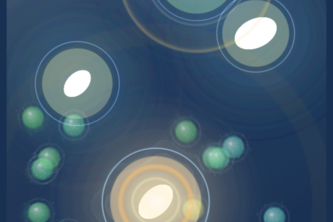
What the company appears to be: Faint Colors is a mobile-first ambient artwork app built by a single developer (Nobuto Suda), using personal passion and AI tools like Codex and GPT-5.6. It allows users to interact with a visual and auditory environment by tapping the screen, which places "stones" that generate sound and light over time.
What changed: The project was submitted as part of an OpenAI 2026 hackathon, indicating it is in early development or prototype stage. There is no evidence of prior commercial activity, revenue, or customer adoption beyond the author's own description.
The single most important open question: Is there a viable path to monetization or broader commercial traction from this type of ambient digital artwork?
This analysis is based solely on the self-reported, unverified project description provided by the author. No third-party verification, archived data, or external sources are available. All claims are attributed to the author’s own account and should be treated as stated rather than proven.
What The Product Actually Is
The description states that Faint Colors is a mobile-first interactive ambient artwork. It uses:
- Visual elements: soft particles, ripples, glow, slow movement
- Audio elements: sound generation through Web Audio API, pentatonic pitch range, retriggered stone voices, collision tones
- Interaction: tapping the screen places stones that resonate over time and influence surrounding audio and visual behavior
It is described as an app built with Next.js, React, TypeScript, HTML Canvas, Web Audio API, and a React Native / Expo shell for iPhone presentation.
The product is not evidenced to have any revenue model, pricing structure, or customer base. It is presented as a personal creative project.
Positioning & Claim Evolution
The author positions Faint Colors as:
- A personal ambient work, not a utility app
- An experience designed for focus, rest, and sleepless nights
- A blend of music theory and visual movement through code
- Inspired by the idea of placing stones in a quiet river at night
There is no evidence of prior positioning or evolution beyond this single author’s vision. The project appears to be a one-off creative endeavor without a history of product iteration or market positioning.
This is a self-stated claim about intent and artistic direction, not proof of traction or commercial viability.
Target Customer & ICP
The description does not identify any specific customer segments or ideal customer profiles (ICP). The author describes the app as being for people seeking:
- Focus
- Rest
- Sleepless nights
However, no demographic, behavioral, or psychographic data is provided to define who these users might be.
No evidence of target customer identification or segmentation exists in the description.
Business Model & Pricing Evidence
There is no evidence of any business model or pricing strategy. The app is described as a personal creative project and not yet released for commercial use.
Not evidenced.
Technical & Delivery Signals
The author built Faint Colors using:
- Next.js, React, TypeScript
- HTML Canvas for visuals
- Web Audio API for sound
- Expo / React Native for mobile deployment
- Tools like Codex and GPT-5.6 were used to assist in implementation and concept development
The app is described as:
- Mobile-first
- Designed with performance considerations (e.g., tuning audio balance, managing active stones/particles)
- Built around a core interaction: tapping the screen to place resonant stones
The technical stack suggests a developer-focused approach, but no evidence of scalability or enterprise-grade delivery.
Traction & Maturity Signals
The project is described as:
- A hackathon submission
- A personal creative endeavor by one developer
- Not yet released as a standalone app
- In early development with plans to polish and prepare for release
There is no evidence of:
- Revenue
- Customers
- Downloads
- User engagement metrics
- Product maturity beyond prototype stage
No traction or maturity signals are evidenced.
Competitive Context
The description does not mention any competitors or existing market players in the ambient sound/art space. The author states that this is their first iPhone app and they see it as the beginning of a larger series of interactive ambient works.
Not evidenced.
Open Questions & Risks
- Single-person development: No team, no external contributors; high risk of limited scalability or maintenance.
- No commercial traction: No revenue, customers, or product-market fit data.
- Ambiguous monetization path: The app is described as a personal artistic work with no clear path to monetization.
- AI dependency: Heavy reliance on AI tools (Codex, GPT-5.6) may not be sustainable or replicable without access to those tools.
- Prototype nature: Submitted to a hackathon; not yet launched or tested in real-world conditions.
These are inferred risks from the self-reported description and lack of evidence for commercial viability.
Questions the description leaves open
- What is your plan for monetizing this type of ambient artwork?
- Have you identified any target users or use cases beyond personal experience?
- How do you intend to scale beyond a single developer?
- Are there any plans to integrate with existing platforms (e.g., Apple Music, meditation apps)?
- What are the key performance indicators (KPIs) you would track if this were to become a commercial product?
These questions aim to uncover assumptions and strategic thinking behind the project that are not evident in the description.
Overall Assessment
There is no evidence of revenue, customers, or traction. The project is described as a personal creative endeavor submitted to a hackathon, with no indication of commercial intent or viability at this stage.
Not evidenced. This is a prototype with no demonstrated path to market or monetization. It may be an artistic exploration rather than a business opportunity.
User Stories BotA demo video on every pull request
Get a demo video on every new feature
GitHub App that watches your pull requests and records a narrated, captioned demo.
Save time on demo prep and make informed decisions faster with a video walkthrough of every new feature.
Source
Submitted to the OpenAI 2026 hackathon on Devpost. Project home on Devpost. Back to the full gallery on Devpost.
This competitive analysis was produced by top-founders.com (opens in a new tab)
Generated by a language model from this project's public Devpost page — its tagline, the author's own write-up and any built-with tags listed there — as captured in August 2026. Short quotations are the author's words. It is an opinion on the idea as a business, not on the people behind it, and it reflects the description as published then. If the project has moved on, request a correction below. The analysis is not independent research and contains no verified traction, revenue or customer data.
An independent guide by KFG International LLC — not affiliated with, endorsed by, or connected to Devpost or OpenAI.