

Archive position — measured, not model output
0 likes on Devpost
2,263 of the 7,850 archived projects have more likes, and 5,587 share exactly 0 — so this project's #4,138 place in the like-ranked listing is a tie-break inside that group, not a ranking.
Projects (log scale)
Likes on Devpost. ▲ marks this project's group.
Show the figures
| Likes | Projects | Share of archive |
|---|---|---|
| 0 | 5,587 | 71.2% |
| 1 | 1,758 | 22.4% |
| 2 | 284 | 3.6% |
| 3–4 | 132 | 1.7% |
| 5–9 | 75 | 1.0% |
| 10+ | 14 | 0.2% |
 User Stories BotA demo video on every pull request
Get a demo video on every new feature
GitHub App that watches your pull requests and records a narrated, captioned demo.
Save time on demo prep and make informed decisions faster with a video walkthrough of every new feature.
Executive Summary
Project: Flight Alert
Author's self-description: A drone pilot’s app that notifies users when an airplane gets too close.
Analysis basis: Self-reported project description from the author, submitted to the OpenAI 2026 hackathon on Devpost. No external verification or traction data provided.
What it appears to be: A proof-of-concept mobile application for drone pilots, built by a single developer (Phineas Howell), designed to monitor nearby aircraft and send alerts when they approach within a certain proximity.
What changed: The project was submitted as part of a hackathon — indicating an early-stage prototype or experimental build, not a commercial product.
Single most important open question: Is there any evidence that the app has been tested in real-world drone operations or validated with actual users?
What The Product Actually Is
The description states:
- Flight Alert is an Android app built using Kotlin and Android Studio.
- It tracks airplanes that are "squawking" (transmitting identification signals) and sends notifications when one gets too close to the user's drone.
Inference: Based on the author’s own write-up, it appears to be a mobile application designed for drone pilots, intended to improve safety by alerting users of nearby aircraft.
Not evidenced:
- No details about how proximity is calculated or what constitutes "too close".
- No information about data sources (e.g., ADS-B feeds, FAA APIs).
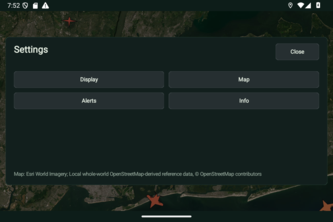
- No mention of user interface design or app functionality beyond notifications.
Positioning & Claim Evolution
The author states:
- “I fly drones, and I kind of couldn't believe this app does not already exist.”
- “Keeps track of all the airplanes that are squawking and send you a notification when one gets too close.”
Claim: The app fills a gap in the market for drone safety tools.
Inference: The positioning is rooted in personal need rather than market research or user validation. The claim implies a lack of existing solutions, but this is not substantiated.
Not evidenced:
- No mention of competitors or prior art.
- No evidence of market demand or user interviews.
- No indication of how the app differentiates from other drone safety tools (if any).
Target Customer & ICP
The author states:
- “For drone pilots.”
Inference: The primary customer is a recreational or commercial drone pilot who flies in airspace where aircraft may be present.
Not evidenced:
- No segmentation of the target audience (e.g., hobbyist vs. professional).
- No indication of geographic scope or regulatory environment (e.g., FAA, EASA).
- No evidence of user personas or customer validation.
Business Model & Pricing Evidence
The description states:
- No explicit mention of pricing or monetization strategy.
Inference: The app is likely a free tool built for personal use, possibly with optional premium features (not described).
Not evidenced:
- No revenue model, subscription plans, or paid features.
- No indication of whether the app will be sold, offered as freemium, or funded via grants or sponsorships.
Technical & Delivery Signals
The author states:
- Built with Android Studio and Kotlin.
- “Tokens. Lots of them.” (possibly referring to API tokens for data feeds).
- “Constructing methodologies for testing and verification along with lots of manual code review.”
Inference: The app is a mobile application, likely using open-source or public APIs for aircraft tracking data. It was built manually with attention to code quality.
Not evidenced:
- No mention of backend architecture or scalability.
- No details on how the app accesses real-time flight data (e.g., ADS-B receivers, cloud APIs).
- No evidence of automated testing or CI/CD pipelines.
Traction & Maturity Signals
The author states:
- Submitted to a hackathon (OpenAI 2026).
- “Legitimately implementing every crucial element in the scope.”
- “I want it to be faster. 120fps faster.”
Inference: The app is at an early prototype stage, likely not yet released or used by others. The author’s ambition to improve performance suggests a focus on optimization but no evidence of real-world usage.
Not evidenced:
- No user base, customer feedback, or adoption metrics.
- No release history or versioning.
- No evidence of app store presence or distribution channels.
Competitive Context
The description states:
- “I couldn't believe this app does not already exist.”
Inference: The author believes there is no existing solution in the market, but this is a personal claim, not a validated fact.
Not evidenced:
- No mention of competitors or similar tools.
- No evidence of market analysis or competitive landscape.
- No indication of whether other drone safety apps exist (e.g., for airspace awareness).
Open Questions & Risks
- Single-person development team: The app is built by one individual, which raises concerns about scalability and long-term maintenance.
- No external validation or user testing: The app has not been tested in real-world conditions or validated with drone pilots.
- Unproven market need: The author’s claim that no such app exists lacks corroboration.
- Unclear technical implementation: No details on how data is sourced, processed, or delivered.
- No monetization strategy: No indication of how the project will be funded or turned into a business.
Questions the description leaves open
- What specific data sources are used to track aircraft (e.g., ADS-B feeds, FAA APIs)?
- How is proximity calculated and what defines “too close”?
- Has the app been tested in real-world drone operations or with other pilots?
- What is the intended business model for monetization or sustainability?
- Are there any existing drone safety tools that this app aims to improve upon or replace?
- What are the technical limitations of the current prototype, and how will they be addressed?
Overall Assessment
Not evidenced:
- No financials, revenue, or customer data.
- No evidence of traction, market validation, or product-market fit.
Inference: At this stage, Flight Alert is a personal project with no clear commercial trajectory. It may be a useful prototype or proof-of-concept, but lacks the signals to support investment or partnership interest.
Confidence level: Low — based on self-reported evidence only, with no external validation or data points.
User Stories BotA demo video on every pull request
Get a demo video on every new feature
GitHub App that watches your pull requests and records a narrated, captioned demo.
Save time on demo prep and make informed decisions faster with a video walkthrough of every new feature.
Source
Submitted to the OpenAI 2026 hackathon on Devpost. Project home on Devpost. Back to the full gallery on Devpost.
This competitive analysis was produced by top-founders.com (opens in a new tab)
Generated by a language model from this project's public Devpost page — its tagline, the author's own write-up and any built-with tags listed there — as captured in August 2026. Short quotations are the author's words. It is an opinion on the idea as a business, not on the people behind it, and it reflects the description as published then. If the project has moved on, request a correction below. The analysis is not independent research and contains no verified traction, revenue or customer data.
An independent guide by KFG International LLC — not affiliated with, endorsed by, or connected to Devpost or OpenAI.