

Archive position — measured, not model output
0 likes on Devpost
2,263 of the 7,850 archived projects have more likes, and 5,587 share exactly 0 — so this project's #3,788 place in the like-ranked listing is a tie-break inside that group, not a ranking.
Projects (log scale)
Likes on Devpost. ▲ marks this project's group.
Show the figures
| Likes | Projects | Share of archive |
|---|---|---|
| 0 | 5,587 | 71.2% |
| 1 | 1,758 | 22.4% |
| 2 | 284 | 3.6% |
| 3–4 | 132 | 1.7% |
| 5–9 | 75 | 1.0% |
| 10+ | 14 | 0.2% |
 User Stories BotA demo video on every pull request
Get a demo video on every new feature
GitHub App that watches your pull requests and records a narrated, captioned demo.
Save time on demo prep and make informed decisions faster with a video walkthrough of every new feature.
Executive Summary
Company: Doorstep – a place-based departure assistant designed to help users remember what they need for trips based on location.
What Changed: The project was built during the OpenAI 2026 hackathon as a prototype using React Native, Expo, and AI tools like Codex and GPT-5.6. It is described as a personal tool for managing tasks and belongings in relation to destinations.
Single Most Important Open Question: Is there evidence of user adoption or traction beyond the author’s own use case?
The description states that Doorstep is a location-based to-do list with geofencing, notifications, and optional map features. It works without an account, network service, or location permission. The product was built in a short timeframe using AI assistance but lacks any indication of real-world usage or monetization.
This is a self-reported, unverified project description — no revenue, customers, or traction data are provided. The author describes it as a personal solution for managing ADHD-related trip preparation, with no evidence of broader market interest or commercial viability.
What The Product Actually Is
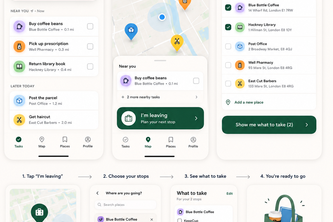
The description states that Doorstep is a place-based departure assistant — described as a “location based to-do list.” It allows users to save places and connect tasks or belongings to one or more destinations. When the user taps “I’m leaving,” it asks where they are going, combines relevant reminders for multi-stop trips, and presents a checklist before confirming departure.
Key features include:
- Native map view
- Optional geofencing and notifications
- Exit reminders
- Support for manual checklist mode (without location services)
- Device-local storage of data
It is built with Expo, React Native, Expo Router, TypeScript, and uses AsyncStorage for local data management. It leverages Expo Location, Expo Notifications, and react-native-maps.
The app was developed during the OpenAI Build Week using Codex and GPT-5.6, with AI tools assisting in component design, interaction debugging, and validation.
Not evidenced: No information on how many users are using it, whether it has been tested beyond the author’s own use case, or if there is any form of monetization or product-market fit.
Positioning & Claim Evolution
The description states that Doorstep helps people “never forget your stuff”, and is designed for those who struggle with last-minute trip preparation — especially users with ADHD. It positions itself as a solution to the gap between knowing what you need to do and remembering what you need to bring.
It is described as:
- A departure assistant
- A location-based to-do list
- A tool that supports multi-stop trips
The author notes that the app works without an account, network service, or location permission — implying a focus on privacy and offline usability.
Inference: The positioning appears to be for personal productivity, not enterprise or B2B use. It is framed as a niche solution for individuals managing ADHD or busy schedules.
Not evidenced: No claims about scalability, broader market appeal, or competitive differentiation beyond its own author’s experience.
Target Customer & ICP
The description states that Doorstep was built for busy people managing ADHD, and specifically addresses the “last-minute gap” between knowing what to do and remembering what to bring on a trip.
It is described as a tool for:
- People who struggle with trip preparation
- Users who want to avoid forgetting items
- Individuals who benefit from structured departure reminders
Inference: The ICP appears to be a single user — the author — or a small group of individuals with similar needs. There is no evidence of targeting other personas, such as families, travelers, or enterprise users.
Not evidenced: No data on customer segments, demographics, or whether there are other types of users beyond the author’s personal use case.
Business Model & Pricing Evidence
The description states that Doorstep works without an account, network service, or location permission, and that data stays on the device. It also mentions that it supports optional features like map pins, geofencing, and notifications — but these are not described as paid services.
There is no mention of:
- Pricing
- Monetization strategy
- Subscription plans
- Paid features
- Revenue model
Not evidenced: No evidence of a business model or pricing structure. The app appears to be a personal prototype with no indication of commercial intent.
Technical & Delivery Signals
The project was built using:
- Expo
- React Native
- Expo Router
- TypeScript
- AsyncStorage for local data
- Expo Location, Expo Notifications, and react-native-maps
It was developed during the OpenAI 2026 hackathon, using:
- Codex
- GPT-5.6
- Various plugins and agents (e.g., Matt Pocock’s Grill skill, Codex Goal plugin)
The author notes that the app supports offline functionality and that location features are optional — indicating a design for privacy and minimal dependency.
Inference: The technical stack suggests a mobile-first, lightweight prototype with strong focus on user privacy and offline usability.
Not evidenced: No evidence of scalability, performance metrics, or production deployment beyond the prototype stage.
Traction & Maturity Signals
The description states that:
- The app was built in a short timeframe (during a hackathon)
- It works without an account, network service, or location permission
- It supports manual checklist mode and optional features like maps and notifications
- The author has not yet added cross-device sync or reusable routines
There is no mention of:
- Users or adoption
- Customer feedback
- Product usage metrics
- Market testing or validation
- Iteration beyond the prototype
Not evidenced: No traction, adoption, or maturity data. It is described as a personal prototype with no indication of real-world use.
Competitive Context
The description does not mention any competitors or similar products. It does not reference:
- Existing apps for trip preparation or to-do lists
- Location-based productivity tools
- Offline-capable checklist apps
Not evidenced: No competitive analysis, market positioning, or awareness of existing solutions in the space.
Open Questions & Risks
- No traction or user data: The app is described as a personal prototype with no evidence of real-world usage.
- Limited scope: It appears to be designed for one person’s use case (ADHD management), not scalable for broader adoption.
- No monetization strategy: No indication of how the product would generate revenue or sustain itself.
- Prototype-only: Built during a hackathon, with no evidence of further development or production deployment.
- AI dependency: Reliance on AI tools like Codex and GPT-5.6 for development raises questions about long-term maintainability and scalability.
Inference: The project is not yet a product in the commercial sense — it’s a proof-of-concept with no evidence of viability beyond its creator’s personal use.
Questions the description leaves open
- What is your actual experience using Doorstep? Is it something you personally rely on?
- Have you tested it with others, or is it purely for your own use?
- Are there any plans to monetize the product or add paid features?
- How do you plan to scale beyond a single-user prototype?
- What are the technical limitations of the current implementation that would prevent production deployment?
- Have you considered how users might adopt this tool in a broader context, not just for personal use?
Overall Assessment
Not evidenced: No data on commercial viability, market potential, or investment readiness.
The project is described as a personal prototype, built during a hackathon, with no evidence of traction, revenue, or customer adoption. It is designed for a narrow use case (ADHD-related trip preparation) and lacks any indication of scalability or monetization strategy.
Inference: At this stage, it is not a viable investment or partnership opportunity — it is a personal tool, not a product with commercial intent or market demand.
User Stories BotA demo video on every pull request
Get a demo video on every new feature
GitHub App that watches your pull requests and records a narrated, captioned demo.
Save time on demo prep and make informed decisions faster with a video walkthrough of every new feature.
Source
Submitted to the OpenAI 2026 hackathon on Devpost. Project home on Devpost. Back to the full gallery on Devpost.
This competitive analysis was produced by top-founders.com (opens in a new tab)
Generated by a language model from this project's public Devpost page — its tagline, the author's own write-up and any built-with tags listed there — as captured in August 2026. Short quotations are the author's words. It is an opinion on the idea as a business, not on the people behind it, and it reflects the description as published then. If the project has moved on, request a correction below. The analysis is not independent research and contains no verified traction, revenue or customer data.
An independent guide by KFG International LLC — not affiliated with, endorsed by, or connected to Devpost or OpenAI.