

Archive position — measured, not model output
0 likes on Devpost
2,263 of the 7,850 archived projects have more likes, and 5,587 share exactly 0 — so this project's #5,751 place in the like-ranked listing is a tie-break inside that group, not a ranking.
Projects (log scale)
Likes on Devpost. ▲ marks this project's group.
Show the figures
| Likes | Projects | Share of archive |
|---|---|---|
| 0 | 5,587 | 71.2% |
| 1 | 1,758 | 22.4% |
| 2 | 284 | 3.6% |
| 3–4 | 132 | 1.7% |
| 5–9 | 75 | 1.0% |
| 10+ | 14 | 0.2% |
 User Stories BotA demo video on every pull request
Get a demo video on every new feature
GitHub App that watches your pull requests and records a narrated, captioned demo.
Save time on demo prep and make informed decisions faster with a video walkthrough of every new feature.
Executive Summary
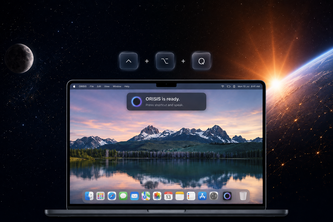
ORISIS is a self-reported voice-first personal computer assistant for macOS, built as a desktop application that uses OpenAI APIs to interpret natural speech and perform actions on the user's computer. The product claims to enable users to control their computer through spoken intent, with three distinct modes: ORISIS Mode (assistant), Smart Dictation (polished writing), and Dictation (exact speech-to-text). It is described as an attempt to change the interface from keyboard-and-mouse first to intent-first, integrating native desktop automation with AI reasoning.
The description states that ORISIS was built by two team members for the OpenAI 2026 hackathon. No revenue, customer data, or traction evidence is provided beyond the self-reported project write-up. The product is positioned as a productivity tool aimed at reducing manual computer interaction through voice commands and AI understanding of context.
The single most important open question is: What level of actual functionality and user experience has been achieved in the prototype, and how does it perform in real-world usage scenarios beyond the hackathon context?
What The Product Actually Is
The description states that ORISIS is a "voice-first personal computer assistant" for macOS. It claims to be built as a desktop application that integrates with native macOS APIs and OpenAI services.
ORISIS Mode is described as the core assistant that understands natural speech in context of the user's current computer state, including apps, windows, browser pages, selected text, files, folders, screen content, memory, workflows, and system actions. It supports tasks like opening applications, searching web content, manipulating text, inspecting screen elements, and running workflows.
Smart Dictation is described as a mode that converts messy speech into polished writing using OpenAI, removing filler words and correcting grammar.
Dictation is described as the simplest mode that types exact spoken words without AI rewriting or interpretation.
The product uses native macOS technologies including Accessibility API, AppKit, AVFoundation, SwiftUI, and Swift, along with OpenAI services like GPT-5.6, OpenAI Realtime API, and Codex for development assistance.
Positioning & Claim Evolution
The description states that ORISIS aims to change the computer interface from keyboard-and-mouse first to intent-first. It positions itself as an attempt to make computers move at the speed of human thought, where users can speak naturally instead of translating thoughts into clicks and keystrokes.
The author claims that ORISIS is not just another AI wrapper but a different way to think about using a computer. It attempts to understand intent directly rather than forcing users to constantly move between apps and translate every thought into manual actions.
The positioning evolved from the inspiration of wanting computers to understand intent instead of waiting for instructions one click at a time, to a concrete product with three distinct modes (ORISIS Mode, Smart Dictation, Dictation) designed to address different user needs during computer interaction.
Target Customer & ICP
The description states that ORISIS is intended for users who want to control their computer more efficiently through voice commands and AI understanding of context. It targets people who find current computer interaction methods too slow or cumbersome, particularly those who perform repetitive tasks like copying, pasting, searching, switching tabs, or rewriting text.
The product appears to be positioned toward productivity-focused users who work with multiple applications, need to manipulate text frequently, and want to reduce manual computer interaction. The target is described as people who are frustrated by the current way computers work in 2026.
Business Model & Pricing Evidence
Not evidenced. The description does not contain any information about pricing models, monetization strategies, or business model details beyond the self-reported project write-up.
Technical & Delivery Signals
The description states that ORISIS was built as a desktop-first assistant for macOS using native technologies including:
- Accessibility API
- AppKit
- AVFoundation
- SwiftUI
- Swift
- OpenAI services (GPT-5.6, OpenAI Realtime API, OpenAI Responses API)
- Codex for development assistance
It uses global shortcuts, microphone input, local dictation, text insertion, selected text handling, clipboard-safe workflows, app opening, window control, browser navigation, file search, screen understanding, local memory, and reusable workflows.
The product is described as combining native desktop control with OpenAI intelligence, particularly using GPT-5.6 for reasoning layers and Codex for code generation and refactoring during development.
Traction & Maturity Signals
Not evidenced. The description does not contain any information about revenue, customers, user adoption, or traction metrics beyond the self-reported project write-up. It is noted that this was submitted to a hackathon, with no indication of post-hackathon development or user base.
Competitive Context
Not evidenced. The description does not contain any information about competitors, market positioning relative to existing products, or competitive landscape analysis.
Open Questions & Risks
- Unverified claims: All descriptions are self-reported and unverified
- Limited evidence of functionality: No demonstration of actual working prototype or user experience beyond the author's account
- Hackathon context: The product was built for a hackathon, with no indication of post-hackathon development or commercial viability
- Technical complexity claims: The description mentions significant technical challenges around context understanding and trust boundaries, but does not provide evidence of successful resolution
- No commercialization evidence: No information about monetization strategy, pricing, or business model implementation
Questions the description leaves open
- What level of functionality has been achieved in the prototype? Can you demonstrate actual working capabilities?
- How does ORISIS handle edge cases and failures in its AI interpretation and execution?
- What specific user testing or feedback has been gathered during development?
- What are the technical limitations of the current implementation that would need to be addressed for commercial viability?
- How does ORISIS manage privacy and security concerns around screen inspection, clipboard access, and system automation?
- What is the roadmap for post-hackathon development and commercialization?
- How does the product handle multi-user environments or shared computer scenarios?
- What specific workflows or use cases have been validated through actual user interaction?
Overall Assessment
Not evidenced. The description provides no information about financials, valuation, funding rounds, or partnership opportunities beyond the self-reported project write-up. The product is described as a hackathon submission with no indication of commercial traction or investment readiness.
User Stories BotA demo video on every pull request
Get a demo video on every new feature
GitHub App that watches your pull requests and records a narrated, captioned demo.
Save time on demo prep and make informed decisions faster with a video walkthrough of every new feature.
Source
Submitted to the OpenAI 2026 hackathon on Devpost. Project home on Devpost. Back to the full gallery on Devpost.
This competitive analysis was produced by top-founders.com (opens in a new tab)
Generated by a language model from this project's public Devpost page — its tagline, the author's own write-up and any built-with tags listed there — as captured in August 2026. Short quotations are the author's words. It is an opinion on the idea as a business, not on the people behind it, and it reflects the description as published then. If the project has moved on, request a correction below. The analysis is not independent research and contains no verified traction, revenue or customer data.
An independent guide by KFG International LLC — not affiliated with, endorsed by, or connected to Devpost or OpenAI.