

Archive position — measured, not model output
0 likes on Devpost
2,263 of the 7,850 archived projects have more likes, and 5,587 share exactly 0 — so this project's #3,789 place in the like-ranked listing is a tie-break inside that group, not a ranking.
Projects (log scale)
Likes on Devpost. ▲ marks this project's group.
Show the figures
| Likes | Projects | Share of archive |
|---|---|---|
| 0 | 5,587 | 71.2% |
| 1 | 1,758 | 22.4% |
| 2 | 284 | 3.6% |
| 3–4 | 132 | 1.7% |
| 5–9 | 75 | 1.0% |
| 10+ | 14 | 0.2% |
 User Stories BotA demo video on every pull request
Get a demo video on every new feature
GitHub App that watches your pull requests and records a narrated, captioned demo.
Save time on demo prep and make informed decisions faster with a video walkthrough of every new feature.
Executive Summary
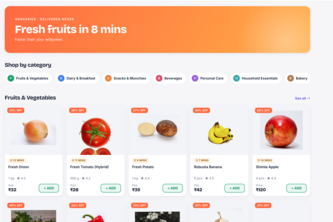
The description states that Dopa Cart (also referred to as DropKart) is a quick-commerce shopping simulator built for Indian users. The app mimics the UX of real delivery apps like Zepto and Blinkit but does not process any real orders, payments or deliveries. It uses real product data sourced from Open Food Facts API and manual curation, with no actual financial transactions. The author claims to have used AI-assisted development via OpenAI Codex by writing detailed spec files (project.md and design.md) before generating UI components.
The project is described as a personal endeavor by one developer (Chetan Pujari), built over several weeks during a hackathon, with no evidence of revenue, customers or traction. The author emphasizes that the app was designed to help manage impulse-buying habits, stress, or shopping addiction rather than encourage overconsumption.
The single most important open question is: What is the commercial viability of this concept beyond its current personal prototype? There is no evidence of monetization strategy, user acquisition, or scalability beyond a single developer's effort. The description does not indicate whether there are any plans for growth, partnerships, or product-market fit validation.
What The Product Actually Is
The description states that Dopa Cart (also called DropKart) is a "quick-commerce shopping simulator" for Indian users. It features:
- Real product data sourced from Open Food Facts API and manual curation
- A UI that mimics real delivery apps like Zepto and Blinkit
- Fully animated experience with micro-interactions (cart bounce, confetti on checkout)
- No real orders, payments or deliveries
- Use of Next.js, TypeScript, Tailwind CSS, Framer Motion, Zustand for development
- Deployment on Vercel
The author describes it as a tool to help people manage impulse-buying habits, stress, or shopping addiction by providing the "dopamine rush" of online shopping without real-world cost.
Positioning & Claim Evolution
The description states that the project was inspired by "dopamine sites" that went viral in South Korea — fake shopping apps that simulate the experience of ordering food or products but never deliver anything. The author notes this trend resonated with them as a developer in India who observed how quick-commerce apps like Zepto and Blinkit use dopamine-driven UX to keep users engaged.
The claim evolution appears to be:
- Initial inspiration from Korean "dopamine sites" trend
- Adaptation for Indian market with real product data
- Focus on helping people manage impulse-buying habits rather than encouraging overconsumption
- Emphasis on using AI-assisted development and behavioral psychology principles
The author states that the app was built to provide a genuinely useful tool for people managing shopping addiction, not to create new addiction.
Target Customer & ICP
The description states that DropKart is designed for "Indian users" who experience impulse-buying habits, stress, or shopping addiction. The author notes they observed how quick-commerce apps like Zepto and Blinkit have become part of daily life in India, and wanted to create a version that focuses purely on the ritual without real-world cost.
The description does not specify:
- Exact demographics or user segments
- Whether it targets people with diagnosed behavioral issues or general impulse buyers
- Any market research or user testing data
Business Model & Pricing Evidence
The description states that DropKart operates without any real orders, payments or deliveries. It is described as a "simulator" that provides the emotional payoff of shopping without financial cost.
There is no evidence in the description of:
- Any pricing model
- Revenue streams
- Monetization strategy
- Paid features or premium tiers
The author explicitly states that the app does not process real payments, store real addresses, or handle actual deliveries.
Technical & Delivery Signals
The description states that DropKart was built using:
- Next.js, TypeScript, Tailwind CSS, Framer Motion, Zustand
- Open Food Facts API for product data
- OpenAI Codex for AI-assisted development
- Vercel for deployment
- Responsive design principles
Key technical details include:
- Use of spec-driven development (project.md and DESIGN.md files)
- Screen-by-screen UI generation using Codex
- Detailed micro-interactions (cart bounce, confetti, delivery tracking animations)
- JSON schema for product data with fields for price, MRP, category, delivery time, image URL
The author notes that early attempts at AI prompting produced inconsistent results but were solved by writing detailed spec files first.
Traction & Maturity Signals
The description states that this is a personal project built by one developer (Chetan Pujari) over several weeks during a hackathon. The web version was deployed on Vercel at dropkart1.vercel.app, with a mobile app version planned next.
There is no evidence of:
- User base or customer numbers
- Revenue or monetization
- Product-market fit validation
- Growth metrics
- Any traction beyond the single developer's prototype
The author mentions that the project was submitted to the OpenAI 2026 hackathon, but this does not indicate commercial traction.
Competitive Context
The description states that DropKart draws inspiration from:
- "Dopamine sites" that went viral in South Korea
- Quick-commerce apps like Zepto and Blinkit in India
- The Fogg Behavior Model for habit-loop psychology
- UX psychology research on dopamine-driven design
The author notes that the emotional payoff in apps like Zepto comes from small things like cart bounce animations, delivery badges, and confetti on checkout — not actual product arrival.
There is no evidence of:
- Direct competitors or market analysis
- Market size or competitive landscape
- Any existing products with similar functionality
Open Questions & Risks
The description indicates several potential risks:
- Lack of commercial viability: The app appears to be a prototype with no evidence of monetization strategy or revenue model.
- Limited scope and scalability: Built by one person, deployed on Vercel, with no indication of team growth or infrastructure scaling.
- Ethical concerns: While the author claims to have built in guardrails against creating new addiction, there's no evidence of how these are implemented or monitored.
- Data sourcing limitations: Reliance on Open Food Facts API and manual curation may not be sustainable for large-scale product data needs.
- AI dependency risk: Heavy reliance on AI-assisted development without clear fallbacks or quality control mechanisms beyond spec files.
- No user acquisition strategy: No evidence of how users would find or adopt the app beyond its hackathon submission.
Questions the description leaves open
- What specific behavioral psychology principles are you applying to ensure this helps rather than harms users?
- How do you plan to validate that this addresses actual user needs rather than just a personal interest?
- What is your roadmap for moving beyond the prototype stage?
- Have you considered legal implications of using product data from open sources?
- How would you monetize this if you wanted to scale it beyond a single developer's effort?
- What metrics would you use to determine success or failure of this concept?
- Are there any existing products or services that already address the same user pain points?
- How do you plan to ensure ethical design practices while maintaining engagement?
Overall Assessment
The description states that DropKart is a personal project built by one developer (Chetan Pujari) during a hackathon, with no evidence of commercial traction or viability beyond its prototype stage.
There is no evidence of:
- Revenue generation
- Customer base
- Product-market fit
- Scalable business model
- Team expansion plans
The author's own account indicates this was a learning exercise and personal project rather than a commercial venture. The description does not provide sufficient evidence to support an investment or partnership decision at this stage.
The single most important open question remains: What is the commercial viability of this concept beyond its current personal prototype? Without evidence of traction, monetization strategy, or scalability, there is insufficient basis for any commercial due-diligence assessment.
User Stories BotA demo video on every pull request
Get a demo video on every new feature
GitHub App that watches your pull requests and records a narrated, captioned demo.
Save time on demo prep and make informed decisions faster with a video walkthrough of every new feature.
Source
Submitted to the OpenAI 2026 hackathon on Devpost. Project home on Devpost. Back to the full gallery on Devpost.
This competitive analysis was produced by top-founders.com (opens in a new tab)
Generated by a language model from this project's public Devpost page — its tagline, the author's own write-up and any built-with tags listed there — as captured in August 2026. Short quotations are the author's words. It is an opinion on the idea as a business, not on the people behind it, and it reflects the description as published then. If the project has moved on, request a correction below. The analysis is not independent research and contains no verified traction, revenue or customer data.
An independent guide by KFG International LLC — not affiliated with, endorsed by, or connected to Devpost or OpenAI.