

Archive position — measured, not model output
1 like on Devpost
505 of the 7,850 archived projects have more likes, and 1,758 share exactly 1 — so this project's #807 place in the like-ranked listing is a tie-break inside that group, not a ranking.
Projects (log scale)
Likes on Devpost. ▲ marks this project's group.
Show the figures
| Likes | Projects | Share of archive |
|---|---|---|
| 0 | 5,587 | 71.2% |
| 1 | 1,758 | 22.4% |
| 2 | 284 | 3.6% |
| 3–4 | 132 | 1.7% |
| 5–9 | 75 | 1.0% |
| 10+ | 14 | 0.2% |
 User Stories BotA demo video on every pull request
Get a demo video on every new feature
GitHub App that watches your pull requests and records a narrated, captioned demo.
Save time on demo prep and make informed decisions faster with a video walkthrough of every new feature.
Executive Summary
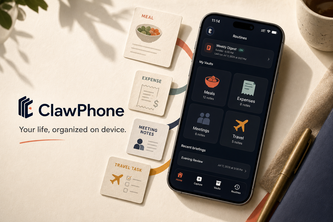
The company appears to be a solo-project, self-reported AI assistant app for iOS, built using Apple Foundation Models and local processing. The author states that it aims to function as a 24/7 personal assistant that logs, summarizes, classifies and schedules user inputs (text, audio, photos) without requiring cloud infrastructure or a laptop. It integrates with Siri and uses custom "vaults" for categorization.
What changed
The project was submitted to the OpenAI 2026 hackathon, suggesting an early-stage development effort focused on demonstrating a proof-of-concept using local AI models on iOS devices.
Single most important open question
Is there any evidence of user adoption or revenue generation beyond the author’s own use case and self-reported development experience?
Note: This analysis is based entirely on the self-reported, unverified project description provided by the caller. No external data, traction metrics, customer feedback or financials are available.
What The Product Actually Is
- The description states that ClawPhone is an app designed to act as a 24/7 AI assistant.
- It claims to capture everything — text, audio, photos — and process them locally on the iPhone using Apple Foundation Models.
- The app is said to summarize, classify, schedule, and track user inputs.
- It integrates with Siri and allows for custom “vaults” (categories) where users can define specific use cases for the AI model.
- It does not require cloud servers or a laptop at home.
Inference: Based on the author's own write-up, this is a personal assistant app built as a proof-of-concept using Apple’s local AI capabilities. The product is described as being in an early stage of development and likely not yet available to users beyond the developer.
Positioning & Claim Evolution
- The tagline: “The 24/7 AI assistant that lives in your pocket” positions ClawPhone as a portable, always-on personal assistant.
- The author claims it eliminates the need for a laptop or cloud infrastructure.
- It builds on prior experience with “Clawbot/Hermes,” suggesting a progression from a web-based agent to a mobile-native app.
- The product is positioned as an extension of AI agents that log and manage life activities, such as meals, meetings, and finances.
Claim: The author positions ClawPhone as a personal assistant that runs entirely on-device, leveraging Apple’s local models. This is a claim about functionality and privacy, not verified traction or adoption.
Target Customer & ICP
- Not evidenced.
- The description does not specify who the target customer is beyond the developer’s own use case.
- There is no mention of personas, market segments, or user types.
Finding: No evidence of a defined ICP or target customer base. The project appears to be a personal experiment rather than a commercial product aimed at a specific group.
Business Model & Pricing Evidence
- Not evidenced.
- No pricing model, monetization strategy or revenue streams are mentioned in the description.
- The app is described as a prototype for a hackathon.
Finding: No evidence of business model or pricing structure. The project seems to be in an exploratory phase without commercial intent.
Technical & Delivery Signals
- Built with: aiddata, apple, apple-foundation-models, localdata, swift.
- Uses Apple Foundation Models for processing text, audio, and vision inputs locally on the device.
- Integrates with Siri.
- Custom “vaults” are used to categorize data.
- The app is said to run on iOS devices only (iPhone).
- Challenges included deployment issues due to local model limitations, cold start performance, and UI design.
Inference: The technical approach suggests a focus on privacy and edge computing. However, the lack of detailed architecture or scalability plans indicates early-stage development.
Traction & Maturity Signals
- Not evidenced.
- No customer data, usage metrics, or adoption indicators are provided.
- The project is described as a hackathon submission.
- The team size is listed as 1 person (the author).
Finding: No evidence of traction or maturity beyond the solo developer’s prototype.
Competitive Context
- Not evidenced.
- No mention of competitors or market landscape.
- The description does not reference similar products or platforms in the AI assistant space.
Finding: No competitive context is provided. This makes it difficult to assess positioning or differentiation.
Open Questions & Risks
- Solo developer: The project has only one member, which raises questions about scalability and long-term maintenance.
- Hackathon prototype: The app was built for a hackathon, suggesting it may not be production-ready or fully tested.
- Limited functionality: The author notes that the context window on phones is short, implying constraints in how much data can be processed effectively.
- Dependency on Apple Foundation Models: This limits compatibility and could pose risks if Apple changes its model offerings.
Inference: The project lacks commercial viability or traction. It may not have moved beyond a proof-of-concept stage.
Questions the description leaves open
- What is the current status of the app? Is it available for download, or still in development?
- How does the app handle data privacy and user control over stored information?
- Has there been any testing with real users beyond the developer?
- Are there plans to expand beyond iOS or integrate with other platforms?
- What are the technical limitations of running AI models locally on mobile devices, and how are they being addressed?
Note: These questions are based on the self-reported nature of the description and aim to uncover gaps in the current narrative.
Overall Assessment
- Not evidenced.
- No financials, revenue, or investment history are available.
- The project is described as a hackathon submission with no commercial traction or clear path to monetization.
Finding: There is insufficient evidence to support an investment or partnership decision. The project appears to be in an exploratory phase and lacks the indicators of a viable business or product market fit.
User Stories BotA demo video on every pull request
Get a demo video on every new feature
GitHub App that watches your pull requests and records a narrated, captioned demo.
Save time on demo prep and make informed decisions faster with a video walkthrough of every new feature.
Source
Submitted to the OpenAI 2026 hackathon on Devpost. Project home on Devpost. Back to the full gallery on Devpost.
This competitive analysis was produced by top-founders.com (opens in a new tab)
Generated by a language model from this project's public Devpost page — its tagline, the author's own write-up and any built-with tags listed there — as captured in August 2026. Short quotations are the author's words. It is an opinion on the idea as a business, not on the people behind it, and it reflects the description as published then. If the project has moved on, request a correction below. The analysis is not independent research and contains no verified traction, revenue or customer data.
An independent guide by KFG International LLC — not affiliated with, endorsed by, or connected to Devpost or OpenAI.