

Archive position — measured, not model output
1 like on Devpost
505 of the 7,850 archived projects have more likes, and 1,758 share exactly 1 — so this project's #808 place in the like-ranked listing is a tie-break inside that group, not a ranking.
Projects (log scale)
Likes on Devpost. ▲ marks this project's group.
Show the figures
| Likes | Projects | Share of archive |
|---|---|---|
| 0 | 5,587 | 71.2% |
| 1 | 1,758 | 22.4% |
| 2 | 284 | 3.6% |
| 3–4 | 132 | 1.7% |
| 5–9 | 75 | 1.0% |
| 10+ | 14 | 0.2% |
 User Stories BotA demo video on every pull request
Get a demo video on every new feature
GitHub App that watches your pull requests and records a narrated, captioned demo.
Save time on demo prep and make informed decisions faster with a video walkthrough of every new feature.
Executive Summary
Company: Clax
Self-reported basis: The description is entirely self-reported and unverified, based on a Devpost submission for the OpenAI 2026 hackathon. No independent evidence of revenue, customers, or traction exists.
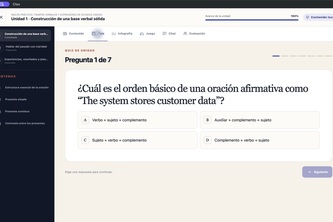
What it appears to be: A desktop application (macOS and Windows) that allows users to create structured, AI-powered learning courses from their own sources using a ChatGPT account. It is designed for adult learners and emphasizes privacy, portability, and pedagogical structure.
What changed: The author describes Clax as an evolution of prior experience in designing virtual learning for adults, aiming to turn scattered AI conversations into reusable, structured educational content.
Single most important open question: Is there evidence that adult learners want or will use this tool, and can it be validated with real users beyond the founder’s own experience?
What The Product Actually Is
The description states that Clax is a desktop application built for macOS and Windows using Electron, React, and TypeScript. It allows users to create personalized AI-powered courses by describing their study goals, adding text or PDF sources, YouTube links, and choosing whether to limit the course to those sources or expand from them.
Key features include:
- Generation of structured learning content with objectives, quizzes, infographics, and review games.
- A teacher avatar with emotional states for conversational evaluation.
- Text-to-speech support, local course library, and portable course export/import.
- Use of a ChatGPT account for content generation.
- Strict output contracts and runtime validation to ensure academic structure.
Inference: The product is a local-first desktop tool designed to help users build modular, reusable educational content using AI. It is not a platform or SaaS offering but a self-contained application.
Positioning & Claim Evolution
The author states that Clax was created to address the problem of scattered learning from AI conversations and aims to turn those into structured, private, and portable courses.
It positions itself as:
- A tool for adult learners.
- Focused on privacy and control over content.
- Designed to be modular, reusable, and grounded in real-world learning needs.
- Not just an AI text generator but a system that structures educational content with pedagogical intention.
Inference: Clax is positioned as a personal, local, and structured learning tool for adult education — not a marketplace or platform. It emphasizes user control, privacy, and reusability over scalability or monetization.
Target Customer & ICP
The description states that Clax was informed by experience designing virtual learning for adults through SENA Colombia’s Specialized Continuing Education program. The author notes that working adults need content that is:
- Clear
- Practical
- Modular
- Connected to real problems
It is designed for adult learners and working professionals who want to create structured, reusable educational content from their own sources.
Inference: The target customer is an adult learner or professional who wants to build and store personal learning materials using AI, with a focus on modularity, privacy, and reuse. No evidence of specific personas, segments, or adoption data is provided.
Business Model & Pricing Evidence
The description does not state anything about pricing, monetization, or business model. It only describes the tool’s functionality and user experience.
Inference: No evidence of a business model or pricing strategy exists in the self-reported description.
Technical & Delivery Signals
Clax is built as an Electron application using:
- TypeScript
- React
- Node.js
- Local-first architecture with encrypted local library
- Secure separation of interface, main process, and internal communication
- Text-to-speech support
- Portable course format independent of central platforms
It uses AI tools like ChatGPT and implements strict output contracts and runtime validation for content generation.
Inference: The technical stack suggests a local-first, secure, and modular product. It is not cloud-based or platform-dependent, which may appeal to privacy-conscious users.
Traction & Maturity Signals
The description states that Clax was built as part of a hackathon submission (OpenAI 2026) and that the author plans to validate it with real adult learners and working professionals. It also mentions next steps like refining the experience, improving visual content generation, and expanding adaptive practice.
There is no evidence of:
- Revenue
- Customers
- Adoption
- Product-market fit
- Prior user feedback or usage data
Inference: The product is in an early stage (hackathon prototype) with no demonstrated traction. It has not yet been validated with real users beyond the founder’s own experience.
Competitive Context
The description does not mention any competitors or market context. It does not state whether similar tools exist, how Clax compares to them, or what the competitive landscape looks like.
Inference: No evidence of competitive analysis or positioning within a broader marketplace is provided.
Open Questions & Risks
- No traction or user validation: The product is described as a hackathon submission with no real-world usage or feedback.
- Founder-only experience: The only learning context comes from the founder’s own experience, not external users.
- Unclear demand: No evidence of market need beyond the author’s personal motivation.
- Local-first approach may limit scalability: While privacy is a benefit, it may also reduce adoption if users expect cloud-based sharing or collaboration.
- No monetization strategy: The product has no stated business model or pricing.
Inference: The main risk is that Clax is an unvalidated idea with no evidence of real user demand or commercial viability.
Questions the description leaves open
- What specific adult learning needs are you trying to solve, and how did you identify them?
- Have you conducted any user interviews or usability testing with your target audience?
- How do you plan to validate the educational value of the generated content?
- Is there a clear path from prototype to product-market fit?
- What is your roadmap for monetization or commercialization?
- Are there any existing tools that solve similar problems, and how does Clax differ?
Overall Assessment
The description presents Clax as an early-stage idea with no evidence of traction, revenue, or user validation. It is a self-contained desktop tool built for personal learning, not a scalable platform or product.
Assessment: Not ready for investment or partnership at this stage. The project is in the prototype phase and lacks any demonstration of market demand, adoption, or commercial viability. Further validation with real users and evidence of traction are required before considering deeper due diligence.
User Stories BotA demo video on every pull request
Get a demo video on every new feature
GitHub App that watches your pull requests and records a narrated, captioned demo.
Save time on demo prep and make informed decisions faster with a video walkthrough of every new feature.
Source
Submitted to the OpenAI 2026 hackathon on Devpost. Project home on Devpost. Back to the full gallery on Devpost.
This competitive analysis was produced by top-founders.com (opens in a new tab)
Generated by a language model from this project's public Devpost page — its tagline, the author's own write-up and any built-with tags listed there — as captured in August 2026. Short quotations are the author's words. It is an opinion on the idea as a business, not on the people behind it, and it reflects the description as published then. If the project has moved on, request a correction below. The analysis is not independent research and contains no verified traction, revenue or customer data.
An independent guide by KFG International LLC — not affiliated with, endorsed by, or connected to Devpost or OpenAI.