

Archive position — measured, not model output
0 likes on Devpost
2,263 of the 7,850 archived projects have more likes, and 5,587 share exactly 0 — so this project's #3,215 place in the like-ranked listing is a tie-break inside that group, not a ranking.
Projects (log scale)
Likes on Devpost. ▲ marks this project's group.
Show the figures
| Likes | Projects | Share of archive |
|---|---|---|
| 0 | 5,587 | 71.2% |
| 1 | 1,758 | 22.4% |
| 2 | 284 | 3.6% |
| 3–4 | 132 | 1.7% |
| 5–9 | 75 | 1.0% |
| 10+ | 14 | 0.2% |
 User Stories BotA demo video on every pull request
Get a demo video on every new feature
GitHub App that watches your pull requests and records a narrated, captioned demo.
Save time on demo prep and make informed decisions faster with a video walkthrough of every new feature.
Executive Summary
Company: ChatLedger
Self-reported basis: The analysis is based entirely on the author-supplied project description from Devpost, submitted to the OpenAI 2026 hackathon. No external verification or historical data are available.
What it appears to be: A tool that processes WhatsApp chat exports into structured expense ledgers, using AI to extract expense data and deterministic logic for settlement calculations. It is described as a prototype built during a hackathon.
What changed: The project was developed as a hackathon submission with no evidence of prior development or commercial traction.
Single most important open question: Is there any evidence that ChatLedger has been used beyond the hackathon context, and does it have any path to product-market fit or revenue generation?
What The Product Actually Is
The description states that ChatLedger:
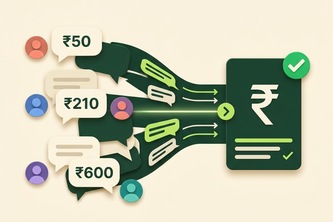
- Converts a WhatsApp .txt export into an auditable shared-expense ledger.
- Identifies expenses, records who paid and why, calculates balances, and creates the smallest set of payments needed to settle the group.
- Provides:
- A Source chat view for comparing original rough messages with the ledger.
- An Activity audit trail for every extracted expense.
- Human confirmation for unclear amounts or splits.
- Receipt and voice-note support for additional evidence.
- A WhatsApp-ready settlement summary and payment reminders.
Inference: The tool is a web-based interface that accepts chat exports, processes them with AI to extract expenses, and outputs a structured ledger. It is not a native WhatsApp integration but a post-hoc tool.
Positioning & Claim Evolution
The description states:
- Shared expenses are hard because the evidence is buried in normal conversations.
- ChatLedger was inspired by the idea that groups should not need a new habit or another spreadsheet.
- Their chat already knows who paid; the product should make that information useful and fair.
Inference: The positioning is to solve an everyday problem—fairly splitting shared expenses without extra tools. It positions itself as a solution that works with existing WhatsApp behavior, not a replacement for it.
Target Customer & ICP
The description states:
- The tool addresses groups like flatmates, hostel outings, or trips.
- It is designed to work with WhatsApp chat exports.
Inference: The target customer appears to be casual groups (e.g., friends, flatmates) who share expenses and use WhatsApp for communication. No evidence of a defined ICP beyond this.
Business Model & Pricing Evidence
The description does not state:
- Any pricing model.
- Revenue streams.
- Monetization strategy.
- Subscription or usage-based models.
Not evidenced: There is no indication of how ChatLedger would generate revenue or whether it has a business model beyond a hackathon prototype.
Technical & Delivery Signals
The description states:
- Built with React, Vite, and Node.js.
- Uses OpenAI GPT-5.6 for structured JSON output to identify expense candidates from English, Hindi, and Hinglish messages.
- Separates AI interpretation from financial arithmetic.
- GPT extracts payer, amount, description, split participants, confidence, and source evidence.
- Deterministic code calculates balances and settlement payments.
- Codex was used to accelerate development.
Inference: The technical stack is modern web-based with AI integration. It separates AI inference from deterministic math, which suggests a design choice for accuracy and auditability.
Traction & Maturity Signals
The description states:
- This is a hackathon prototype.
- No evidence of prior usage or adoption beyond the demo.
- No mention of customers, revenue, or user engagement.
- The system does not persist chats.
Not evidenced: There is no evidence of traction, user base, or product maturity beyond the hackathon submission.
Competitive Context
The description does not state:
- Any competitors.
- Market analysis.
- How ChatLedger compares to existing tools for shared expense tracking.
Not evidenced: No competitive landscape or positioning against other tools is provided.
Open Questions & Risks
- The tool is described as a hackathon prototype with no evidence of product-market fit or traction.
- It relies on AI interpretation, which introduces risk around accuracy and trust.
- No evidence of privacy or data handling policies beyond the statement that uploads are explicit and API keys are not exposed.
- No indication of scalability, monetization, or long-term viability.
Inference: The project is unproven in real-world usage and lacks commercial viability signals.
Questions the description leaves open
- What is the actual user journey beyond the hackathon demo?
- Has there been any external testing or feedback from users?
- How does ChatLedger handle edge cases or ambiguous messages?
- Are there plans to monetize or scale this beyond a prototype?
- What are the risks of AI misinterpretation in financial contexts, and how are they mitigated?
- Is there any evidence of user retention or repeat usage?
Overall Assessment
Not evidenced: There is no evidence of commercial traction, revenue, or a clear path to monetization.
Inference: As a hackathon prototype with no demonstrated product-market fit, user adoption, or business model, ChatLedger does not currently present a compelling investment or partnership opportunity. It may be a proof-of-concept with potential for further development, but that potential is not evidenced in the description.
User Stories BotA demo video on every pull request
Get a demo video on every new feature
GitHub App that watches your pull requests and records a narrated, captioned demo.
Save time on demo prep and make informed decisions faster with a video walkthrough of every new feature.
Source
Submitted to the OpenAI 2026 hackathon on Devpost. Project home on Devpost. Back to the full gallery on Devpost.
This competitive analysis was produced by top-founders.com (opens in a new tab)
Generated by a language model from this project's public Devpost page — its tagline, the author's own write-up and any built-with tags listed there — as captured in August 2026. Short quotations are the author's words. It is an opinion on the idea as a business, not on the people behind it, and it reflects the description as published then. If the project has moved on, request a correction below. The analysis is not independent research and contains no verified traction, revenue or customer data.
An independent guide by KFG International LLC — not affiliated with, endorsed by, or connected to Devpost or OpenAI.