

Archive position — measured, not model output
0 likes on Devpost
2,263 of the 7,850 archived projects have more likes, and 5,587 share exactly 0 — so this project's #3,066 place in the like-ranked listing is a tie-break inside that group, not a ranking.
Projects (log scale)
Likes on Devpost. ▲ marks this project's group.
Show the figures
| Likes | Projects | Share of archive |
|---|---|---|
| 0 | 5,587 | 71.2% |
| 1 | 1,758 | 22.4% |
| 2 | 284 | 3.6% |
| 3–4 | 132 | 1.7% |
| 5–9 | 75 | 1.0% |
| 10+ | 14 | 0.2% |
 User Stories BotA demo video on every pull request
Get a demo video on every new feature
GitHub App that watches your pull requests and records a narrated, captioned demo.
Save time on demo prep and make informed decisions faster with a video walkthrough of every new feature.
Executive Summary
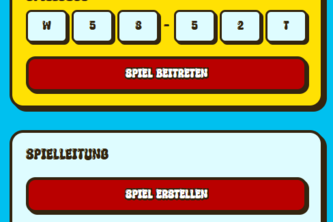
buzzrr is a self-reported mobile-first web app for hosting real-time quiz games with text or buzzer modes. The author states it supports spontaneous quiz rounds where hosts can invite players via QR code or short link, and players answer in real time without accounts. It was built as a full-stack application using Next.js, React, PostgreSQL, and Pusher Channels.
The description indicates no revenue, customers, or traction data exist beyond the author's own account. The project is presented as a hackathon submission with no evidence of commercial adoption or business model execution.
Most important open question
Is there any evidence that buzzrr has moved beyond the prototype stage or demonstrated product-market fit in real-world usage?
What The Product Actually Is
The description states that buzzrr is:
- A mobile quiz show web app
- Designed for spontaneous quiz rounds
- Supports both text answer and buzzer modes
- Allows hosts to create games, invite players via QR code or short link
- Enables real-time answering with no player accounts required
- Built as a full-stack web application using Next.js, React, PostgreSQL, and Pusher Channels
The author describes two main gameplay modes:
- Text answer mode, where players submit written answers for host review
- Buzzer mode, where players buzz first to answer verbally
Key technical features include:
- Real-time updates via Pusher Channels
- Server-side ordering of answers and buzzes using PostgreSQL as the source of truth
- Host-side sound feedback
- QR-code joining
- Round control, scoring, and scoreboard display
Inference: The app appears designed for casual or informal use — such as at parties, classrooms, or workshops — where spontaneity is valued over structured question catalogs.
Positioning & Claim Evolution
The description states that buzzrr was inspired by "the energy of live quiz nights, classrooms, workshops, and game shows" and aims to replicate the experience without complicated setup or player accounts.
It positions itself as a tool for:
- Spontaneous quiz rounds
- Real-time engagement
- Fair competition (especially in buzzer mode)
- Flexible real-world workflows
The author claims it supports "a flexible real-world flow" where questions can be asked out loud, on slides, or in person — rather than forcing all content into the app.
Inference: The positioning emphasizes ease of use and adaptability to informal settings, not a formal quiz management system. It is positioned as an enabler of spontaneous social interaction through gaming.
Target Customer & ICP
The description does not name specific customers or define a target market beyond general use cases like:
- Quiz nights
- Classrooms
- Workshops
- Game shows
It implies the app targets users who want to host informal, real-time quizzes without complex systems or pre-prepared question sets.
Inference: The ICP likely includes casual quiz hosts (e.g., educators, event organizers, friends) who value simplicity and spontaneity over structured quiz tools.
Business Model & Pricing Evidence
There is no evidence of pricing, monetization strategy, or business model in the description. The author does not mention any revenue streams, subscriptions, or paid features.
Inference: No commercial business model has been described or evidenced.
Technical & Delivery Signals
The project was built using:
- Next.js App Router and React
- TypeScript
- Tailwind CSS
- PostgreSQL with Prisma
- Auth.js for host authentication
- Pusher Channels for real-time updates
- Playwright and Vitest for testing
Key technical decisions noted:
- Real-time events are used only as transport; database is the source of truth
- Server-side ordering ensures fairness in buzzer mode
- No question text stored in MVP — focus on rounds, answers, buzzes, scoring, host control
Inference: The app shows some engineering sophistication around real-time systems and data consistency. However, no evidence of production deployment or scalability beyond a single developer's prototype.
Traction & Maturity Signals
The description states that buzzrr was submitted to the OpenAI 2026 hackathon on Devpost and is described as a "hackathon project" by its author.
There is no evidence of:
- Revenue
- Customers
- User adoption
- Product-market fit
- Post-launch activity or iteration
Inference: The product exists only in prototype form, with no demonstrated traction or maturity beyond the initial build.
Competitive Context
The description does not mention competitors or market positioning relative to existing quiz apps. It does not reference similar products or platforms that might offer comparable functionality.
Inference: No competitive landscape is described or evidenced.
Open Questions & Risks
- No commercial traction or revenue: The project is presented as a hackathon submission with no evidence of real-world usage.
- Single developer team: Only one member listed (smaniren Smania), suggesting limited capacity for scaling or iteration.
- Unproven product-market fit: No data on user behavior, engagement, or demand.
- No monetization strategy: No indication of how the app would generate revenue if launched commercially.
- Prototype-only status: The project is described as a hackathon submission with no evidence of further development.
Questions the description leaves open
- Has buzzrr been used beyond the prototype stage? If so, by whom and in what context?
- What is the intended monetization strategy if this were to become a commercial product?
- Are there any plans for user onboarding or account management beyond the current host-only model?
- How does the app handle potential abuse or misuse (e.g., bots, unfair buzzing)?
- Has the team considered how to scale the real-time system for larger audiences?
Overall Assessment
The description presents buzzrr as a hackathon project with no evidence of commercial viability, traction, or business execution.
Assessment: Not evidenced as a viable investment or partnership opportunity at this time. The product is in early prototype form and lacks any demonstration of real-world usage, revenue, or customer demand.
User Stories BotA demo video on every pull request
Get a demo video on every new feature
GitHub App that watches your pull requests and records a narrated, captioned demo.
Save time on demo prep and make informed decisions faster with a video walkthrough of every new feature.
Source
Submitted to the OpenAI 2026 hackathon on Devpost. Project home on Devpost. Back to the full gallery on Devpost.
This competitive analysis was produced by top-founders.com (opens in a new tab)
Generated by a language model from this project's public Devpost page — its tagline, the author's own write-up and any built-with tags listed there — as captured in August 2026. Short quotations are the author's words. It is an opinion on the idea as a business, not on the people behind it, and it reflects the description as published then. If the project has moved on, request a correction below. The analysis is not independent research and contains no verified traction, revenue or customer data.
An independent guide by KFG International LLC — not affiliated with, endorsed by, or connected to Devpost or OpenAI.