

Archive position — measured, not model output
0 likes on Devpost
2,263 of the 7,850 archived projects have more likes, and 5,587 share exactly 0 — so this project's #5,029 place in the like-ranked listing is a tie-break inside that group, not a ranking.
Projects (log scale)
Likes on Devpost. ▲ marks this project's group.
Show the figures
| Likes | Projects | Share of archive |
|---|---|---|
| 0 | 5,587 | 71.2% |
| 1 | 1,758 | 22.4% |
| 2 | 284 | 3.6% |
| 3–4 | 132 | 1.7% |
| 5–9 | 75 | 1.0% |
| 10+ | 14 | 0.2% |
 User Stories BotA demo video on every pull request
Get a demo video on every new feature
GitHub App that watches your pull requests and records a narrated, captioned demo.
Save time on demo prep and make informed decisions faster with a video walkthrough of every new feature.
Executive Summary
LiveLab is an educational tool that allows learners to ask plain English questions about technical concepts and receive interactive simulations in response. The system uses AI to propose simulations, which are then validated through deterministic checks before becoming immutable versions. These versions can be stepped through, modified conversationally, and compared — all while maintaining a safe, repeatable learning environment.
The author states that LiveLab supports Dijkstra’s shortest-path algorithm, Binary Search, and TCP three-way handshake simulations. It is built with Next.js, React, FastAPI, Pydantic, Gemini, and other technologies. The system separates AI flexibility from runtime safety by using validators to approve generated content before it becomes part of a simulation.
The project was submitted as a hackathon entry to the OpenAI 2026 hackathon. No revenue, customers, or traction data are available beyond what is self-reported.
Key open question
What is the actual educational impact or adoption potential of this system? The description does not indicate whether learners have used it, how effective it is at teaching, or if there is any market demand for such a tool.
What The Product Actually Is
The description states that LiveLab turns plain English questions into interactive algorithm simulations. It supports:
- Dijkstra’s shortest-path algorithm
- Binary Search with generated arrays and targets
- TCP three-way handshake with packet loss and network delay experiments
Each simulation is built using AI-generated content, validated through deterministic checks, and stored as immutable versions.
The system includes:
- A frontend (Next.js, React, TypeScript, Tailwind CSS)
- A backend (FastAPI, Pydantic)
- AI components powered by Gemini
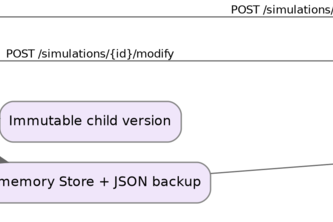
- An in-memory store for persistence during the hackathon
It allows learners to step through simulations, ask contextual questions, and modify them conversationally. Modifications create new immutable versions.
Inference The product is an experimental educational platform that uses AI to generate interactive learning experiences, with a focus on safety and version control.
Positioning & Claim Evolution
The author positions LiveLab as a tool that makes learning feel less like reading static answers and more like running experiments. It aims to bridge the gap between explanation and understanding by enabling learners to interact with simulations directly.
Key claims:
- Learners can ask questions like “Explain Dijkstra” and get an interactive simulation.
- Modifications are safe, versioned, and immutable.
- The system supports both generated examples and learner-supplied problems.
- A conversational AI tutor explains current states.
- Simulations are deterministic and local to the browser.
There is no indication of prior positioning or evolution in the description — this appears to be a first-time self-description from a hackathon submission.
Target Customer & ICP
The description states that LiveLab targets learners who want to understand technical concepts through interactive experimentation. It supports algorithms such as Dijkstra, Binary Search, and TCP protocols.
It is designed for:
- Students or educators seeking hands-on learning tools
- Individuals interested in algorithmic thinking and networking concepts
There is no evidence of segmentation beyond general learner types. No specific personas, use cases, or customer profiles are mentioned.
Business Model & Pricing Evidence
Not evidenced.
The description does not contain any information about pricing models, monetization strategies, or business plans. It focuses entirely on the technical implementation and educational goals.
Technical & Delivery Signals
The system is built using:
- Frontend: Next.js, React, TypeScript, Tailwind CSS
- Backend: FastAPI, Pydantic
- AI: Gemini for structured outputs
- Storage: In-memory store with JSON backup (for hackathon only)
Key technical decisions include:
- Separating AI flexibility from runtime safety
- Using deterministic validation before simulation creation
- Ensuring immutable versioning and exact backend rendering
- Keeping simulation engines local to the browser for responsiveness
The author notes challenges in reliability, visual readability, and versioning consistency.
Traction & Maturity Signals
Not evidenced.
There is no mention of users, adoption metrics, or product maturity beyond a hackathon prototype. No data on usage, retention, or feedback from learners is provided.
Competitive Context
Not evidenced.
The description does not reference competitors or similar tools in the market. It does not describe how LiveLab compares to existing educational platforms or algorithm simulators.
Open Questions & Risks
- Unproven impact: No evidence of learner engagement, effectiveness, or adoption.
- Limited scope: Only three algorithms are supported; expansion is planned but untested.
- Hackathon prototype: The system was built for a single hackathon event and lacks long-term development signals.
- No commercialization plan: No indication of how the idea might scale into a product or service.
- Single-founder team: The project has only one member, which may limit execution capacity.
Questions the description leaves open
- How many people have tested this system? What feedback did they give?
- Are there any plans to validate the educational effectiveness of these simulations?
- What are the key assumptions about how learners interact with the tool?
- Is there a plan to move beyond the in-memory store and build durable persistence?
- How do you intend to expand the catalog of supported algorithms or concepts?
- What is your vision for integrating teachers, classrooms, or institutional use cases?
Overall Assessment
Not evidenced.
There is no evidence of funding, revenue, or investor interest. The project is described as a hackathon submission with no indication of commercial viability or strategic value beyond its experimental nature.
The author’s stated goals are ambitious but unvalidated — making it difficult to assess whether this represents a scalable opportunity or just an interesting prototype.
User Stories BotA demo video on every pull request
Get a demo video on every new feature
GitHub App that watches your pull requests and records a narrated, captioned demo.
Save time on demo prep and make informed decisions faster with a video walkthrough of every new feature.
Source
Submitted to the OpenAI 2026 hackathon on Devpost. Project home on Devpost. Back to the full gallery on Devpost.
This competitive analysis was produced by top-founders.com (opens in a new tab)
Generated by a language model from this project's public Devpost page — its tagline, the author's own write-up and any built-with tags listed there — as captured in August 2026. Short quotations are the author's words. It is an opinion on the idea as a business, not on the people behind it, and it reflects the description as published then. If the project has moved on, request a correction below. The analysis is not independent research and contains no verified traction, revenue or customer data.
An independent guide by KFG International LLC — not affiliated with, endorsed by, or connected to Devpost or OpenAI.