

Archive position — measured, not model output
0 likes on Devpost
2,263 of the 7,850 archived projects have more likes, and 5,587 share exactly 0 — so this project's #6,992 place in the like-ranked listing is a tie-break inside that group, not a ranking.
Projects (log scale)
Likes on Devpost. ▲ marks this project's group.
Show the figures
| Likes | Projects | Share of archive |
|---|---|---|
| 0 | 5,587 | 71.2% |
| 1 | 1,758 | 22.4% |
| 2 | 284 | 3.6% |
| 3–4 | 132 | 1.7% |
| 5–9 | 75 | 1.0% |
| 10+ | 14 | 0.2% |
 User Stories BotA demo video on every pull request
Get a demo video on every new feature
GitHub App that watches your pull requests and records a narrated, captioned demo.
Save time on demo prep and make informed decisions faster with a video walkthrough of every new feature.
Executive Summary
Project: Strepitus Silvae
Self-reported basis: The entire analysis is based on a single author-supplied description from a Devpost submission to the OpenAI 2026 hackathon. No independent verification, revenue, customer data or traction evidence is available.
What it appears to be: A prototype wildlife identification tool built using AI copilot technologies (Codex, GPT) that processes video, image, or audio inputs to generate Darwin Core species records.
What changed: The author states this is a new tool developed for use by biologists and conservationists, with ambitions to expand into mobile and wearable platforms.
Most important open question: Is there any evidence of actual usage, adoption or validation by the target biologist community?
What The Product Actually Is
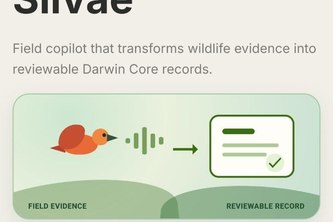
The description states that Strepitus Silvae is a "copilot app" that helps identify animal species from video, image, or audio inputs. It is described as transforming wildlife evidence into "reviewable Darwin Core records".
- Inferred: The tool uses AI (Codex, GPT) to process media and output species identification data.
- Not evidenced: No details on the technical architecture, data pipeline, or how Darwin Core records are generated.
Positioning & Claim Evolution
The author positions Strepitus Silvae as a tool for biologists and conservationists to improve their work using AI.
- Claim: The app is intended to help colleagues in everyday wildlife research and conservation.
- Inferred evolution: The project started as a personal initiative by a biologist, with ambitions to scale into mobile and wearable platforms.
- Not evidenced: No evidence of prior versions, user feedback, or market positioning beyond the author’s own description.
Target Customer & ICP
The author states that Strepitus Silvae is intended for biologists and people working in wildlife conservation.
- Claim: The tool targets researchers and practitioners in biodiversity and conservation.
- Not evidenced: No evidence of actual users, customer interviews, or segmentation data. No indication of whether the target audience has been reached or engaged.
Business Model & Pricing Evidence
The description does not mention any business model or pricing strategy.
- Not evidenced: No information on monetization, licensing, subscription plans, or revenue streams.
Technical & Delivery Signals
The project was built using Codex, GPT, Python, Streamlit, and tools like eBird, iNaturalist, and IUCN.
- Claim: The app uses AI to process media inputs and output species data.
- Inferred: It is a prototype or proof-of-concept, likely built quickly for a hackathon.
- Not evidenced: No details on scalability, performance, accuracy, or deployment architecture.
Traction & Maturity Signals
The description states that the app was created as part of a hackathon and has not yet been released to users.
- Claim: The project is in early development, with ambitions to become an Android/iOS app.
- Not evidenced: No evidence of user adoption, usage metrics, or product maturity beyond prototype status.
Competitive Context
The author does not reference any competitors or market context.
- Not evidenced: No mention of existing tools for wildlife identification or AI-based biodiversity apps.
- Inferred: The project likely competes with platforms like iNaturalist, eBird, or other citizen science tools, but this is unconfirmed.
Open Questions & Risks
- Risk: The tool is described as a hackathon prototype with no evidence of real-world usage or validation.
- Open question: No evidence of market traction, revenue, or customer feedback.
- Open question: The author is the sole team member, which may indicate limited development capacity or lack of team structure.
- Inferred risk: If the tool is intended for conservation professionals, it must meet high accuracy and reliability standards — no evidence of this.
Questions the description leaves open
- What specific wildlife identification tasks does Strepitus Silvae aim to solve?
- How accurate is the AI in identifying species from video/image/audio inputs?
- Have you tested the tool with actual biologists or conservationists?
- What are your plans for validation, accuracy testing, and data quality control?
- Are there any existing tools in this space that you're aware of?
- What is the roadmap for moving from prototype to a production-ready product?
Overall Assessment
The project is described as a hackathon prototype with no evidence of traction, revenue, or customer engagement.
- Inferred: The tool may have potential in conservation and biodiversity research but lacks validation.
- Not evidenced: No data on product-market fit, scalability, or commercial viability.
- Assessment: Not suitable for investment or partnership at this stage without further evidence of adoption, traction, or product maturity.
User Stories BotA demo video on every pull request
Get a demo video on every new feature
GitHub App that watches your pull requests and records a narrated, captioned demo.
Save time on demo prep and make informed decisions faster with a video walkthrough of every new feature.
Source
Submitted to the OpenAI 2026 hackathon on Devpost. Project home on Devpost. Back to the full gallery on Devpost.
This competitive analysis was produced by top-founders.com (opens in a new tab)
Generated by a language model from this project's public Devpost page — its tagline, the author's own write-up and any built-with tags listed there — as captured in August 2026. Short quotations are the author's words. It is an opinion on the idea as a business, not on the people behind it, and it reflects the description as published then. If the project has moved on, request a correction below. The analysis is not independent research and contains no verified traction, revenue or customer data.
An independent guide by KFG International LLC — not affiliated with, endorsed by, or connected to Devpost or OpenAI.