

Archive position — measured, not model output
0 likes on Devpost
2,263 of the 7,850 archived projects have more likes, and 5,587 share exactly 0 — so this project's #2,478 place in the like-ranked listing is a tie-break inside that group, not a ranking.
Projects (log scale)
Likes on Devpost. ▲ marks this project's group.
Show the figures
| Likes | Projects | Share of archive |
|---|---|---|
| 0 | 5,587 | 71.2% |
| 1 | 1,758 | 22.4% |
| 2 | 284 | 3.6% |
| 3–4 | 132 | 1.7% |
| 5–9 | 75 | 1.0% |
| 10+ | 14 | 0.2% |
 User Stories BotA demo video on every pull request
Get a demo video on every new feature
GitHub App that watches your pull requests and records a narrated, captioned demo.
Save time on demo prep and make informed decisions faster with a video walkthrough of every new feature.
Executive Summary
What the company appears to be
The author states that AI Family OS is an AI-powered family organization assistant designed to reduce mental load by transforming unstructured inputs (like brain dumps, voice, or chat) into structured calendars, tasks, reminders, and routines. It is described as a prototype built during an OpenAI hackathon.
What changed
No evidence of prior version or evolution; this is the first public description of the project.
Single most important open question
Is there any evidence that families are actively using or adopting this tool, or that it has moved beyond a personal prototype?
What The Product Actually Is
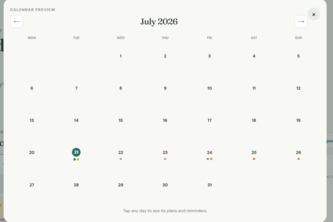
The description states that AI Family OS is an operating system for family life. It allows users to input information through brain dumps, chat, or voice and organizes it into structured calendar events, tasks, reminders, medications, and routines.
It includes features such as:
- Family member management
- Weekly and monthly calendar views
- Event creation and editing
- Custom reminders and final alarms
- Brain Dump processing
- Responsive mobile-first layout
- Browser-based voice input
The system is built using React/Vite with AI assistance from Codex powered by GPT-5.6.
Inference The author describes the product as a prototype, not a finished solution.
Positioning & Claim Evolution
The author positions AI Family OS as an assistant that reduces mental load for families, especially those managing complex schedules involving children with disabilities or multiple appointments.
It claims to:
- Transform scattered information into one clear dashboard
- Not replace existing apps but integrate with them
- Eventually connect with calendars, email providers, and task managers
The author also states that the long-term vision includes AI-powered planning, calendar synchronization, email integration, automatic task creation, medication management, and proactive suggestions.
Inference These are claims about future capabilities, not current functionality.
Target Customer & ICP
The author identifies mothers of young children, particularly those with children who have disabilities requiring therapy appointments, as the primary user group.
They note that most families already use several good apps but struggle with information fragmentation and mental load.
Inference The target customer is inferred from the author's personal experience rather than market data or user research.
Business Model & Pricing Evidence
Not evidenced. No mention of pricing, monetization strategy, or business model in the description.
Technical & Delivery Signals
The product was built using:
- CSS
- HTML
- JavaScript
- React
- Vite
- GitHub
- OpenAI Codex (powered by GPT-5.6)
Development process involved:
- Product vision documentation
- MVP scope definition
- Iterative development with local testing
- Use of AI to accelerate coding
Inference The use of AI tools suggests a fast prototyping approach, but no evidence of scalability or production deployment.
Traction & Maturity Signals
Not evidenced. No data on users, adoption, revenue, or usage metrics are provided.
The project is described as a hackathon prototype with no indication of prior versions or market traction.
Competitive Context
No evidence of direct competitors or competitive positioning in the description.
The author notes that families already use several good apps but do not name them or describe how AI Family OS would differentiate from existing solutions.
Open Questions & Risks
- The project is described as a personal prototype, not a scalable product.
- No evidence of user testing beyond the developer’s own experience.
- No mention of security, privacy, or data handling practices.
- Long-term features are claimed but not implemented in the current version.
- The author is a single individual (team size: 1), which raises questions about execution capacity.
Questions the description leaves open
- What specific user feedback has been gathered from families using this tool?
- How does AI Family OS handle data privacy and security for sensitive family information?
- Are there any plans to test the product with real users beyond the developer’s own family?
- What is the roadmap for integrating with existing calendar/email/task apps?
- Has the author considered how to scale beyond a single-person development effort?
Overall Assessment
Not evidenced. No financials, traction, or commercial viability data are available.
The project is described as a hackathon prototype with no indication of market readiness or business model.
Confidence Level Low — based entirely on self-reported description and no external validation.
User Stories BotA demo video on every pull request
Get a demo video on every new feature
GitHub App that watches your pull requests and records a narrated, captioned demo.
Save time on demo prep and make informed decisions faster with a video walkthrough of every new feature.
Source
Submitted to the OpenAI 2026 hackathon on Devpost. Project home on Devpost. Back to the full gallery on Devpost.
This competitive analysis was produced by top-founders.com (opens in a new tab)
Generated by a language model from this project's public Devpost page — its tagline, the author's own write-up and any built-with tags listed there — as captured in August 2026. Short quotations are the author's words. It is an opinion on the idea as a business, not on the people behind it, and it reflects the description as published then. If the project has moved on, request a correction below. The analysis is not independent research and contains no verified traction, revenue or customer data.
An independent guide by KFG International LLC — not affiliated with, endorsed by, or connected to Devpost or OpenAI.