

Archive position — measured, not model output
0 likes on Devpost
2,263 of the 7,850 archived projects have more likes, and 5,587 share exactly 0 — so this project's #7,772 place in the like-ranked listing is a tie-break inside that group, not a ranking.
Projects (log scale)
Likes on Devpost. ▲ marks this project's group.
Show the figures
| Likes | Projects | Share of archive |
|---|---|---|
| 0 | 5,587 | 71.2% |
| 1 | 1,758 | 22.4% |
| 2 | 284 | 3.6% |
| 3–4 | 132 | 1.7% |
| 5–9 | 75 | 1.0% |
| 10+ | 14 | 0.2% |
 User Stories BotA demo video on every pull request
Get a demo video on every new feature
GitHub App that watches your pull requests and records a narrated, captioned demo.
Save time on demo prep and make informed decisions faster with a video walkthrough of every new feature.
Executive Summary
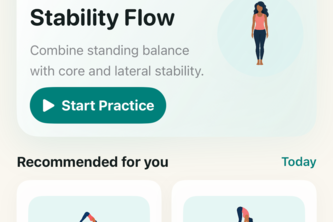
What the company appears to be: Yogalite is a self-reported iOS app built as a personal yoga companion. The author describes it as a lightweight, privacy-conscious tool that guides users through yoga practices using illustrated poses, audio cues, and timers — without requiring full video recordings or user accounts.
What changed: The project was submitted to the OpenAI 2026 hackathon on Devpost. It is described as a native iOS app built with SwiftUI, structured around reusable models for poses, sequences, and programs. It uses local storage for personalization and does not require backend infrastructure or login.
Single most important open question: Is there evidence of user adoption, feedback, or traction beyond the author’s own description?
Note: This analysis is based solely on the self-reported project description provided by the author. No independent verification, revenue data, customer base, or third-party sources are available.
What The Product Actually Is
The description states that Yogalite is a native iOS app built using SwiftUI. It includes:
- Illustrated poses
- Timers and audio cues
- Personalized recommendations
- Multi-day programs
- Onboarding preferences
- Daily recommended flows
- Post-practice reflection features
It is structured around reusable models for poses, practice steps, yoga sequences, and multi-day programs.
The app avoids full video classes and does not require a backend or user login. Instead, it stores data locally on-device to enable personalization without invasive tracking.
Claim: Yogalite is an iOS app built with SwiftUI.
Evidence: Author’s own write-up.
Claim: The app uses local storage for personalization.
Evidence: Author’s own write-up.
Claim: Yogalite does not use full video recordings.
Evidence: Author’s own write-up.
Positioning & Claim Evolution
The author positions Yogalite as a modern, lightweight yoga companion rooted in ancient tradition. It is described as:
- Less intimidating than traditional wellness apps
- Portable and adaptable to different time constraints
- Focused on audio cues and illustrated poses rather than video
- Designed for personalization without requiring accounts or screen time
The app aims to feel calm and complete while remaining fast, flexible, and privacy-conscious.
Claim: Yogalite is a modern yoga app rooted in ancient tradition.
Evidence: Tagline provided by author.
Claim: It helps users practice yoga wherever they are.
Evidence: Author’s own write-up.
Claim: It avoids full video classes and subscriptions.
Evidence: Author’s own write-up.
Target Customer & ICP
The description states that Yogalite is designed for people who want to practice yoga in a way that feels less intimidating, more portable, and adaptable to their schedule. Users can:
- Practice at any time (e.g., five minutes in the morning or before bed)
- Choose practices based on mood, experience level, or time available
- Use it without needing an account or screen-heavy interface
It targets individuals seeking a calm, personal, and lightweight yoga experience.
Claim: Yogalite is for people who want a portable, low-intensity yoga practice.
Evidence: Author’s own write-up.
Claim: It supports users with varying levels of experience.
Evidence: Author’s own write-up.
Business Model & Pricing Evidence
There is no evidence in the description of any pricing model or monetization strategy. The app is described as not requiring subscriptions, accounts, or backend infrastructure — suggesting it may be free to use or built for personal use only.
Claim: No pricing or business model is described.
Evidence: Author’s own write-up.
Technical & Delivery Signals
The app is built natively for iOS using SwiftUI. It uses reusable models for poses, practice steps, sequences, and programs. It avoids full video content by structuring flows from timed holds and transitions.
Key technical features include:
- Local storage of user data
- On-device analytics
- Audio cues with timing control
- Responsive UI across screen sizes
Claim: Yogalite is built using SwiftUI.
Evidence: Author’s own write-up.
Claim: The app avoids full video content.
Evidence: Author’s own write-up.
Claim: It uses local storage and on-device analytics.
Evidence: Author’s own write-up.
Traction & Maturity Signals
There is no evidence of user adoption, customer base, or traction beyond the author's own account. The project was submitted to a hackathon, and no metrics, downloads, usage data, or feedback are mentioned.
Claim: No traction or maturity signals are evident.
Evidence: Author’s own write-up.
Competitive Context
The description does not mention any competitors or market positioning relative to existing yoga apps. It is unclear whether Yogalite is intended to compete with full-video subscription platforms, mindfulness apps, or other wellness tools.
Claim: No competitive context is provided.
Evidence: Author’s own write-up.
Open Questions & Risks
- No revenue or monetization model — the app appears to be a prototype or personal project.
- No user feedback or adoption data — no evidence of real-world usage or traction.
- Limited scope — built only for iOS, with no indication of cross-platform support or scalability.
- Self-reported only — all claims are unverified and based on the author’s own description.
Inference: The lack of any monetization strategy or user data suggests this is a proof-of-concept or personal project rather than a scalable business.
Evidence: Author’s own write-up.
Questions the description leaves open
- What is the intended monetization model for Yogalite?
- Are there any users beyond the author who have tested or used the app?
- How does the app handle accessibility and inclusivity in its design?
- Is there a plan to expand beyond iOS or support other platforms?
- What are the technical limitations of local storage for personalization?
- Has the app been tested with real users, and what feedback has been received?
Overall Assessment
Not evidenced.
Claim: No investment or partnership potential is evident.
Evidence: Author’s own write-up.
Inference: The project appears to be a hackathon submission with no demonstrated traction, revenue, or scalable business model.
Evidence: Author’s own write-up.
User Stories BotA demo video on every pull request
Get a demo video on every new feature
GitHub App that watches your pull requests and records a narrated, captioned demo.
Save time on demo prep and make informed decisions faster with a video walkthrough of every new feature.
Source
Submitted to the OpenAI 2026 hackathon on Devpost. Project home on Devpost. Back to the full gallery on Devpost.
This competitive analysis was produced by top-founders.com (opens in a new tab)
Generated by a language model from this project's public Devpost page — its tagline, the author's own write-up and any built-with tags listed there — as captured in August 2026. Short quotations are the author's words. It is an opinion on the idea as a business, not on the people behind it, and it reflects the description as published then. If the project has moved on, request a correction below. The analysis is not independent research and contains no verified traction, revenue or customer data.
An independent guide by KFG International LLC — not affiliated with, endorsed by, or connected to Devpost or OpenAI.