

Archive position — measured, not model output
1 like on Devpost
505 of the 7,850 archived projects have more likes, and 1,758 share exactly 1 — so this project's #2,246 place in the like-ranked listing is a tie-break inside that group, not a ranking.
Projects (log scale)
Likes on Devpost. ▲ marks this project's group.
Show the figures
| Likes | Projects | Share of archive |
|---|---|---|
| 0 | 5,587 | 71.2% |
| 1 | 1,758 | 22.4% |
| 2 | 284 | 3.6% |
| 3–4 | 132 | 1.7% |
| 5–9 | 75 | 1.0% |
| 10+ | 14 | 0.2% |
 User Stories BotA demo video on every pull request
Get a demo video on every new feature
GitHub App that watches your pull requests and records a narrated, captioned demo.
Save time on demo prep and make informed decisions faster with a video walkthrough of every new feature.
Executive Summary
What the company appears to be
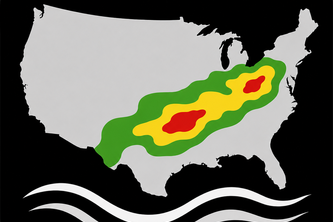
XGBoosted Flash Flood Predictions (XGBFFP) is a self-reported meteorological forecasting tool built by one individual (Tyreek Frazier), using machine learning models trained on historical data from mesoscale convective systems (MCSs). It predicts the probability that observed 24-hour rainfall will exceed flash flood guidance thresholds, with four XGBoost models operating at different spatial scales (40–100 km neighborhood radius).
What changed
The author states that this project evolved from research conducted for a Ph.D. dissertation into an interactive web-based forecasting system. The original work was static and research-oriented; the current version adds real-time prediction capabilities, visualization tools, and explainability features.
Single most important open question
Is there any evidence of operational use or adoption by meteorological services, emergency responders, or end users beyond the author’s own development and testing?
Note: This analysis is based entirely on the self-reported description provided by the project author. No independent verification, revenue data, customer list, or traction metrics are available.
What The Product Actually Is
The description states that XGBFFP is a system that uses four XGBoost machine learning models to predict the probability that 24-hour rainfall will exceed at least one form of Flash Flood Guidance within a neighborhood around each grid point. These predictions are generated for days involving mesoscale convective systems (MCSs), using environmental predictors from the Rapid Refresh model and gridded Flash Flood Guidance.
The system operates in real time, triggered by detection of potential MCS events through HRRR forecast fields. It produces both static graphics and interactive map data accessible via a website, with capabilities to compare different ML configurations against official forecasts and verification fields.
Claim: XGBFFP uses XGBoost models trained on 350 warm-season MCS cases from 2018–2023.
Evidence: The description states this explicitly.
Claim: It generates probabilistic flash-flood risk guidance at four spatial scales (40–100 km).
Evidence: Described in detail under “What XGBFFP predicts.”
Claim: It includes an interactive website with comparison tools and model diagnostics.
Evidence: Described under “How the real-time workflow operates” and “Model performance.”
Positioning & Claim Evolution
The author positions XGBFFP as a tool that improves upon existing flash-flood forecasting by offering:
- Real-time probabilistic predictions
- Multiple spatial scales for risk assessment
- Interactive visualizations and comparisons with operational guidance
- Explainability through SHAP summaries and dependence plots
It is described as evolving from academic research into a practical application aimed at improving flood forecasting accuracy, especially in regions where MCSs contribute significantly to warm-season rainfall.
Claim: XGBFFP improves upon current forecasts by focusing on MCS-specific conditions.
Evidence: The description states that the models were trained specifically for days involving MCSs and not general weather days.
Claim: It enhances transparency and usability compared to black-box ML systems.
Evidence: Mentioned in “How I built it” section regarding explainability components.
Target Customer & ICP
The description does not clearly identify a defined customer base or target market. However, the author implies that the intended audience includes:
- Meteorologists and NWS forecasters
- Emergency management personnel
- Researchers studying flash flooding
- General public interested in weather forecasting
There is no evidence of specific user personas, segmentation, or direct engagement with end users beyond the author’s own testing.
Claim: The system targets meteorological professionals and emergency responders.
Inference: Based on the context of flood guidance and operational forecasting.
Evidence: Not directly stated; inferred from domain knowledge and use case description.
Business Model & Pricing Evidence
There is no evidence of a business model or pricing structure in the provided description. The project appears to be a personal research effort turned into an open-source or demonstration tool.
Claim: No commercial revenue, pricing, or monetization strategy is described.
Evidence: Not evidenced.
Technical & Delivery Signals
The system uses Python-based machine learning pipelines with XGBoost models and integrates meteorological datasets from sources like HRRR, MRMS, NWS API, and others. It leverages GitHub Actions for automation and includes tools such as deck.gl, Leaflet.js, and SHAP for visualization and explainability.
Claim: The system uses XGBoost with geospatial data processing pipelines.
Evidence: Described under “How I built it.”
Claim: It integrates real-time forecasting workflows with automated triggers.
Evidence: Described in “How the real-time workflow operates.”
Claim: It includes interactive web components and diagnostics for transparency.
Evidence: Described in “How I built it” and “Model performance.”
Traction & Maturity Signals
There is no evidence of customer adoption, revenue, or measurable traction beyond the author’s own testing. The system has been tested on 45 independent MCS cases from 2024–2025, but there is no indication of deployment in operational settings or feedback from users.
Claim: The models were evaluated against real-world flood proxies and WPC forecasts.
Evidence: Described under “Model performance.”
Claim: There is no evidence of operational use or user engagement beyond testing.
Evidence: Not evidenced.
Competitive Context
The description does not provide information about competitors or existing solutions in the flash-flood forecasting space. It focuses on how XGBFFP improves upon current forecasts but does not compare directly with other systems or platforms.
Claim: No competitive landscape is described.
Evidence: Not evidenced.
Open Questions & Risks
- Single-person operation: The entire system is built by one individual, raising concerns about scalability and long-term maintenance.
- Lack of operational deployment: No evidence of use in real-world forecasting or emergency response systems.
- No commercialization strategy: No indication of monetization or business model beyond personal development.
- Limited external validation: Performance metrics are based on internal testing without independent verification.
Claim: Lack of operational use is a key risk.
Inference: Based on absence of evidence for real-world deployment or adoption.
Questions the description leaves open
- Has the system been tested in actual emergency response scenarios?
- Are there any partnerships with meteorological services or government agencies?
- How is the system maintained and updated over time?
- What are the plans for scaling beyond personal development?
- Is there any feedback from users or domain experts on usability or accuracy?
- What are the limitations of the current model in terms of false-positive/false-negative rates in operational settings?
Overall Assessment
Not evidenced.
Claim: No investment or partnership interest is indicated.
Evidence: Not evidenced.
User Stories BotA demo video on every pull request
Get a demo video on every new feature
GitHub App that watches your pull requests and records a narrated, captioned demo.
Save time on demo prep and make informed decisions faster with a video walkthrough of every new feature.
Source
Submitted to the OpenAI 2026 hackathon on Devpost. Project home on Devpost. Back to the full gallery on Devpost.
This competitive analysis was produced by top-founders.com (opens in a new tab)
Generated by a language model from this project's public Devpost page — its tagline, the author's own write-up and any built-with tags listed there — as captured in August 2026. Short quotations are the author's words. It is an opinion on the idea as a business, not on the people behind it, and it reflects the description as published then. If the project has moved on, request a correction below. The analysis is not independent research and contains no verified traction, revenue or customer data.
An independent guide by KFG International LLC — not affiliated with, endorsed by, or connected to Devpost or OpenAI.