

Archive position — measured, not model output
1 like on Devpost
505 of the 7,850 archived projects have more likes, and 1,758 share exactly 1 — so this project's #2,235 place in the like-ranked listing is a tie-break inside that group, not a ranking.
Projects (log scale)
Likes on Devpost. ▲ marks this project's group.
Show the figures
| Likes | Projects | Share of archive |
|---|---|---|
| 0 | 5,587 | 71.2% |
| 1 | 1,758 | 22.4% |
| 2 | 284 | 3.6% |
| 3–4 | 132 | 1.7% |
| 5–9 | 75 | 1.0% |
| 10+ | 14 | 0.2% |
 User Stories BotA demo video on every pull request
Get a demo video on every new feature
GitHub App that watches your pull requests and records a narrated, captioned demo.
Save time on demo prep and make informed decisions faster with a video walkthrough of every new feature.
Executive Summary
What the company appears to be
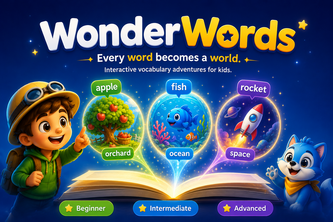
WonderWords is a self-reported interactive web application for children that uses AI-assisted development tools to transform English vocabulary learning into visual mini-games, stories, and challenges. The product is described as an educational tool that aims to make vocabulary learning feel like exploration rather than memorization.
What changed
The project description indicates the team began with a shared problem — how to make vocabulary learning more engaging for children — and used AI tools (specifically OpenAI Codex) to rapidly prototype and build an interactive experience. No evidence of prior version, funding or traction is provided.
The single most important open question
Is there any evidence that children actually use this product or that it achieves its stated educational goals? The description contains no data on user engagement, learning outcomes, or adoption.
What The Product Actually Is
The description states:
- WonderWords is an "interactive web application"
- It "transforms English vocabulary into immersive learning adventures"
- Every vocabulary word opens an "interactive world filled with animations, visual storytelling, playful challenges, and meaningful interactions"
- It supports Beginner, Intermediate, and Advanced learning levels
- The experience works across desktop and tablet devices
Evidence Self-reported. No independent verification of functionality or user experience.
Positioning & Claim Evolution
The description states:
- The product is positioned to "rethink how children experience language learning"
- It aims to make vocabulary learning feel like "exploring a game instead of studying for a test"
- The vision is that "Every word becomes a world"
- It seeks to move away from "repeating flashcards and memorizing word lists"
- The team emphasizes that "memorable learning happens when curiosity comes before memorization"
Evidence Self-reported claims about positioning, intent and educational philosophy. No evidence of actual market positioning or customer feedback.
Target Customer & ICP
The description states:
- The product targets "children"
- It supports "Beginner, Intermediate, and Advanced learning levels"
- It is designed for "young learners"
- The team includes a mother and a university student who has experienced vocabulary challenges
Evidence Self-reported. No evidence of specific customer segments, age ranges, or user testing.
Business Model & Pricing Evidence
The description states:
- There is no mention of pricing, subscriptions, or monetization strategies
- No indication of whether the product will be free, paid, or offered through partnerships
Evidence Not evidenced. The description does not contain any information about business model or pricing.
Technical & Delivery Signals
The description states:
- Built with: codex, css, css3, framer, html5, javascript, motion, next.js, openai, react, tailwind, typescript, vercel
- OpenAI Codex was used for prototyping, generating components, refining interactions, debugging, and iterating on UX
- The interface is designed to be intuitive with large interactive elements, clear visual feedback, and simple navigation
Evidence Self-reported. No evidence of technical performance, scalability or delivery quality.
Traction & Maturity Signals
The description states:
- The project was submitted to the OpenAI 2026 hackathon
- Team size is two members (Monica Xia, Qihui Sha)
- No mention of users, customers, revenue, or product adoption
Evidence Not evidenced. No data on usage, retention, or business traction.
Competitive Context
The description states:
- The team notes that "most learning activities relied on repeating flashcards and memorizing word lists"
- They aim to "rethink how children experience language learning"
- They mention that their concept can grow beyond English vocabulary to support reading, science, geography
Evidence Self-reported. No evidence of competitive analysis or market positioning relative to existing tools.
Open Questions & Risks
The description states:
- The biggest challenge was balancing education and entertainment
- Designing interactions for different levels while keeping the interface simple
- Ensuring every word feels unique instead of becoming a picture with translation
Inferences
- The lack of evidence on user testing or learning outcomes raises risk that the product may not achieve its educational goals
- The use of AI tools like Codex suggests rapid prototyping, but no evidence of long-term development maturity or scalability
Evidence Not evidenced. No data to confirm whether these challenges were overcome or if the product is viable.
Questions the description leaves open
- What specific learning outcomes have you observed from children using WonderWords?
- How do you plan to validate that your product improves vocabulary retention?
- Have you conducted any user testing with children, and what were the results?
- What is your path to monetization or scaling beyond a hackathon project?
- How do you intend to differentiate WonderWords from existing vocabulary apps or platforms?
- What are the technical limitations of using AI tools like Codex for long-term product development?
Overall Assessment
The description states:
- The team is focused on making WonderWords more personalized with AI-generated worlds, adaptive learning paths, pronunciation feedback, and parent dashboards
- Future versions will support additional subjects beyond English
Inference
- The project appears to be in early development stage (hackathon submission)
- No evidence of revenue, customers or product-market fit
- The team has a clear vision but lacks demonstrated traction or validation
Confidence Level Low. The description is entirely self-reported and unverified. No evidence of commercial viability, user adoption, or financial performance.
User Stories BotA demo video on every pull request
Get a demo video on every new feature
GitHub App that watches your pull requests and records a narrated, captioned demo.
Save time on demo prep and make informed decisions faster with a video walkthrough of every new feature.
Source
Submitted to the OpenAI 2026 hackathon on Devpost. Project home on Devpost. Back to the full gallery on Devpost.
This competitive analysis was produced by top-founders.com (opens in a new tab)
Generated by a language model from this project's public Devpost page — its tagline, the author's own write-up and any built-with tags listed there — as captured in August 2026. Short quotations are the author's words. It is an opinion on the idea as a business, not on the people behind it, and it reflects the description as published then. If the project has moved on, request a correction below. The analysis is not independent research and contains no verified traction, revenue or customer data.
An independent guide by KFG International LLC — not affiliated with, endorsed by, or connected to Devpost or OpenAI.