

Archive position — measured, not model output
0 likes on Devpost
2,263 of the 7,850 archived projects have more likes, and 5,587 share exactly 0 — so this project's #5,286 place in the like-ranked listing is a tie-break inside that group, not a ranking.
Projects (log scale)
Likes on Devpost. ▲ marks this project's group.
Show the figures
| Likes | Projects | Share of archive |
|---|---|---|
| 0 | 5,587 | 71.2% |
| 1 | 1,758 | 22.4% |
| 2 | 284 | 3.6% |
| 3–4 | 132 | 1.7% |
| 5–9 | 75 | 1.0% |
| 10+ | 14 | 0.2% |
 User Stories BotA demo video on every pull request
Get a demo video on every new feature
GitHub App that watches your pull requests and records a narrated, captioned demo.
Save time on demo prep and make informed decisions faster with a video walkthrough of every new feature.
Executive Summary
What the company appears to be
Mi-CampusCR is a self-reported Android application built by one developer (Avalon Vargas) for university students at The National University of Costa Rica. It aims to consolidate various digital tools needed by students—such as calendar management, bus route tracking, file access, and AI-powered document handling—into a single interface. The app integrates with the university's academic platform via API and includes widgets for offline access.
What changed
The project was initially conceptualized during a hackathon (OpenAI 2026) and is described as an evolving prototype. It began with basic features like calendar and bus tracking, later expanded to include AI functionality through local and cloud-based models, and now includes plans for publishing on the Play Store.
Single most important open question
Is there evidence of user adoption or traction beyond the developer’s own use case?
Note: This analysis is based solely on the self-reported description provided by the author. No external verification, revenue data, customer feedback or usage metrics are available.
What The Product Actually Is
- The description states that Mi-CampusCR is an Android app designed for students at The National University of Costa Rica.
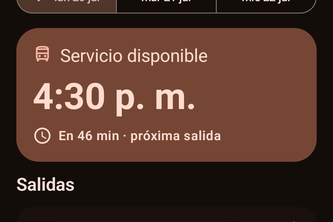
- It bundles calendar functionality with dynamic reminders, official bus routes and times, API access to the university’s academic platform, and widgets for offline file access.
- AI integration is included but described as a work in progress; it involves local and cloud-based LLMs for chat and document handling.
- The app was built using Jetpack Compose, Kotlin, and Material 3 libraries.
- It uses Codex and ChatGPT for development planning and implementation.
Inference: The product is an early-stage prototype developed by a single individual, likely intended for personal use or limited student testing within one university.
Positioning & Claim Evolution
- The tagline claims Mi-CampusCR is “your one way stop to everything you need to access on your university,” suggesting it positions itself as a centralized hub.
- The author describes the app as a solution to common digital hurdles faced by students, particularly around fragmented systems and clunky websites.
- Over time, the scope expanded from basic calendar and bus tracking to include AI features like document processing and chatbot capabilities.
- The project evolved from an idea discussed with ChatGPT into a working prototype using Codex and Android development tools.
Inference: The positioning has shifted from a simple utility app to a more integrated student resource platform, though the AI component remains underdeveloped.
Target Customer & ICP
- The target customer is identified as university students at The National University of Costa Rica.
- The description implies that users are likely those who struggle with navigating multiple platforms or apps for academic and logistical needs.
- There is no mention of other institutions, demographics, or broader market segments beyond this specific university.
Not evidenced: No data on how many students might be using the app, whether it has been adopted by others, or if there’s a defined persona beyond “a student.”
Business Model & Pricing Evidence
- The description does not state any pricing model or monetization strategy.
- There is no indication of paid features, subscriptions, or revenue streams.
- The author mentions that AI functionality runs locally to avoid hosting costs, implying cost-consciousness in design.
- Publishing on the Play Store is mentioned as a future goal, but no details about app store listing or distribution fees are provided.
Not evidenced: No evidence of business model, pricing plans, or monetization strategy beyond personal development and potential future publishing.
Technical & Delivery Signals
- Built using Android native technologies: Jetpack Compose, Kotlin, Material 3.
- Uses Codex and ChatGPT for planning and implementation.
- API integration with the university’s academic platform is mentioned.
- Widgets are included for offline access to files.
- AI features involve both local (e.g., Gemma v4) and cloud-based LLMs (Google Studio API).
- Challenges include API rate limits, limited context windows in local models, speed issues, and compatibility problems with Android devices lacking local AI support.
Inference: The technical stack is modern and appropriate for an Android app. However, the AI implementation shows significant limitations due to device constraints and model capabilities.
Traction & Maturity Signals
- The project was submitted as part of a hackathon (OpenAI 2026).
- It is described as a prototype with room for improvement.
- No evidence of user adoption, downloads, or active usage beyond the developer’s own testing.
- The AI functionality is noted as still in development and not fully functional.
- The app is not yet published on the Play Store.
Not evidenced: No data on user engagement, retention, or market traction. The project appears to be at a very early stage of maturity.
Competitive Context
- The description does not mention direct competitors or similar products in the market.
- It references existing university websites and apps as clunky or fragmented, suggesting a gap in the market for better integration.
- No comparison with other campus management tools or student productivity apps is made.
Not evidenced: No competitive analysis or awareness of existing solutions in this space.
Open Questions & Risks
- The app is described as a prototype built by one person; no team, funding, or scalability plan are evident.
- AI functionality relies heavily on local models with limited context windows and performance issues.
- Compatibility problems with Android devices lacking local AI support may limit reach.
- Publishing to the Play Store is mentioned but not confirmed; costs and process are unclear.
- The app’s scope and features are based on one university's needs, limiting generalizability.
Inference: High risk of limited adoption due to technical constraints, lack of team structure, and unproven market demand.
Questions the description leaves open
- What is the actual user base beyond the developer?
- How many students are currently using this app in practice?
- Are there any plans for monetization or revenue generation?
- Has the AI functionality been tested with real student data?
- What are the long-term goals for scaling beyond one university?
- Is there a plan to address device compatibility issues with local AI models?
- How does the app handle privacy and data security, especially with document uploads?
Overall Assessment
- The project is described as a personal hackathon effort with no evidence of traction or commercial viability.
- It lacks clear business model, revenue streams, or team structure.
- While the concept shows potential for solving real student pain points, it is currently at an early prototype stage with unresolved technical challenges.
Assessment: Not ready for investment or partnership. Requires significant development, user testing, and proof of traction before any commercial viability can be assessed.
User Stories BotA demo video on every pull request
Get a demo video on every new feature
GitHub App that watches your pull requests and records a narrated, captioned demo.
Save time on demo prep and make informed decisions faster with a video walkthrough of every new feature.
Source
Submitted to the OpenAI 2026 hackathon on Devpost. Project home on Devpost. Back to the full gallery on Devpost.
This competitive analysis was produced by top-founders.com (opens in a new tab)
Generated by a language model from this project's public Devpost page — its tagline, the author's own write-up and any built-with tags listed there — as captured in August 2026. Short quotations are the author's words. It is an opinion on the idea as a business, not on the people behind it, and it reflects the description as published then. If the project has moved on, request a correction below. The analysis is not independent research and contains no verified traction, revenue or customer data.
An independent guide by KFG International LLC — not affiliated with, endorsed by, or connected to Devpost or OpenAI.