

Archive position — measured, not model output
0 likes on Devpost
2,263 of the 7,850 archived projects have more likes, and 5,587 share exactly 0 — so this project's #5,287 place in the like-ranked listing is a tie-break inside that group, not a ranking.
Projects (log scale)
Likes on Devpost. ▲ marks this project's group.
Show the figures
| Likes | Projects | Share of archive |
|---|---|---|
| 0 | 5,587 | 71.2% |
| 1 | 1,758 | 22.4% |
| 2 | 284 | 3.6% |
| 3–4 | 132 | 1.7% |
| 5–9 | 75 | 1.0% |
| 10+ | 14 | 0.2% |
 User Stories BotA demo video on every pull request
Get a demo video on every new feature
GitHub App that watches your pull requests and records a narrated, captioned demo.
Save time on demo prep and make informed decisions faster with a video walkthrough of every new feature.
Executive Summary
What the company appears to be
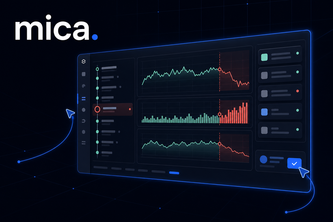
The description states that Mica is a local-first workspace for production investigations, designed to help humans and AI agents collaborate on understanding system issues, tracking changes, and verifying fixes. It integrates with Prometheus telemetry and supports both human and AI workflows through a shared context.
What changed
Mica was built as part of the OpenAI 2026 hackathon submission. The author describes it as an experimental tool to reduce friction in onboarding SRE engineers into unfamiliar systems, using AI agents to accelerate incident response while preserving evidence and context.
Single most important open question
Is there any evidence that Mica has been used beyond the hackathon demo? Has it been tested in real production environments or with actual teams?
What The Product Actually Is
The description states that Mica is a local workspace for production investigations. It compares healthy and degraded Prometheus data, saves evidence, and maintains a record of hypotheses, code changes, tests, approvals, and recovery checks within one incident record.
It supports both human users via a web interface and AI coding agents using MCP tools, working with the same context.
The system includes:
- A local daemon built in Go
- A React-based user interface
- An SQLite-based incident store
- Integration with Prometheus metrics
- Typed MCP tools for AI agents
It also includes a Docker Compose environment that simulates a real-world scenario, including a checkout service, traffic generator, and an N+1 regression to trigger and resolve.
Evidence
- The author states Mica is a local workspace for production investigations.
- It reads metrics from Prometheus.
- It uses typed MCP tools for AI agents.
- It stores evidence in SQLite.
- It runs locally with deterministic data.
- It supports both human and AI workflows.
Inference Mica appears to be an experimental tool built for incident response, not yet proven in production or at scale.
Positioning & Claim Evolution
The author positions Mica as a local-first workspace that helps teams respond to production issues more efficiently by combining human and AI efforts. It aims to reduce the time it takes for engineers to understand systems and contribute during incidents.
Key claims:
- Reduces friction when adding new SRE engineers to projects.
- Accelerates incident response with AI agents.
- Preserves evidence and context across investigation steps.
- Helps new engineers learn a system before an incident occurs, not just during one.
Evidence
- The author states that Mica was built to reduce the time it takes for engineers to understand systems and contribute.
- It supports both humans and AI agents in the same workflow.
- It is designed to help new engineers learn systems before incidents occur.
Inference Mica’s positioning reflects a vision of improving operational workflows through AI integration, but no evidence shows adoption or impact beyond the demo.
Target Customer & ICP
The description states that Mica targets production engineers, especially those who are new to a system and need to respond quickly to incidents. It also aims to help teams onboard SREs more efficiently.
It is designed for:
- Engineers responding to production issues
- Teams looking to reduce cognitive load during incident response
- Organizations wanting to train new engineers on systems before incidents occur
Evidence
- The author states that Mica reduces friction when adding a new SRE engineer.
- It supports both humans and AI agents in the same workflow.
- It aims to help new engineers learn systems before an incident.
Inference The target customer is likely SREs or DevOps engineers working in production environments, but no evidence of actual users or teams exists.
Business Model & Pricing Evidence
Not evidenced.
Evidence No mention of pricing, monetization, or business model in the description.
Inference Since this is a hackathon project, it is unclear whether Mica has any commercial intent or if it’s purely experimental.
Technical & Delivery Signals
The system is built with:
- Go for the local daemon
- React for the web interface
- SQLite for incident storage
- Integration with Prometheus metrics
- MCP tools for AI agents
- A Docker Compose environment simulating a real-world scenario
The system supports:
- Local operation
- Shared context between humans and AI
- Deterministic data for demo purposes
- Full investigation loop: detect, inspect, investigate, record, verify
Evidence
- The author states the system is built in Go, React, and SQLite.
- It integrates with Prometheus.
- It uses MCP tools for AI agents.
- It simulates a real-world environment with Docker Compose.
Inference The technical stack suggests a lightweight, local-first approach. However, no evidence of scalability or production deployment exists.
Traction & Maturity Signals
Not evidenced.
Evidence No mention of users, customers, revenue, or adoption beyond the hackathon demo.
Inference This is an experimental project with no demonstrated traction or maturity in real-world use.
Competitive Context
Not evidenced.
Evidence The description does not reference competitors or similar tools in the market.
Inference No competitive positioning or market analysis is provided, so it's unclear how Mica fits into existing incident response or observability tooling.
Open Questions & Risks
- Experimental nature: Mica is a hackathon project with no evidence of real-world use.
- Limited scope: It only supports Prometheus and local environments; no mention of broader telemetry backends.
- No commercialization: No indication of monetization or business model.
- Single founder: The team size is listed as 1, which may limit development velocity.
- Demo-only functionality: The system works locally with deterministic data, not in production.
Evidence
- It was built for a hackathon.
- It only supports Prometheus and local environments.
- No mention of users or commercial intent.
Questions the description leaves open
- Has Mica been tested in any real-world production environments?
- What is the plan for supporting other telemetry backends beyond Prometheus?
- Are there any plans to move beyond a local-first approach to support distributed teams?
- How does Mica handle multi-user collaboration in real-time?
- What are the long-term goals for Mica’s commercialization or monetization?
Overall Assessment
Not evidenced.
Evidence No financial data, funding rounds, or investment history is provided.
Inference Given that this is a hackathon project with no demonstrated traction, revenue, or users, it is not suitable for investment or partnership at this stage. It may be a promising idea, but lacks evidence of viability or market demand.
User Stories BotA demo video on every pull request
Get a demo video on every new feature
GitHub App that watches your pull requests and records a narrated, captioned demo.
Save time on demo prep and make informed decisions faster with a video walkthrough of every new feature.
Source
Submitted to the OpenAI 2026 hackathon on Devpost. Project home on Devpost. Back to the full gallery on Devpost.
This competitive analysis was produced by top-founders.com (opens in a new tab)
Generated by a language model from this project's public Devpost page — its tagline, the author's own write-up and any built-with tags listed there — as captured in August 2026. Short quotations are the author's words. It is an opinion on the idea as a business, not on the people behind it, and it reflects the description as published then. If the project has moved on, request a correction below. The analysis is not independent research and contains no verified traction, revenue or customer data.
An independent guide by KFG International LLC — not affiliated with, endorsed by, or connected to Devpost or OpenAI.